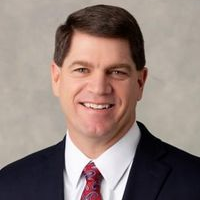

The Idaho legislative session has entered a period of heightened uncertainty following the Senate’s recent rejection of the Department of Health and Welfare budget. In an interview on Newstalk 107.9, Representative Rod Furniss, a member of the Joint Finance-Appropriations Committee (JFAC), discussed the implications of the 25-10 vote and the challenges facing budget writers as they return to the drawing board.
Furniss noted that the failed vote likely extends the session, as the $5.7 billion budget lacked a clear directive for revision. He explained that opposition came from both ends of the political spectrum: some senators viewed the spending as excessive, while others felt it provided insufficient funding. This “unusual” outcome leaves JFAC negotiators with the difficult task of deciding whether to restore funding for mental health programs and provider increases or pursue further reductions beyond the $207 million already cut.
During the interview, Furniss critiqued the use of across-the-board budget cuts, which some lawmakers have proposed. He described uniform 1% or 2% reductions as “draconian,” arguing they punish well-managed programs while failing to address specific inefficiencies. Furniss expressed that he had previously pushed for more time to scrutinize budgets with agency directors but was “gabbled down” by leadership. He suggested that the Senate’s rejection now mandates the deeper review he initially sought.
The conversation also touched on the broader political climate in Boise. Furniss described the end-of-session dynamics as a “cat and mouse” bargaining environment, where bills are often held as leverage between the House and Senate. Regarding immigration, Furniss clarified his opposition to mandatory E-Verify legislation, citing concerns over the system’s reliability and the potential impact on Idaho’s dairy and agricultural sectors. He advocated instead for federal reforms to the H-2A program to stabilize the workforce.
Looking toward the end of the session, Furniss highlighted several personal priorities, including a measure to support a new tungsten mine in Lemhi County and a proposal to merge the state’s Insurance and Finance departments to increase efficiency. As the session continues, Furniss remains focused on finding a workable “middle ground” amidst the ongoing inter-chamber negotiations.