Idaho competing for new Nuclear Innovation Campus; could double size of Idaho National Laboratory workforce">Idaho competing for new Nuclear Innovation Campus; could double size of Idaho National Laboratory workforce

Idaho competing for new Nuclear Innovation Campus; could double size of Idaho National Laboratory workforce">

IDAHO FALLS, Idaho (KIFI) – One of the most impactful U.S. energy initiatives in decades, a federal proposal to construct a Nuclear Lifecycle Innovation Campus, received an application from Idaho on March 31.

Nuclear power presents an opportunity for Idaho families to continue receiving affordable, clean energy far into the future, and I support the growth of Idaho’s nuclear industry,” Governor Little said. “I hope the Department of Energy will recognize Idaho’s historic nuclear leadership and its strong candidacy for this initiative.”

Lt. Gov. Scott Bedke and state Senator Dave Lent, (R)-Idaho Falls, and a Trump administration official have spent the last two days touring Idaho National Laboratory, meeting with venture-capitalist investors and hearing from experts about the laboratory’s capabilities.

“I feel strongly this is our game to win,” Lent said. “If we can stand up a strong response back and willingness to step up, this is really a chance for us again to lead – be the national leader in nuclear for the next 50 to 60 years.”

You can watch our full interview on the Nuclear Lifecycle Innovation Campus with state Senator Dave Lent below.

Lent is one of two Idaho legislators serving on the newly-created Idaho Advanced Nuclear Energy Task Force.

The 20-person task force is led by Lt. Gov. Scott Bedke and Idaho National Laboratory Director John Wagner.

The Department of Energy solicited Requests For Information (RFIs) for the Nuclear Innovation Campus in January.

“Securing this designation would bolster Idaho’s economy, expand access to reliable baseload power, and position the state at the forefront of next-generation nuclear technologies,” according to a release from the Idaho Office of Energy and Mineral Resources.

The state faces competition from Utah, Texas, and other states vying for the same designation, Lent said.

The DOE’s original proposal asks for states interested in hosting “integrated, full‑cycle nuclear ecosystems that could colocate and support the entire nuclear value chain while exploring durable pathways for managing used nuclear materials in a safe, secure, and fiscally responsible manner.”

“These campuses must support functions such as fuel fabrication, enrichment, reprocessing used nuclear fuel, and disposition of waste, and could additionally support functions such as advanced reactor deployment, power generation, advanced manufacturing, and co‑located data centers,” the request continues.

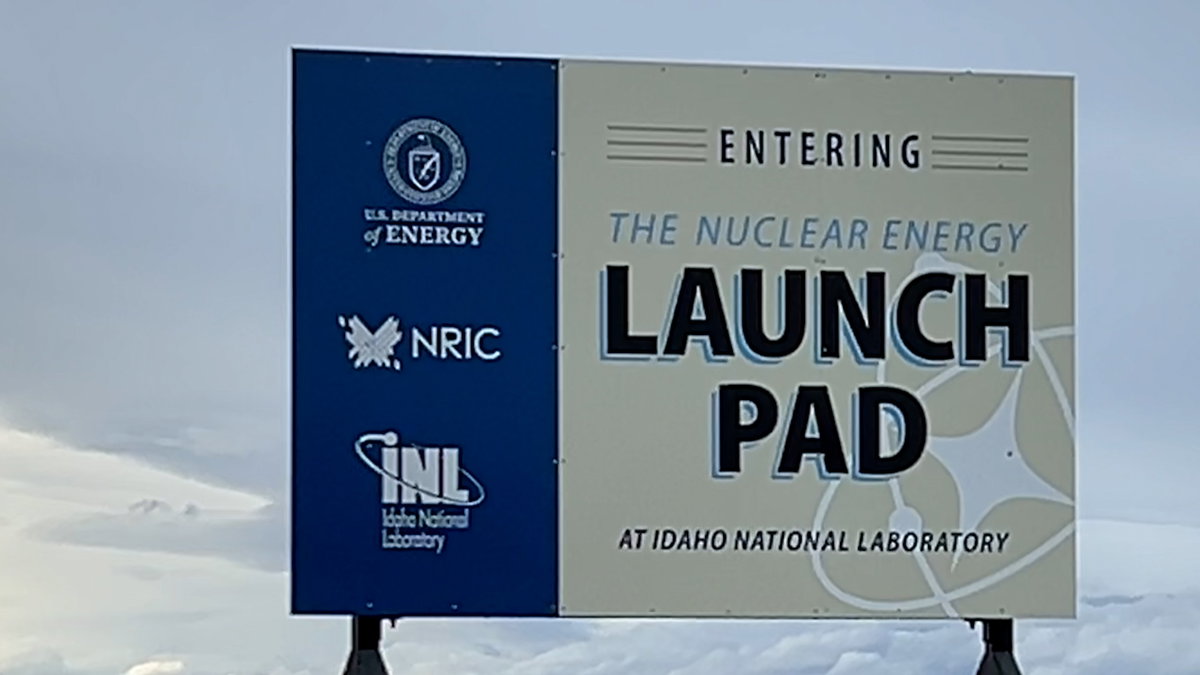
The Idaho National Laboratory already features much of the infrastructure and programs required to implement a national Nuclear Innovation Campus, Lent explained.

“At the INL, we already do most of this stuff already and have for many years and have developed many of the technologies that are used throughout the world,” he said.

Currently, Idaho National Laboratory employs 9,000 to 10,000 individuals, he said, in addition to the secondary work its activities generate throughout the region and state.

“There’s a potential there to come close to doubling that workforce – if some of this work were to come through as it’s being described by the Department of Energy,” Lent said.

Eastern Idaho is uniquely situated to launch the next renaissance in advanced nuclear technology.

“Idaho is prepared to continue our tradition of nuclear excellence and build on the foundation that has already made our state great,” Little said.

Local vendors helping students shine this prom season—without the high cost">Local vendors helping students shine this prom season—without the high cost

Local vendors helping students shine this prom season—without the high cost">

With prom season right around the corner, several organizations and businesses across Eastern Idaho are stepping up to make sure every student has the chance to dress up for the big night—without the big price tag.

Prom can be one of the most memorable experiences of high school, but for many families, the cost of formalwear can be a challenge. That’s why local schools and community partners are offering free or low-cost options for students in need—while also encouraging others to give back.

At Idaho Falls High School, students and staff are teaming up with the Tiger Club to host the “Prom-Swag Swap.” The event serves as a free prom dress and formal wear closet, giving students access to outfits at no cost. Donations from the school community are being accepted now through April 24 at the school’s media center.

The College of Eastern Idaho Center for New Directions is also collecting gently used prom dresses, men’s suits, and ties. The program aims to support individuals working toward new opportunities by helping ease the financial burden of special events like prom.

In Blackfoot, the Village Foster Care Closet is accepting donations specifically for girls in foster care. The organization hopes to ensure these students can experience the excitement of prom without the added financial stress.

Meanwhile, in Pocatello, KATZ Formal Wear is offering students a unique opportunity. With a referral from their school, girls can receive personalized assistance in finding their dream dress at no cost. The store also accepts donations year-round to keep the program going.

Organizers say these efforts go beyond just providing clothing. They’re about giving formal wear a second life, promoting sustainability, and most importantly, helping students create lasting memories.

For those doing a little spring cleaning, donating a dress, suit, or accessory could make a meaningful difference in a student’s prom experience—and help ensure everyone gets a chance to feel their best on a special night.

EXCLUSIVE: Sen. Julie Van Orden on Legislative Session, Campaign">EXCLUSIVE: Sen. Julie Van Orden on Legislative Session, Campaign

EXCLUSIVE: Sen. Julie Van Orden on Legislative Session, Campaign">

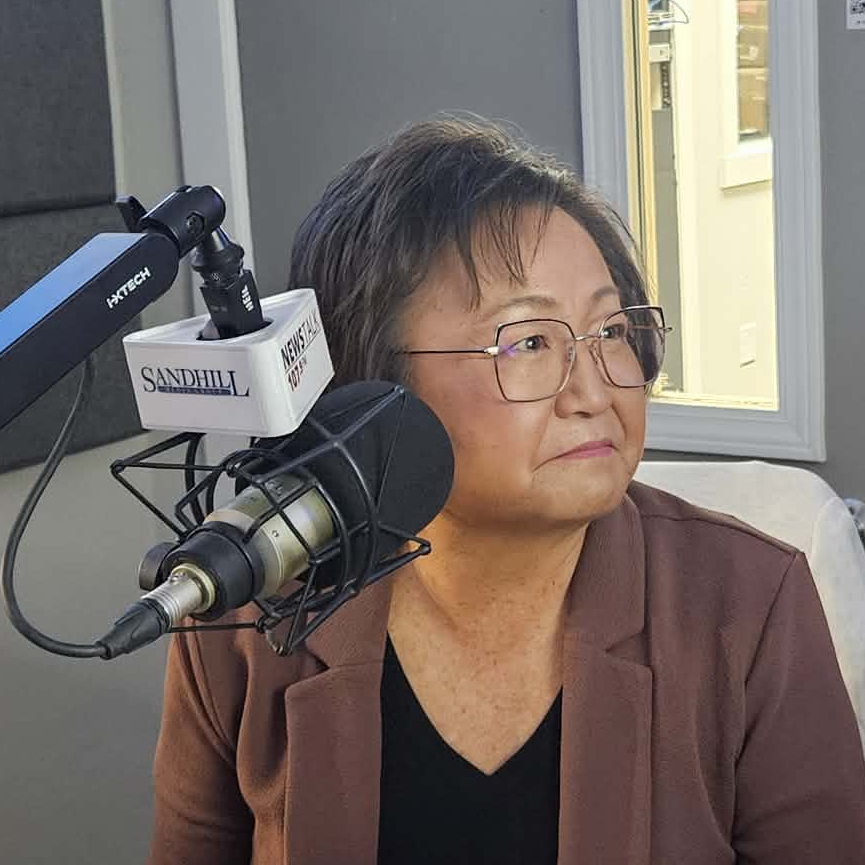
Idaho State Senator Julie Van Orden recently joined Neal Larson and Julie Mason on Newstalk 107.9 to reflect on the most recent legislative session and outline her priorities for the future. Van Orden characterized the session as one marked by significant procedural tension between the House and Senate, specifically noting “hot moments” where lawmakers used aggressive tactics to move stalled legislation during the final weeks of the term.

A primary focus of the interview involved legislative procedures, such as “radiator capping”—the process of replacing a bill’s contents to bypass a committee chair’s refusal to hear it. Van Orden expressed support for a potential rules change that would require any bill passing one chamber by a strong margin, such as 60%, to receive a committee hearing in the other chamber. She argued this would prevent lawmakers from relying on the opposite chamber to quietly kill bills they did not want to vote against openly, thereby encouraging more transparent voting in the first chamber.

Addressing regional agricultural concerns, Van Orden highlighted the critical water shortage currently affecting East Idaho. She noted that many farmers are making difficult operational decisions, including leaving land uncultivated and returning leases because the necessary water is unavailable. While acknowledging the economic hit to the region, she pointed to ongoing mitigation plans and long-term water storage discussions in Washington, D.C., as essential efforts to provide future stability for the state’s water users.

As Chair of the Health and Welfare Committee, Van Orden also detailed recent shifts in state Medicaid policy. She discussed House Bill 345, which focuses on cost containment through managed care and work requirements for expansion recipients. She explained a new three-month “look-back” period designed to verify employment status, framing Medicaid as a transitional support system. While some critics argue these changes are intended to undermine Medicaid expansion, Van Orden suggested the policies aim to refine eligibility and ensure the program’s long-term fiscal sustainability.

Van Orden concluded the interview by citing her experience in both the House and Senate as a key asset for her constituents in Bingham and Bonneville counties. She emphasized her commitment to navigating complex budgeting and policy issues to serve local interests.

4.13.2026 – Iran Breakdown, Idaho Union Bill, Primary Money Questions">4.13.2026 – Iran Breakdown, Idaho Union Bill, Primary Money Questions

4.13.2026 – Iran Breakdown, Idaho Union Bill, Primary Money Questions">

Send us Fan Mail

This episode was one of those “it’s Monday but it doesn’t feel like Monday” shows—because everything hit at once. We walked through the collapse of the Iran peace talks after a marathon 21-hour negotiation, with J.D. Vance central to the effort and both sides stuck on a non-starter: Iran’s nuclear future. From there, the conversation shifted to what happens next—Trump signaling the war is back on, focusing immediately on the Strait of Hormuz and using Truth Social as a tool to send messages straight to Iran (and to the rest of the world watching). We also dug into how to interpret public support for the conflict, why poll wording matters, and why Trump’s “end of civilization” rhetoric is more strategic posture than literal intent—paired with real concerns about escalation, shipping lanes, and whether “boots on the ground” quietly becomes “boats on the seas.”

Closer to home, we talked about a major Idaho win: Governor Brad Little signing the bill ending taxpayer support for teachers union political activity and infrastructure—forcing unions to operate more like any other private organization. We also pointed to early evidence of competition doing what competition does, with Idaho Falls School District 91 expanding online offerings amid growing demand and new education choice pressure. Then we hit a story that deserves sunlight: a pro-abortion advocacy group (the Idaho Coalition for Safe Health Care) hosting a fundraiser for several Republican lawmakers/candidates, raising serious transparency questions in the middle of a Republican primary—who was there, what was promised, and why take that money at all. Along the way we sprinkled in the weekend’s lighter moments—Artemis/Orion’s intense re-entry and the pride that comes with American space wins—plus a few rapid-fire media clips (Kamala’s awkward mob-boss bit, Buttigieg sparring over inflation, and the not-so-shocking party divide on profanity).

**Highlights**
– Iran talks fail after 21 hours; Strait of Hormuz becomes the immediate flashpoint  
– Gov. Little signs the “no taxpayers for teachers unions” bill—big shift in union power dynamics  
– District 91 expands online school options as education competition heats up  
– Questions raised about Republicans appearing on a fundraiser invite tied to a pro-choice advocacy group  
– Artemis/Orion splashdown: the coolest—and most dangerous—minutes of the mission

Let’s talk advertising. When you want to advertise on the radio, you call the station, right? But what about Facebook, Instagram, Hulu, Disney+, Peacock, and other streaming platforms?

You could try clicking around, reading books, or taking online courses to figure it out—or you can let us handle it. At Sandhill Media Group, we’re your local experts in both radio and digital marketing.

Visit SandhillMediaGroup.com today.

Read More

scroll to top