FULL DEBATE VIDEO: Bingham vs McKellar – District 32B">FULL DEBATE VIDEO: Bingham vs McKellar – District 32B

FULL DEBATE VIDEO: Bingham vs McKellar – District 32B">

FULL VIDEO BELOW

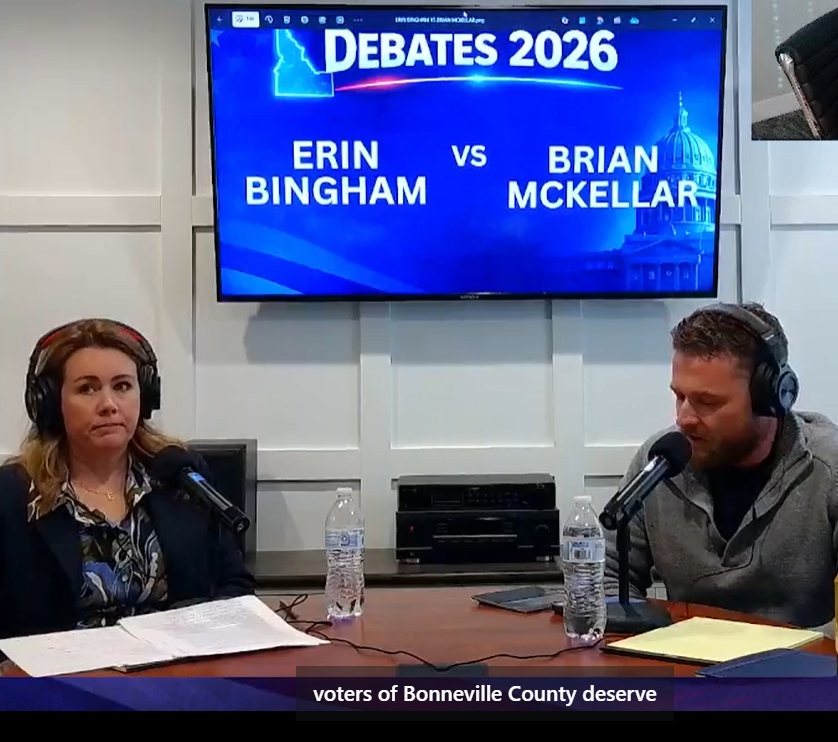
In a legislative debate hosted by Neal Larson and Julie Mason on Newstalk 107.9, incumbent Representative Erin Bingham and challenger Brian McKellar presented differing visions for Idaho House District 32B. The primary contest highlights a contrast between Bingham’s recent record as an appointee and McKellar’s platform as a “conservative businessman” seeking to give voters an elected choice.

A primary point of contention was state-level immigration enforcement. Bingham defended her votes against several enforcement bills, including House Bill 700 regarding E-Verify. She argued the legislation created “unfunded mandates” for local governments and potentially violated the supremacy clause of the U.S. Constitution. McKellar countered that the bill was a “no-nonsense” approach to employer accountability. He suggested that legal channels, such as H1-B visas, are sufficient for industries like agriculture and emphasized the need for tougher state enforcement.

The candidates also diverged on education and House Bill 93, a landmark parental tax credit bill. While Bingham identifies as a supporter of school choice, she explained her opposition to the bill was based on a lack of fiscal oversight and “guardrails.” McKellar gave an enthusiastic endorsement of the program, noting that 13,000 children have already enrolled. He argued that traditional educational methods are no longer sufficient and that the high demand for the tax credit proves it is a priority for Idaho families.

Regarding the state budget, Bingham criticized the legislature’s recent “across-the-board” cuts of 4-5%, advocating instead for a line-item approach to ensure essential services like fire suppression and transportation remain funded. McKellar pointed to Medicaid expansion as a primary area for potential savings, arguing the program has been “abused” and should be reconsidered to protect funds for the elderly and disabled.

In her closing remarks, Bingham pivoted to public safety, detailing her efforts to regulate Kratom, which she referred to as “gas station fentanyl.” McKellar concluded by emphasizing the “appointee versus elected” narrative, stating that the voters of Bonneville County deserve to choose their own representative. The primary election is scheduled for May 19.

Bingham v. McKellar Part 1:


Bingham v. McKellar Part 2:

4.14.2026 – Trump AI Image, Outrage Culture, Idaho Primaries">4.14.2026 – Trump AI Image, Outrage Culture, Idaho Primaries

4.14.2026 – Trump AI Image, Outrage Culture, Idaho Primaries">

Send us Fan Mail

Today we spent a good chunk of time on the social-media firestorm over President Trump sharing (and then deleting) an AI-generated image with heavy religious symbolism—something a lot of people took as “Trump portraying himself as Jesus.” We didn’t defend the post (it was a boneheaded move), but we also talked about how our cultural outrage gauge is totally busted: people rush to the loudest, most performative reaction, often more for clicks and group approval than conviction. From a Christian lens, we argued the real tell isn’t who can condemn Trump the hardest—it’s who’s actually willing to practice forgiveness. And we also called out the moral inconsistency of being apoplectic over an offensive image while shrugging at abortion, urging listeners to recalibrate what deserves the most outrage and attention.

From there, we shifted into election mode with five weeks until the primary, previewed our in-studio debate series (starting with Representative Aaron Bingham vs. challenger Brian McKeller), and got into which Idaho legislative races feel most competitive right now—especially where turnout matters and where frustrations over “bills in drawers” and party cohesion are becoming real liabilities. We talked through how to evaluate candidates beyond mailers and social posts: look at voting records, who’s endorsing whom, and whether someone running with an “R” is actually delivering Republican representation. We also hit on how personality politics and vendettas are suffocating real policy discussion—and why authenticity matters more than ever.

### Highlights
– Why Trump’s AI “healer/Jesus” image was a mistake—and why the online reaction has been wildly over-amplified  
– A challenge to recalibrate outrage: performance vs. principle, and what actually matters morally  
– Primary season preview + debate announcement: Aaron Bingham vs. Brian McKeller  
– Races to watch and why party cohesion/voting patterns (and endorsements) are shaping outcomes  
– “Personality politics” is crowding out policy—and everyone’s keeping score

Let’s talk advertising. When you want to advertise on the radio, you call the station, right? But what about Facebook, Instagram, Hulu, Disney+, Peacock, and other streaming platforms?

You could try clicking around, reading books, or taking online courses to figure it out—or you can let us handle it. At Sandhill Media Group, we’re your local experts in both radio and digital marketing.

Visit SandhillMediaGroup.com today.

Read More

Shoshone-Bannock Tribes to honor legacy of late Judge William “Bill” Bacon">Shoshone-Bannock Tribes to honor legacy of late Judge William “Bill” Bacon

Shoshone-Bannock Tribes to honor legacy of late Judge William “Bill” Bacon">

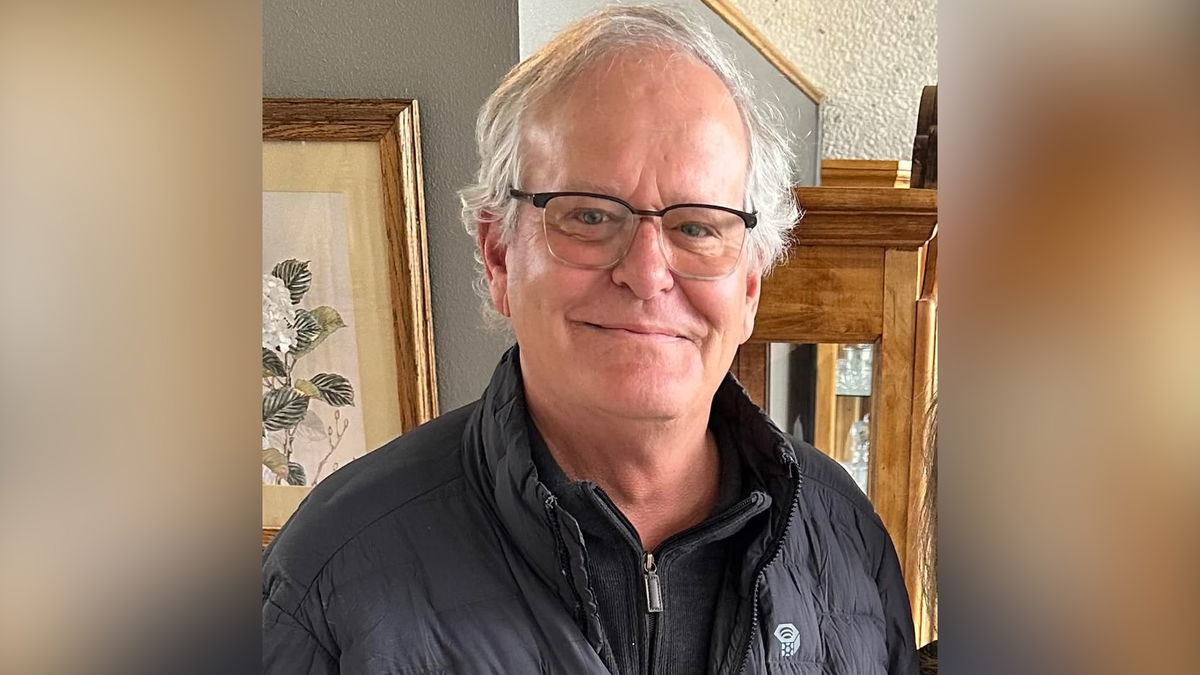
FORT HALL, Idaho (KIFI) — The Shoshone-Bannock Tribes will gather this Friday to pay tribute to the life and enduring impact of William “Bill” F. Bacon, a longtime Tribal Judge and General Counsel described as a “tireless advocate” for Indigenous rights.

Judge Bacon passed away on March 26 following a tragic car accident along I-15 near Pocatello. In the weeks since, Tribal leadership and community members have continued to reflect on a career defined by
“dedicated service, steady leadership, and meaningful contributions to the Tribes and the community.”

RELATED: “Tireless advocate” for Shoshone-Bannock Tribes identified as victim in fatal I-15 semi-truck crash

Memorial Service Details

Tribal leadership has organized a formal memorial and plaque dedication ceremony to ensure Bacon’s contributions are permanently recognized. According to a Shosone-Bannock Tribes Facebook post, the open-house-style event will be held indoors at the Tribal Business Center Council Chambers on Friday, April 17, 9:30 a.m. to 11 a.m.

“The memorial will bring together Tribal leadership, family, friends, and community members to reflect on his life and lasting impact,” states the post.

The program will include an opening prayer, reflections, recognition of Bacon’s family, an honor song, and the plaque dedication. Light refreshments will follow the ceremony.

Because seating within the Council Chambers is limited the event will be held in an open house format, and attendees are welcome to come and go throughout the program. For more information, click HERE.

‘The First Responder You Never See:‘ Pocatello 911 Dispatcher Highlights Demands, Rewards of Life on the Line">‘The First Responder You Never See:‘ Pocatello 911 Dispatcher Highlights Demands, Rewards of Life on the Line

‘The First Responder You Never See:‘ Pocatello 911 Dispatcher Highlights Demands, Rewards of Life on the Line">

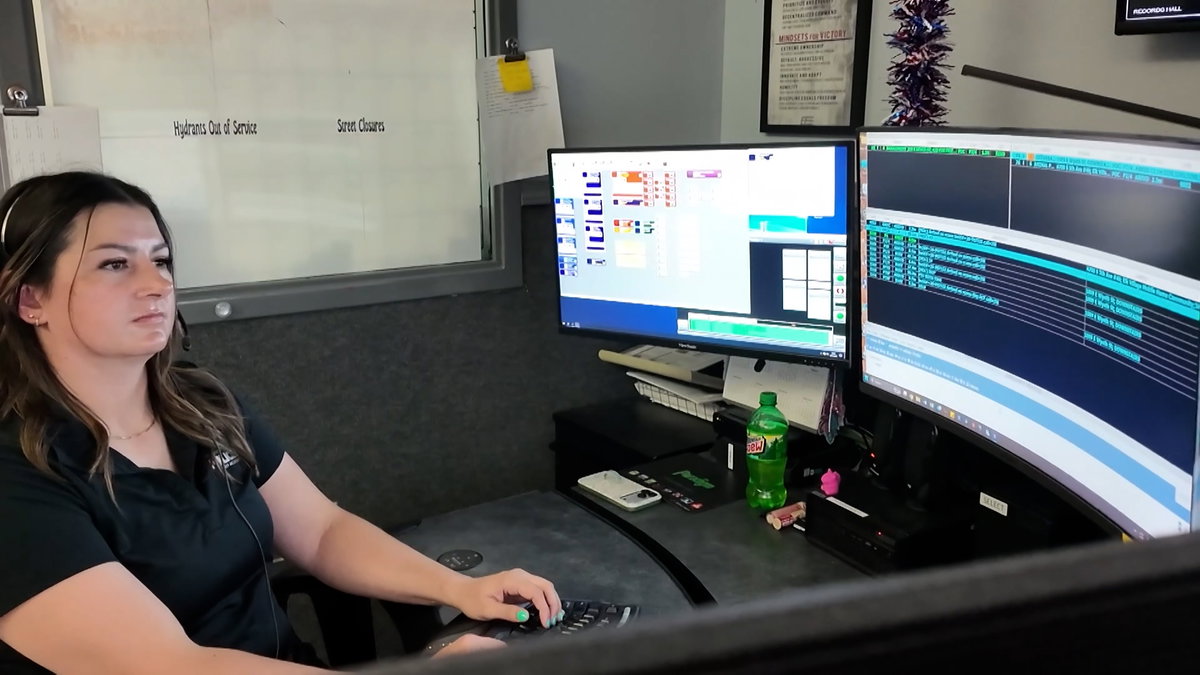
POCATELLO, IDAHO (KIFI) — When someone in Bannock County dials 911, the first person they talk to isn’t a police officer, firefighter, or paramedic. It’s a dispatcher like April Neal, who has spent nearly a decade on the other end of the line.

Neal, a 911 dispatcher for the Pocatello Police Department, says one of the biggest misconceptions about her job is that dispatchers are “just secretaries.”

“A lot of people think that we’re just secretaries, but we multitask constantly,” Neal said. “We are taking calls. We are dispatching out medical for the entire county of Bannock County, and we also dispatch police for the city of Pocatello. We are constantly doing something and entering paperwork into the NCIC database.”

Neal has been a dispatcher for 10 years. She works 12-hour day shifts, 7 a.m. to 7 p.m., helping manage everything from life‑threatening emergencies to parking problems and utility questions.

“We deal with everything under the sun,” Neal said.

On a typical weekday, Neal estimates she and her fellow dispatchers handle around 100 calls each.

Not every call is a true emergency. Some are transfers to records or detectives. Others are for city services, like paying a utility bill. But all of them must be answered and routed correctly, while genuine emergencies are entered into the computer-aided dispatch (CAD) system and prioritized in real time.

The center is staffed with a minimum of three dispatchers per shift — one for police, one for 911/medical, and one for the non-emergency line. That’s the minimum, Neal says, not necessarily the ideal.

“We definitely need more dispatchers,” she said. “If a big incident occurs, then it’s really difficult when there are only two call takers on the floor. The more dispatchers, the easier the incident can complete itself.”

During fire season, dispatchers often receive a flood of calls about the same incident.

“We’ll answer the phone, ‘911, are you calling about the West Bench fire?’” she said. “If they don’t have any new information and nobody is hurt, we tell them we have help on the way and move to the next call so we can get to someone who might be in dire straits.”

Neal says dispatchers are frequently exposed to callers’ worst moments, and that can take a toll.

She keeps the details of the most traumatic calls private out of concern for victims and their families, but says some still stay with her.

To cope, Neal focuses on separating work from home.

“One of the things I do is I go home, and I go for a walk if it’s been an extremely stressful day,” Neal said. “I have other outside activities that I do, I still pitch softballs, or I officiate volleyball. It’s separate from what I do day in and day out, to help realize that there are good people, there are good things out in the world.”

Becoming a dispatcher in Pocatello is not a simple process. Neal says training takes about 27 weeks, depending on how quickly a trainee progresses.

“Roughly, it can you can go quicker or longer, just depends on how you are accelerating with the program.” Neal said, “So we are trained with the computer system, with paperwork, and then we’re trained in call taking EMD, which is emergency medical dispatch, which we are the only Police Department in Idaho that is certified. And then we’re trained in the police. Police is the hardest discipline, because, obviously, officers are officer safety is the biggest issue, and making sure that they’re safe and knowing where their locations are and making sure we check on them constantly and do whatever quests they they need us to do to complete the investigation.

“We have to ask certain questions, and it depends on what the chief complaint is,” Neal said. “We ask those specific questions to make sure we get the correct amount of units to the person in trouble.”

Often, Neal never meets the people whose lives she may have helped save, but she hears about outcomes through officers and paramedics.

“I do hear feedback … that we saved them or they were able to be transported to the hospital where they received the help they needed and survived their injuries,” she said. “That’s what keeps me coming back to the job. I love helping people.”

From Neal’s perspective, the most important thing people can know before they dial 911 is their location.

“That is the first and foremost question that a dispatcher will ask you,” Neal said. “Just answer the questions that the dispatcher asks you directly. We are getting help there. It’s not delaying.”

Neal says she tries to treat every caller as if she were speaking to a friend or a family member.

“That gives me the drive to come to my job every single day,” she said. “I just want to make sure that I get help to the public the best that I can, and to make sure all my officers go home.”

As communities across the nation mark National Public Safety Telecommunicators Week, Neal wants people to remember the unseen voices who answer the phone when someone dials 911.

“Dispatchers, any emergency telecommunication officers, they are the first responders, and they do not get enough credit,” Neal said. “If anybody’s looking for a career and likes to help serve their community, help people, then a 911 dispatcher is a good career for someone to apply for.”

She also had a message for her colleagues across Idaho and the country.

“I just want to say thank you to all the 911 dispatchers out there,” Neal said. “The police department and every agency couldn’t do what they do without serving the public the way that dispatchers do. They’re amazing.”

scroll to top