EXCLUSIVE: Heritage Fellow Steve Yates Analyzes U.S.-China Relations">EXCLUSIVE: Heritage Fellow Steve Yates Analyzes U.S.-China Relations

EXCLUSIVE: Heritage Fellow Steve Yates Analyzes U.S.-China Relations">

Steve Yates, a senior research fellow with the Heritage Foundation, provided an in-depth analysis of current U.S. foreign policy during a recent interview with Neal Larson and Julie Mason on Newstalk 107.9. Speaking from Taiwan, Yates discussed the intricacies of U.S. relations with China and Iran, as well as the strategic importance of the Pacific region.

Yates opened the interview by announcing his new podcast, “Nation States with Yates,” launched this month on the Clay Travis and Buck Sexton network. He described the program as a personal national security advisor for listeners, applying common-sense analysis to global events that impact American households.

Reflecting on a recent high-level executive delegation to China, Yates highlighted the intense security concerns associated with the Chinese Communist Party. He noted that members of the American delegation reportedly discarded gifts and electronic devices upon departure to prevent cyber infiltration. “The only thing you can do is throw things away and use burner communications only,” Yates remarked, emphasizing the sophisticated nature of Chinese surveillance. He also touched on the substantive outcomes of the visit, including discussions on fentanyl regulation and agricultural trade, though he warned that Chinese promises require verification.

The discussion shifted to the Middle East, where Yates characterized recent policy toward Iran as a “prudent use of force.” He noted that while the U.S. is avoiding large-scale ground wars, it is effectively pressuring regional allies to take a more active role. Yates pointed out that China remains a primary economic lifeline for Iran, purchasing a “super majority” of its oil exports. He suggested that China benefits strategically when the U.S. is distracted by conflicts in other theaters.

Currently stationed in Taiwan, Yates observed that local leadership remains cautious following U.S.-China diplomatic meetings. He specifically addressed a potential $14 billion arms sale package to Taiwan, which has become a point of leverage in broader negotiations. Yates expressed that while unscripted comments regarding these sales can cause anxiety in the region, the underlying alliance remains a critical deterrent against Chinese expansion.

5.25.2026 – Memorial Day Reflections, Trump Primary Fallout, Epstein File Arguments">5.25.2026 – Memorial Day Reflections, Trump Primary Fallout, Epstein File Arguments

5.25.2026 – Memorial Day Reflections, Trump Primary Fallout, Epstein File Arguments">

Send us Fan Mail

On Memorial Day, Neal Larson and Julie Mason open the show by grounding the day in gratitude—then pivot into a wide-ranging, very “live radio” conversation that hits politics, culture, and the moment we’re in. They discuss Thomas Massie losing his primary despite Trump’s endorsement power, and what that says about how vulnerable incumbents can be when local dissatisfaction is already there. From there, they pull the camera back to Idaho politics—how moderates adapt in a deep-red state, why Democrats struggle statewide, and how ideological “blue/purple” influence can still show up through legislative races, party infiltration, and out-of-state money.

The tone shifts when they play Ronald Reagan’s “Soldier’s Pledge,” then the day’s biggest theme emerges: how Americans process politics now—especially around Donald Trump. They talk about the 2028-ish Democratic field speculation (Kamala Harris, Gavin Newsom, AOC, Buttigieg, Shapiro, etc.), the absurdity of vilifying an NFL player (Jackson Dart) simply for introducing a president, and the broader “hero/villain” thinking that’s breaking people’s brains. Two heated calls—one centered on Israel money, Massie, and the Epstein files, another from a three-time Trump voter frustrated with Trump’s language and follow-through—turn into a real-time case study of how quickly political disagreement becomes moral accusation. Neal and Julie keep coming back to the same point: it’s complicated, nobody’s pure, and if you can’t live in the messy middle—praising what’s good while criticizing what’s bad—you’re going to be manipulated by narratives all day long.

### Highlights
– Reagan’s “Soldier’s Pledge” sets the Memorial Day tone and sparks a call to reflect with family.
– Thomas Massie’s loss becomes a debate over Trump’s influence, money in politics, and local voter dynamics.
– A sharp look at the Democratic bench: likability, coalition math, and why Shapiro’s ceiling may be real.
– Culture snapshot: outrage at Jackson Dart for introducing Trump vs. what actually gets ignored in pro sports.
– The Epstein files argument exposes a deeper divide: transparency demands vs. “everything becomes a weapon.”

Let’s talk advertising. When you want to advertise on the radio, you call the station, right? But what about Facebook, Instagram, Hulu, Disney+, Peacock, and other streaming platforms?

You could try clicking around, reading books, or taking online courses to figure it out—or you can let us handle it. At Sandhill Media Group, we’re your local experts in both radio and digital marketing.

Visit SandhillMediaGroup.com today.

Read More

5.26.2026 – Iran Nuance, Media Skepticism, Voter Turnout">5.26.2026 – Iran Nuance, Media Skepticism, Voter Turnout

5.26.2026 – Iran Nuance, Media Skepticism, Voter Turnout">

Send us Fan Mail

Neal Larson and Julie Mason spend the morning unpacking two things that have been sitting heavy: how easily we can get locked into a narrative, and how much hotter and more on-edge people feel lately—even after a holiday weekend. They circle back to a heated Memorial Day call/text exchange about Trump’s “obliterated” comment on Iran’s Fordow site, and Neal walks through the nuance: the facilities were devastated, but “nuclear capability” also includes the scattered pieces you can’t bomb out of existence—scientists, know-how, stockpiles, hidden sites, and the regime’s will (plus outside help from countries like China and Russia). The point isn’t to relitigate personalities; it’s to be careful about absolutist claims in a messy world, and to resist letting hatred (of Trump, Israel, whoever) replace analysis.

From there, the conversation widens into media literacy and civic responsibility. They talk about how YouTube/podcasts can be useful but also financially incentivized to amplify outrage, and how algorithms can embed false premises that radicalize people over time. Locally, they touch on post-election burnout, low turnout, and the frustration of voters feeling powerless against “dark money,” plus concerns about ballot confusion and whether expanded early voting windows actually increase participation. They also revisit ranked-choice voting and why they believe Idaho dodged a bullet—especially in races where a “jungle primary” could create strange outcomes. The throughline is simple: take a breath, stay skeptical (including of them), do the homework, and don’t outsource your worldview to the loudest feed.

**Highlights**
– What Trump meant (and didn’t mean) by “obliterated” Iran’s Fordo site—and what “nuclear capability” really includes  
– Why algorithm-driven media can lock people into false premises (and why outrage is profitable)  
– Voter turnout, early voting, ballot issues, and why ranked-choice voting could have made local outcomes messier  

Let’s talk advertising. When you want to advertise on the radio, you call the station, right? But what about Facebook, Instagram, Hulu, Disney+, Peacock, and other streaming platforms?

You could try clicking around, reading books, or taking online courses to figure it out—or you can let us handle it. At Sandhill Media Group, we’re your local experts in both radio and digital marketing.

Visit SandhillMediaGroup.com today.

Read More

“The mountains look like they should in July:” Burn Ban to begin a month early">“The mountains look like they should in July:” Burn Ban to begin a month early

“The mountains look like they should in July:” Burn Ban to begin a month early">

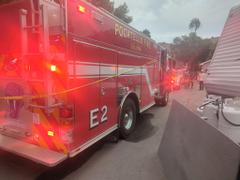
POCATELLO, Idaho (KIFI) – After a dry winter in southeast Idaho, wildfire season has struck early and the Pocatello Fire Department is urging people to take precautions, especially in wildland urban interface areas. They have also pushed the annual burn ban up an entire month, now to start June 1.

Wildland urban interface areas, or WUI for short, is where homes interact with the natural habitat on the edges of city lines.

“Those are our areas of greatest concern here in Pocatello,” said Kim Stouse, Public Information Officer for the Pocatello Fire Department. “It’s not to say we can’t get a fire in a field or a backyard, but if it’s in an interface area, then the potential to grow significantly is much greater than if we can contain it to a backyard or somewhere else.”

In assessing wildfire risk, the fire departments look at the moisture accumulated from the winter season. This year, there was little precipitation at all, leading to hardly any runoff to keep the ground wet. Stouse said they’ve also seen temperatures increasing more quickly than normal.

“The mountains look now, like they normally would in July,” she said.

Stouse also said this year has the potential for more “red flag warnings” which are issued by the fire department when three main factors come together for the highest chance of a rapidly-growing wildfire. The factors are high temperatures, low relative humidity, and high winds.

The legendary Charlotte fire in Pocatello in 2012 was a red flag warning day. “We’re always on guard and ready to go at any time, but we may bring in extra personnel in our brush trucks to drive the mountain just to make sure that if we do see anything, we can get on top of it as quickly as possible,” Stouse said.

Fires can be caused by fallen power lines, blown over by the wind. Experts say these can be especially dangerous, and to never touch a downed line.

“When winds get really high, it can cause damage to the power system,” said Chad Monroe, Wildfire Communication Programs Manager at Rocky Mountain Power. “Often it’s because of debris that gets into the lines or it’s from vegetation, trees and things that have branches fall and cause a power line to come down.”

Monroe says to call 911 immediately or your local power company if you see a downed power line. He also says to be aware that a purposeful power outage may occur during the fire season out of caution for public safety. The public will be notified of these outages.

Tips from the Fire Department

In a high-risk year like this one coming off of a dry winter, people have a few steps to take to stay safe during fire season. Stouse reminded travelers to be mindful if you have to pull to the side of the road not to pull into tall grass where a fire could start from the heat of the car.

She also said to make sure to work in your yard earlier in the morning when the humidity is higher and the temperature is lower. Something as small as a chainsaw spark could cause a fire.

“We know, on average, between 85% and 90% of all wildfires are caused from humans,” Stouse said. “It could be a matter that people are in the outdoors and using a fireplace and not making sure it’s totally out, so it’s about being really mindful.”

The fire department also asks that you call them immediately if you see smoke or flames anywhere. If you recieve an evacuation notice to your phone, follow the orders immediately.

Stouse also says to have a plan in place for your children if they stay home alone during the summer. “Safety is always our number one priority,” she said. “Make sure you can contact your kids if they’re home and you recieve a wildfire notice. We want to get everybody out safely as soon as possible.”

Other tips include maintaining your property per the fire department guidelines found on their website. Dry shrubs and fallen branches left untouched can put your home in more danger of a wildfire spreading.

The Burn Ban

Already this season, several small fires have occured in the mountains surrounding Bannock County. On May 25, the Summit Creak Fire near Burley created a plume of smoke viewable from over one hundred miles away. Stouse said at this point, it’s a matter of time before one strikes closer to our area.

The fire department usually issues a burn ban in July, preventing people from controlled burning or campfire buring any material during the highest risk months. This year, the burn ban will go into effect on June 1.

“It means not allowing people to have any kind of open burning campfires in anything that’s considered a wildland urban interface and it’s county wide,” she explained. “You’re still allowed to use your gas or charcoal commercial cooking equipment, just making sure you’re using it responsibly.”

This is the time of year when people love to go camping, but the fire department says they have to look at the inherent risk and how they can limit fires this season. Stouse recommended finding alternatives for “cooking your marshmallows” like a gas propane heater.

The burn ban is only effective for areas outlined on the wildland urban interface map, seen below. Homes not inlcluded in the yellow or red areas are welcome to continue using backyard fireplaces in a safe manner.

Pocatello Fire Department
scroll to top