

3.9.2026 – Iran Operation, Idaho Democrats, Participation Trophies">3.9.2026 – Iran Operation, Idaho Democrats, Participation Trophies

3.9.2026 – Iran Operation, Idaho Democrats, Participation Trophies">

Send a text

This episode was a classic “big picture to local politics to cultural weirdness” Monday. We dug into the fast-moving U.S. operation against Iran and the debate over what powers the president has versus Congress—acknowledging why some people are wary, but also arguing the case that after decades of Iran using proxies (Hamas, Hezbollah, Houthis, etc.) to kill and threaten Americans, patience isn’t the same thing as “justification.” We walked through what lawmakers like Lindsey Graham and John Kennedy are publicly signaling (heavy strikes, no ground invasion), talked about how media coverage seems to fixate on collateral narratives (like an oil refinery or a desalination plant) while ignoring the evil of the regime itself, and why we think this is designed to be decisive—not another years-long half-commitment.

Then we shifted to Idaho and the political theater closer to home: Tim Walz showing up for Idaho Democrats (and the question of what the ROI possibly was), plus the ongoing frustration with bills dying “in a drawer” at the legislature—especially E-Verify—while certain lawmakers or PACs run glossy, careful-worded ads claiming they’re tough on illegal immigration. We also hit a couple culture moments that feel like parody but aren’t: the State Department “queering the map” explanation, and the LA Marathon controversy where people stopping at mile 18 could still be labeled “finishers.” Our take: celebrate effort, sure—but don’t rewrite reality. Words mean things, and “finisher” is one of them.

**Highlights**
– Why the Iran operation is being framed as fast, surgical, and regime-focused—not a ground war  
– The “maps are too heterosexual” / “queering the map” moment and why it struck us as forced compliance, not inclusion  
– Idaho politics: Tim Walz visit, legislative bills dying in drawers, and PAC messaging games around E-Verify/immigration  
– LA Marathon “finishers” at mile 18—participation trophies for grown-ups, and runners calling it out  

Let’s talk advertising. When you want to advertise on the radio, you call the station, right? But what about Facebook, Instagram, Hulu, Disney+, Peacock, and other streaming platforms?

You could try clicking around, reading books, or taking online courses to figure it out—or you can let us handle it. At Sandhill Media Group, we’re your local experts in both radio and digital marketing.

Visit SandhillMediaGroup.com today.
Read More

3.10.2026 – NEW: Party Cohesion Index, Oil Prices, Idaho RINOs, SAVE Act">3.10.2026 – NEW: Party Cohesion Index, Oil Prices, Idaho RINOs, SAVE Act

3.10.2026 – NEW: Party Cohesion Index, Oil Prices, Idaho RINOs, SAVE Act">

Send a text

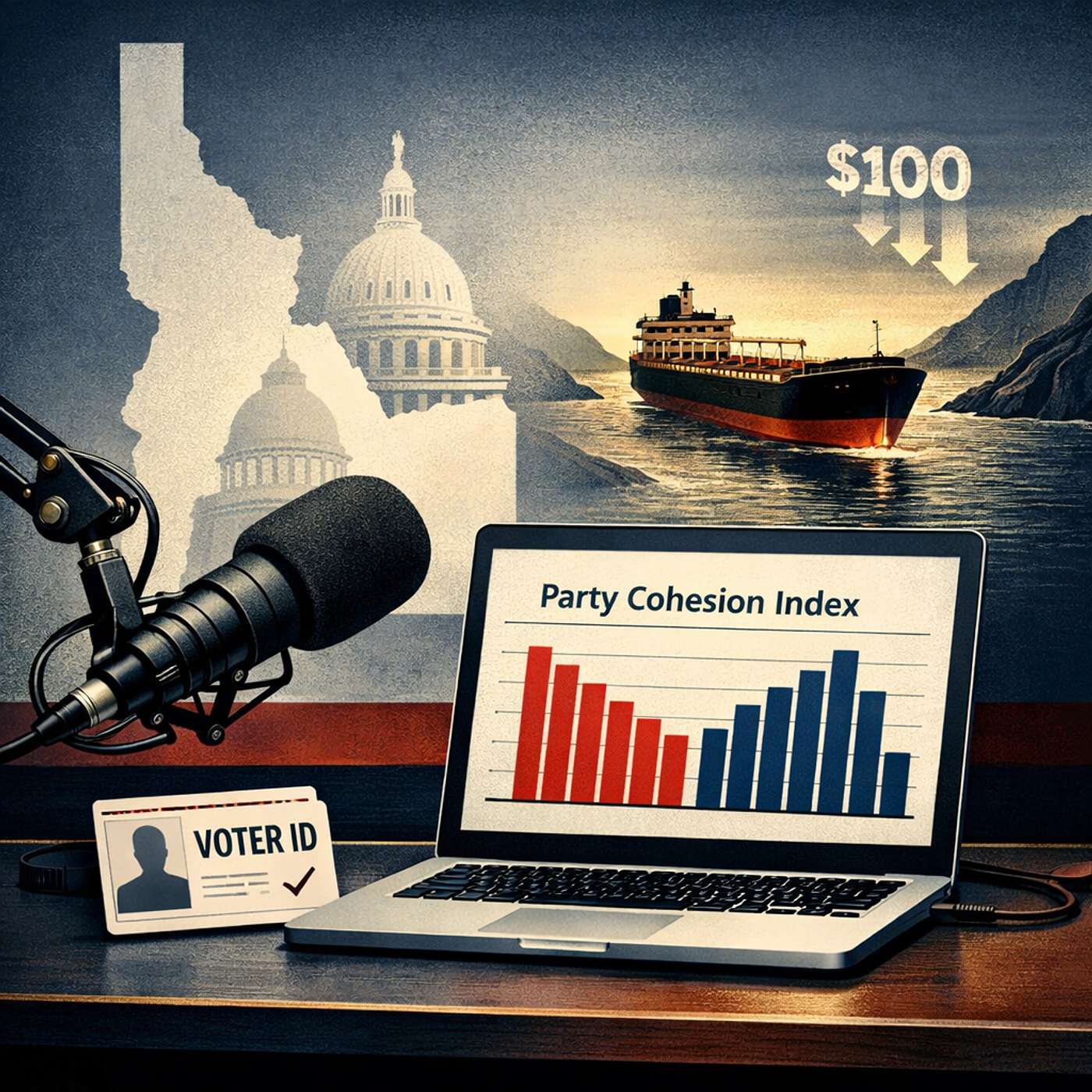
Today’s show was a bit of a whirlwind, but it all circled around the same theme: people weaponizing narratives instead of dealing in reality. We dug into the spike (and quick drop) in oil prices tied to risk around the Strait of Hormuz—reminding everyone there’s not an “oil shortage” so much as speculation and shipping/insurance fear. From there we pivoted into politics, where we see the same knee-jerk energy: folks rooting for bad economic news just so they can score points against Trump, and Democrats getting giddy over flashy, radical candidates who feel exciting inside the bubble but don’t match what most voters will actually support.

The core of the episode, though, was Idaho’s legislature and accountability. Neal walked through a new “Party Cohesion Index” he built using AI + Legislative Scan data—only measuring truly split, high-stakes votes—to show who actually votes with their stated party when it counts. Democrats are highly unified; Republicans are not, and a chunk of East Idaho lawmakers who campaign as Republicans routinely vote with Democrats in these defining moments. We talked integrity: if you’re going to wear the party label for advantage, you should at least mostly align with it—or be honest and pick a different “home.” Calls reinforced the frustration (term limits getting overturned, lawmakers missing votes, crossover voting), and we tied it to a bigger national fight: the SAVE Act and voter ID. The numbers show overwhelming support for photo ID across race and party, and we called out the insulting argument that women somehow can’t handle the documentation process—something they already navigate constantly in real life.

**Highlights**
– Oil prices jumped on Hormuz risk/insurance pressure—not a true supply shortage—and quickly eased back down.
– Neal’s AI-built Party Cohesion Index tracks how often lawmakers vote with their party on split votes; Democrats are cohesive, Republicans are fractured.
– Strong warning about “strategic party affiliation” and crossover voting shaping East Idaho representation.
– SAVE Act talk: broad public support for voter ID and frustration with Senate theatrics/filibuster games.
– Notable media moment: ABC’s Jonathan Karl describing how unusually accessible Trump is by phone to reporters.

Let’s talk advertising. When you want to advertise on the radio, you call the station, right? But what about Facebook, Instagram, Hulu, Disney+, Peacock, and other streaming platforms?

You could try clicking around, reading books, or taking online courses to figure it out—or you can let us handle it. At Sandhill Media Group, we’re your local experts in both radio and digital marketing.

Visit SandhillMediaGroup.com today.

Read More

3.11.2026 – Obergefell Revisited, Jetsons Tech, Party Cohesion Index">3.11.2026 – Obergefell Revisited, Jetsons Tech, Party Cohesion Index

3.11.2026 – Obergefell Revisited, Jetsons Tech, Party Cohesion Index">

Send a text

Neal Larson and Julie Mason start in their usual gear-shifting way—riffing on Utah potentially becoming a real-life Jetsons test lab for personal aerial vehicles (cargo first, people later) and the creeping reality of humanoid robots—before pivoting hard into an Idaho Legislature vote urging the U.S. Supreme Court to reconsider *Obergefell* (the 2015 decision legalizing same-sex marriage nationwide). What makes the conversation stick is that it isn’t a simple “just undo it” take. They walk through the practical and political reality of trying to unwind a decade of contracts, taxes, insurance, property, and state laws built on that ruling—plus the electoral risk of re-litigating an issue that has become culturally embedded. They also debate the proper role of courts vs. legislatures, including a caller’s argument that courts shouldn’t be treated as ultimate lawgivers, and they push back on how quickly “ignore the courts” becomes a recipe for chaos.

In the second half, they dig into Idaho’s intraparty dynamics with Neal’s “Party Cohesion Index” (the “handy dandy data sheet”)—a metric tracking how often lawmakers vote with their party on true split votes. The goal isn’t to whip up hostility; it’s to give constituents something measurable to start better conversations with their representatives, especially when public messaging doesn’t match voting patterns. They also touch on concerns about Democrats encouraging crossover registration to influence Republican primaries, and they land on a simple response: conservatives can’t be apathetic—register, show up, and vote. Along the way they wrestle with the bigger philosophical question underneath the marriage fight: once government took ownership of marriage for secular benefits, did it inevitably invite government to redefine it?

### Highlights
– Utah as a testing ground for “Jetsons” transportation: high-speed electric aerial vehicles, cargo first, then people  
– Idaho’s memorial urging SCOTUS to revisit *Obergefell*—and why undoing it isn’t as clean as it sounds  
– Courts vs. legislatures: what happens if states decide Supreme Court rulings are “optional”?  
– The “Party Cohesion Index” as a transparency tool for spotting trends and prompting constituent questions  
– Closed primaries and crossover voting: the antidote is turnout and registration, not wishful thinking  

Let’s talk advertising. When you want to advertise on the radio, you call the station, right? But what about Facebook, Instagram, Hulu, Disney+, Peacock, and other streaming platforms?

You could try clicking around, reading books, or taking online courses to figure it out—or you can let us handle it. At Sandhill Media Group, we’re your local experts in both radio and digital marketing.

Visit SandhillMediaGroup.com today.
Read More

Unique training for emergency responders takes place in vacant houses along Highway 20 in Ashton">Unique training for emergency responders takes place in vacant houses along Highway 20 in Ashton

Unique training for emergency responders takes place in vacant houses along Highway 20 in Ashton">

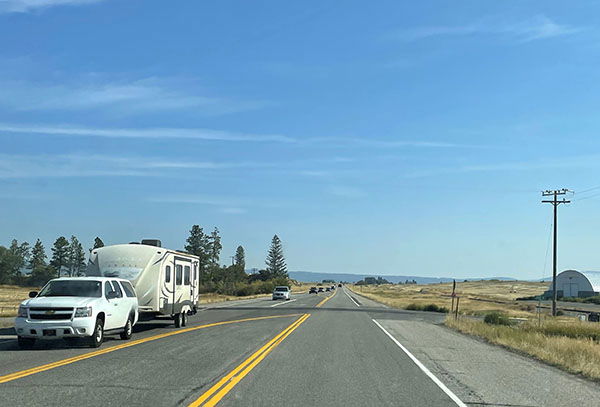
Ashton, ID (KIFI) – Upper Valley emergency responders in Eastern Idaho are getting a new training opportunity thanks to a partnership with the Idaho Transportation Department (ITD). Drivers traveling along Highway 20 may see law enforcement and emergency response vehicles around vacant properties located just south of the Tri-State Tire building.

An agreement between ITD and the Upper Valley Special Response Team now allows state-owned properties along U.S. Highway 20 to be used for emergency services training.

On Wednesday, March 11, the team will host its first training exercise near Ashton. The Upper Valley Special Response Team includes emergency responders from Fremont County, Madison County, and Teton County.

ITD has been purchasing properties along Highway 20 between Chester and Ashton as part of early planning for a future four-lane divided highway. The agency says these acquisitions are made when sellers are willing and when design plans are sufficiently finalized, with approval from the Federal Highway Administration.

Before the buildings are demolished, they will serve a new purpose: realistic training environments for emergency responders.

Officials say the Upper Valley Special Response Team will use several of the homes along the corridor for monthly training exercises until they are eventually demolished. Road construction for the highway project is currently anticipated to begin around 2031.

Fremont County Sgt. Colter Cannon says the opportunity will significantly improve how teams prepare for emergencies.

“This opportunity for us is huge,” Cannon said. “We’ve formerly had to train in schools, but being able to work in actual houses and different layouts with all of our gear will help the team so much in the long run.”

ITD says that more information about the Highway 20 project between Chester and Ashton is available on the agency’s website.

scroll to top