
NEWDALE, IDAHO (KIFI) – Dozens of Idaho leaders honored the men and women who overcame unbelievable devastation unleashed when a wall of water 80 feet high surged out of the Teton Dam 50 years ago.
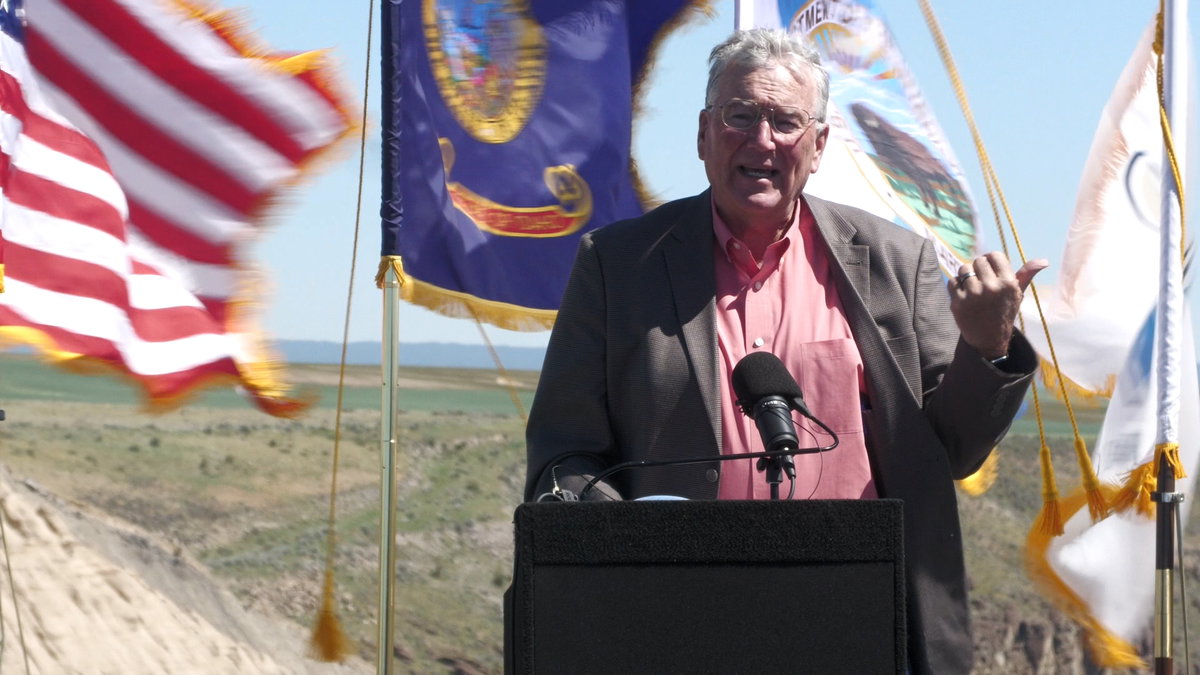
“In Sugar City there wasn’t much left,” said Idaho Lieutenant Governor Scott Bedke, who at the time was a recent high school graduate assisting in recovery efforts. “We spent a lot of time in people’s homes closer to Rexburg, just literally shoveling mud into buckets and carrying them upstairs and dumping it into wheelbarrows or dump trucks.”
Family members of the eleven people who lost their lives as a result of the flood were invited to a commemorative ceremony at the site of the dam Friday.
“Loved ones were taken suddenly without warning,” said Bureau of Reclamation Senior Advisor Linnea Melbye. “Homes, farms and ways of life built through generations were sucked away in minutes as the torrent of floodwaters surged through the Upper Snake River Plain. Entire communities including Sugar City, Rexburg and Wilford were forever changed.”

Others recalled the flood’s immense power and the ensuing devastation.
“We stood at water’s edge and watched all the commotion that was happening that day,” said Idaho Water Resource Board Chairman Jeff Raybould. “Saw the house float through Smith Park and down Main Street pretty much intact.”

Bureau of Reclamation Regional Director Roland Springer shared a letter from State Representative Rod Furniss recollecting the flood.
“We could hear the roar of the oncoming water, punctuated by the sharp explosions of breaking infrastructure,” he said. “Then came a sound I will never forget. An eerie, agonizing screech of twisting metal. It was the sound of immense friction, like giant sheets of iron rubbing together under unimaginable force. Sensing the immediate peril, my father yelled, ‘We better get the hell out of here!’ As we fled, a police officer at the perimeter informed us we had escaped by the narrowest of margins. The wall of water was only a mile behind us.”

Following the disaster, the Bureau of Reclamation evaluated the failure and transformed its Dam Safety program.
“What emerged – this aftermath was a profound transformation in how we design, how we evaluate, and how we manage dams,” said Bureau of Reclamation Dam Safety Engineer Peggy Mott. “The Teton Dam failure became the catalyst for building the Bureau of Reclamation’s modern dam safety program. This is a program that today is recognized across the nation and around the world for its rigor, its transparency, and its commitment to protecting the public.”

Fifty years later, the legacy and impact of the Teton Dam lives on.