POWER COUNTY, Idaho (KIFI) — Both surviving victims of the deadly shooting in Power County on Friday are now in stable condition, Bannock County authorities confirmed over the weekend. One victim has already been released from the hospital as the investigation continues.
What We Know
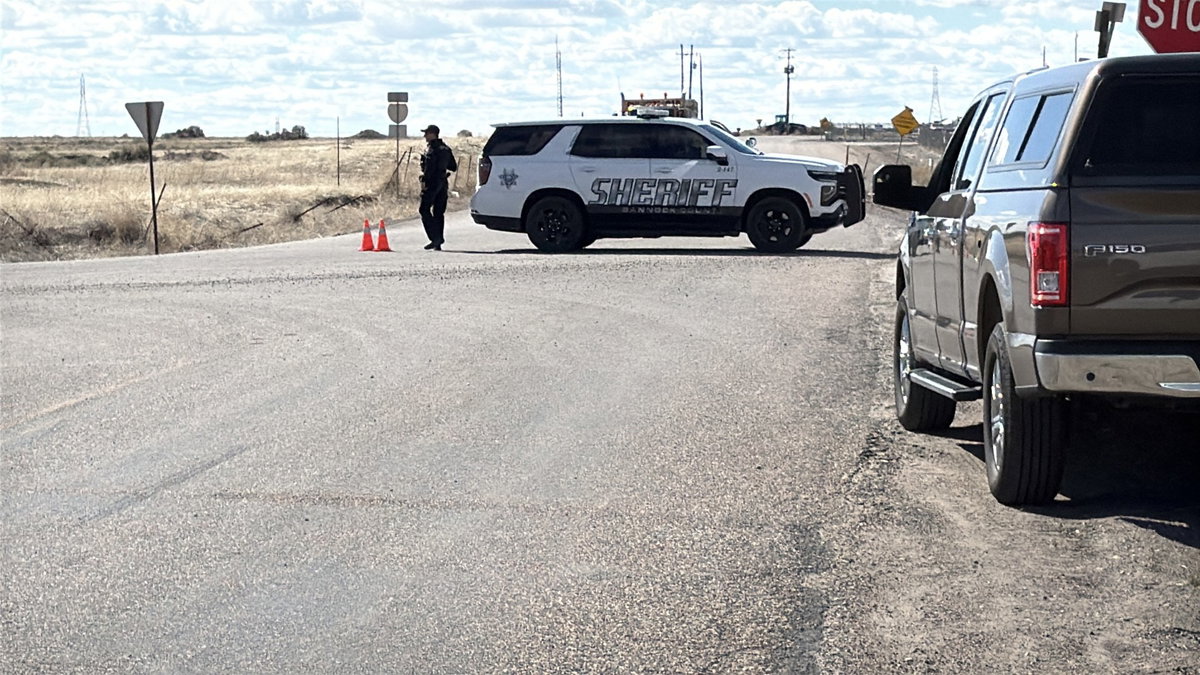
The incident began around 2:40 p.m. Friday when deputies responded to reports of gunfire in northern Power County. As they arrived, the officers discovered a grim scene. Two people were dead at the scene, and a third person was injured. The surviving victim was treated at the scene and rushed by ground ambulance to a local hospital.
While securing the perimeter, investigators heard additional shots fired nearby. A fourth victim—a bystander in a boat—was struck by gunfire as the suspect attempted to escape police. Emergency responders stabilized the man at the scene, and he was airlifted to the Portneuf Medical Center for further treatment. Bannock County Public Information Officer Emma Iannacone confirmed Saturday that he has since been released.
As the search continued, deputies located an unnamed suspect hiding near the Portneuf River. As they tried to negotiate, the suspect brandished a firearm. Officers responded with deadly force, and the suspect was pronounced dead at the scene, according to the sheriff’s office.
Next Steps in the Investigation
The Idaho Falls Police Department will lead the Eastern Idaho Critical Incident Task Force investigation into the officer-involved shooting.
The names of the deceased victims and the shooter have not been released at this time pending notification of the next of kin. Local News 8 is in contact with the Bannock County Sheriff’s and Coroner’s offices and will provide updates as more information is released.
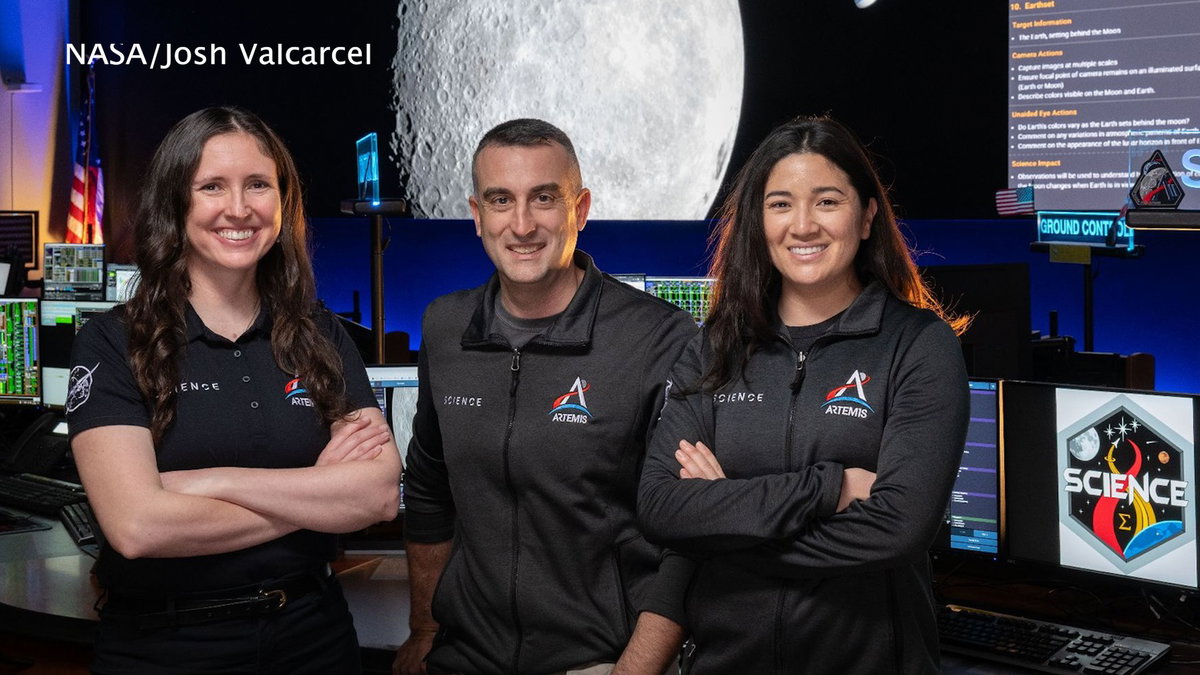
POCATELLO, Idaho (KIFI) – As astronauts today journeyed to the furthest distance in deep space ever reached by humankind, an Idaho State University (ISU) graduate is one of three scientists advising the Artemis II team from Mission Control at the Johnson Space Center.
Angela Garcia graduated from ISU with a master’s degree in geosciences around 2019, and has taken her career to new heights ever since.
“She’s just a brilliant scientist and researcher who’s been working with NASA in the years since, doing a lot of work to be able to prepare for these missions, and has been qualified as a flight controller to be in the flight control room supporting science for Artemis II,” said Dr. Shannon Kobs Nawotniak, a professor and chair of Idaho State University’s Geosciences Department.
“She is going to be monitoring all the science work that the astronauts are doing up there – answering questions for them, relaying questions that they have to the science evaluation room in the back, helping make sure that we’ve got solid support for those astronauts as they do science.”
Dr. Kobs Nawotniak said the astronauts will be researching the impact of meteorites on the far side of the moon.
“This is our first human return to the moon, circling around it in over 50 years. … You can imagine if we’re trying to ultimately put a lunar base up there, it really behooves us to know a lot more about how the stuff is going to go,” she said. “We’re also interested in sort of the size of the distribution, the changes, all of these different things. So that’s going to be one of their key things, is looking for these micrometeorite impacts through flashes on the surface as they’re going by.”
Researchers from ISU have been heavily involved with NASA from 2014 to the present, performing work at Craters of the Moon for the FINESSE (Field Investigations to Enable Solar System Science and Exploration), BASALT (Biologic Analog Science Associated with Lava Terrains), and IDEAS (Integrated Display and Environmental Awareness System) programs.
“The FINESSE program, we’re actually doing work out here with the lava tubes, with the alteration of the rocks, things like that, to understand how the shapes of the landscape and the geochemistry of the rocks all tie together,” Dr. Kobs Nawotniak said.
The research was vital preparing for the Artemis program and an eventual mission to Mars.
“BASALT was about using volcanoes here, in the space here, and in Hawaii as a testbed for high-fidelity simulations of crewed missions,” Dr. Kobs Nawotniak said. “In that case, we were actually aiming it for Mars, but all the stuff we were doing there was also relevant to this, and we used s some of those lessons learned also to be able to inform later tests where they’re actually preparing for Artemis to be able to design the backroom team. How do you support these phenomenal astronauts?”
The lunar-like volcanic landscape at Craters of the Moon is also ideal for practicing astronauts’ navigation techniques required on the moon.
“We’re also working on navigation systems to be able to help astronauts as they’re working around the surface of the moon,” she explained. “We don’t have GPS or compasses for the moon, so they’re actually going to be doing dead reckoning navigation, using printed paper atlases with air photos and alphanumeric grids. It turns out that’s really easy to get yourself turned around. … How we can better support the astronauts for their training and the back corrections afterwards, to be able to ensure that we actually have them in the right place at the right time?”
The ISU researchers and rangers at Craters of the Moon hope the Artemis program and its work will help inspire the next generation of scientists.
“What I love about being a park ranger is that I’m able to work with a lot of young people and people that they get really excited about science,” said Craters of the Moon Chief of Education and Interpretation Michael Irving. “I’m able to help nurture and help grow that love and hopefully get them to go on and pursue fields or pursue careers in those types of fields.”
ISU graduate Angela Garcia and Dr. Shannon Kobs Nawotniak smile at Mission Control in the Johnson Space Center.
Yellowstone National Park, WY (KIFI) – While this winter has been relatively warm across eastern Idaho and parts of Wyoming and Montana, there are still plenty of ways to enjoy the outdoors—including a unique opportunity inside Yellowstone.
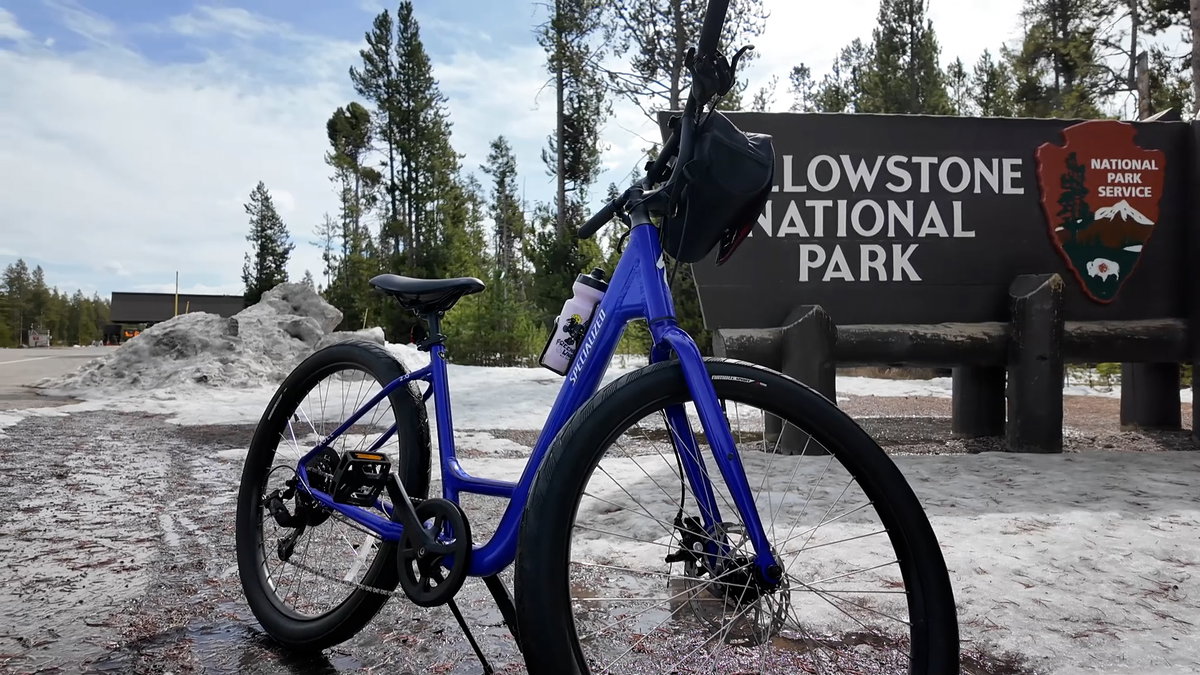
Inside the Yellowstone National Park, April 2026.
For a few weeks each spring, before the park fully reopens to vehicle traffic, Yellowstone looks a lot different. Roads that are typically packed with cars become quiet, open pathways—creating ideal conditions for cyclists.
According to the National Park Service, bikes are allowed on select park roads during this early-season window, until the roads reopen to vehicles later in the spring.
That means visitors can ride past geysers, rivers, and even wildlife in a way that’s nearly impossible during peak tourist season.
“The craziest thing I’ve seen in springtime biking is baby bison being born,” said local cyclist Kelli Hart, as she poured an espresso shot for the new customer who listened to her across the small bike shop cafe countertop.
Just outside the park’s entrance in West Yellowstone, MT, Freeheel and Wheel Bike Shop is helping visitors make the most of the short biking season. Shop owners Kelli Hart and Melissa Alder say this time of year offers a completely different Yellowstone experience.
Freeheel and Wheel Bike Shop, located in West Yellowstone
“My favorite part about biking in Yellowstone this time of year is being able to just go in there without the cars,” Hart said.
She says the experience is all about slowing down and taking in the natural surroundings.
“We tell people—it’s so calm. You can ride side-by-side with somebody and not feel the danger of cars and vehicles,” Hart said.
From bike rentals and repairs to gear and local expertise, the shop sees more visitors eager to hit the road during this limited window.
While biking is typically limited to April, warmer weather and clearer road conditions this year have allowed cyclists to get an early start, with some already riding in March.
Still, conditions can change quickly. Park officials encourage visitors to check current road conditions before heading out and to be prepared for limited services inside the park this time of year.
Cyclists are also reminded to stay alert, share the road with wildlife, and plan ahead for changing weather conditions.
Yellowstone is set to reopen to vehicle traffic on April 17th, bringing this quiet biking season to a close.
As more people look for unique outdoor experiences, spring biking in Yellowstone is quickly becoming a must-do adventure—offering a rare chance to see the park in near silence before the crowds return.
In a recent interview on Newstalk 107.9 with hosts Neal Larson and Julie Mason, Idaho Falls Mayor Lisa Burtenshaw detailed the city’s strategy for the upcoming construction season and addressed concerns regarding state-level zoning legislation. Burtenshaw emphasized that the city’s Public Works department is prioritizing regional coordination to ensure that essential road projects do not simultaneously close all major east-west or north-south travel corridors.
The Mayor highlighted several key infrastructure projects, including a planned roundabout at Boulevard and D Street near the Aquatic Center. To minimize disruptions for residents and visitors, construction on that project is scheduled to begin after the Fourth of July holiday. Burtenshaw noted that while maintenance activities like chip sealing are often unpopular with drivers due to loose gravel, they remain a cost-effective necessity for road preservation. She also explained that certain projects on St. Clair, John Adams, and First Street were delayed to better coordinate with Bonneville County and the city of Ammon.
Addressing public transparency, Burtenshaw pointed to a new online tool hosted under Community Development Services. This resource allows residents to view site plans for both public and private developments throughout Idaho Falls. During the interview, she also addressed local retail rumors, confirming that while a new Chick-fil-A and Raising Cane’s are planned for the city, there is currently no Trader Joe’s in the pipeline.
A significant portion of the discussion focused on Burtenshaw’s opposition to proposed state legislation that would limit local authority over planning and zoning. The bills aim to increase housing density by allowing tiny homes or additional units on existing lots. However, Burtenshaw argued that such changes could overwhelm existing infrastructure, such as water pressure, sewer, and stormwater systems, which were engineered for specific neighborhood densities. She suggested that the housing market’s primary gap is a lack of simple, entry-level homes for first-time buyers rather than a lack of high-density options.
The interview concluded with an update on regional traffic management. Burtenshaw announced an agreement with Ammon, the Idaho Transportation Department, and Bonneville County to synchronize traffic signals across jurisdictional lines. This unified system is currently optimized for morning and evening rush hours, with plans to expand coordination as regional traffic continues to grow.