
3.3.2026 – Idaho Immigration Bills, Party Integrity, Clinton-Epstein Fallout">3.3.2026 – Idaho Immigration Bills, Party Integrity, Clinton-Epstein Fallout

3.3.2026 – Idaho Immigration Bills, Party Integrity, Clinton-Epstein Fallout">

Send a text

Today we’re tracking the Idaho Legislature as two major immigration enforcement bills (H700 and H704) move from the House to what Neal calls the Senate “morgue” — State Affairs — chaired by Senator Jim Guthrie. We talk through why that committee placement raises alarms, how primary-season politics may pressure the Senate to at least give the bills a real hearing, and why Neal wants a rule change: if a bill clears one chamber with a strong margin (something like 60%), the other chamber should be required to hear it and vote it, instead of letting leadership quietly bury it. From there, we pivot into a bigger frustration about Idaho’s one-party dominance and the open, organized practice of people registering Republican just to manipulate the GOP primary—plus the related issue of candidates who run with an “R” because it’s the golden ticket here, even when their voting record consistently aligns with Democrats.

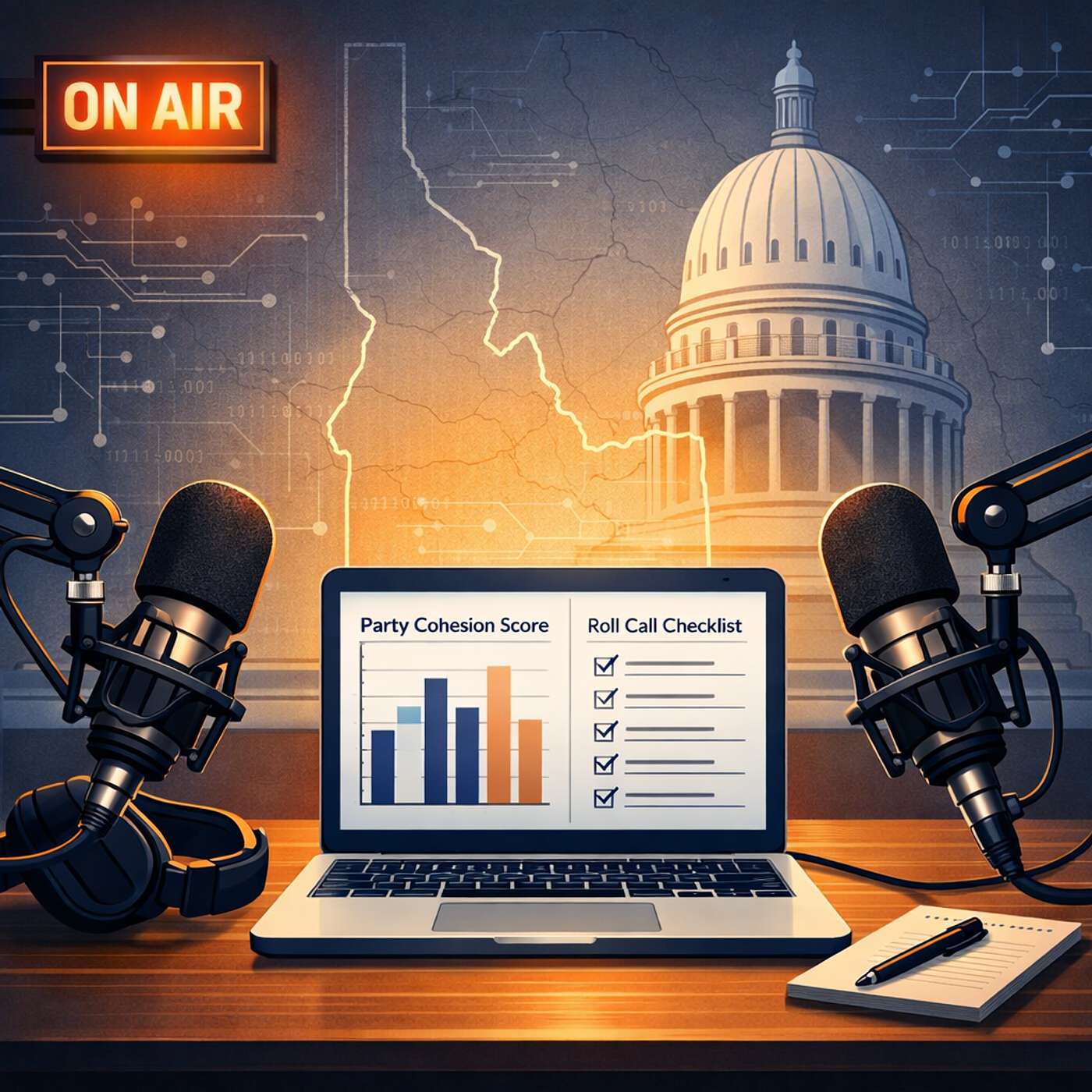
That leads to the “honesty in affiliation metric” idea: not a subjective ideology score, but a simple, objective look at how often lawmakers vote with their own party versus the other one—then asking the blunt question: why affiliate with a party you vote against more than you vote with? Julie and Neal also dig into specific local controversy around Ben Fuhriman (and Dave Cannon) and their votes on H700/H704, plus the broader theme that transparency matters more than perfect agreement. In hour two we shift national: the Clintons’ public deposition audio (including Nancy Mace’s aggressive questioning) turns into a discussion of media incentives, Epstein-file politics, and why Bill Clinton saying he saw nothing improper from Donald Trump in the early 2000s is such a problem for Democrats trying to hang Epstein on Trump—because if they had real proof, they’d have used it years ago. We end with a quick hit on Iran coverage, clickbait media behavior, and the uneasy “free money” talk of possible government checks as political strategy.

### Highlights
– H700/H704 advance, but landing in Senate State Affairs signals possible “quiet death” for the bills.  
– Proposal: require a committee hearing/vote in the second chamber when a bill passes with a strong margin in the first.  
– “Honesty and affiliation” metric: track cross-party voting frequency to expose strategic party labels.  
– Local heat: Ben Fuhrman’s refusal to engage media vs. his claim of “open and honest discussions.”  
– Clinton deposition + Epstein conversation: if Democrats had real Trump-Epstein proof, they would’ve used it already.

Let’s talk advertising. When you want to advertise on the radio, you call the station, right? But what about Facebook, Instagram, Hulu, Disney+, Peacock, and other streaming platforms?

You could try clicking around, reading books, or taking online courses to figure it out—or you can let us handle it. At Sandhill Media Group, we’re your local experts in both radio and digital marketing.

Visit SandhillMediaGroup.com today.
Read More

3.4.2026 – Party Cohesion, Lawmaker Accountability, Idaho Politics">3.4.2026 – Party Cohesion, Lawmaker Accountability, Idaho Politics

3.4.2026 – Party Cohesion, Lawmaker Accountability, Idaho Politics">

Send a text

Neal Larson walks us through a new “party cohesion” metric he built (with help from AI and the legislative API) to measure how often Idaho lawmakers vote with the majority of their stated party on votes that break along clear partisan lines. The goal isn’t a purity test or a “gotcha,” but a sunlight tool: if you’re running with an “R” (or “D”), how often do you actually vote like one—especially on the big, ideological fights? Neal and Julie Mason dig into early House results (enough votes to be meaningful) while noting the Senate sample size is still tiny, and they talk about refining the model to filter out procedural votes and even weight issues (immigration vs. bureaucratic tweaks) based on what voters care about.

From there, the conversation broadens into accountability and trust: if a lawmaker’s public branding doesn’t match their roll-call behavior, that’s an integrity problem—not a “we demand 100% loyalty” problem. They get into why some lawmakers avoid coming on-air to explain votes, the frustration with the Senate’s slow pace, and how local party politics and money shape outcomes (including a weird rabbit hole about Bingham County GOP activity/donations and what that says about organization and credibility). The show also touches on national headlines—Article V convention chatter cooling off, campaign finance “sunshine portal” sleuthing, and quick reactions to broader political and foreign-policy news—while circling back to the same theme: voters should stop buying the packaging and start demanding explanations backed by real data.

– Neal’s new “party cohesion score” uses roll-call data to quantify how often lawmakers vote with their party’s majority (and why he wants to filter out procedural votes).
– A practical threshold: Neal/Julie are comfortable in the mid-80%+ range—independence is fine, misrepresentation isn’t.
– The Senate has had very few qualifying votes so far, raising questions about workload, process, and transparency.
– Campaign finance transparency: how to use Idaho’s Sunshine Portal—and why PAC money can become a circular maze.
– Local party organization issues (and funding) matter more than people want to admit when it comes to who ends up representing you.

Let’s talk advertising. When you want to advertise on the radio, you call the station, right? But what about Facebook, Instagram, Hulu, Disney+, Peacock, and other streaming platforms?

You could try clicking around, reading books, or taking online courses to figure it out—or you can let us handle it. At Sandhill Media Group, we’re your local experts in both radio and digital marketing.

Visit SandhillMediaGroup.com today.

Read More

3.5.2026 – INTERVIEW: Secretary of State Phil McGrane, Idaho Elections, Dark Money, Immigration">3.5.2026 – INTERVIEW: Secretary of State Phil McGrane, Idaho Elections, Dark Money, Immigration

3.5.2026 – INTERVIEW: Secretary of State Phil McGrane, Idaho Elections, Dark Money, Immigration">

Send a text

Today’s show was a classic “all of the above” kind of morning. We started with a mix of Idaho politics and everyday-life tangents—everything from why the governor’s race is crowded while other statewide incumbents are basically unopposed, to Pocatello’s new Target and the excitement around Raising Caine’s. From there we jumped into a clip from the Senate floor where Lt. Gov. Scott Bedke enforced the rule about referring to the governor as “the gentleman on the second floor,” which turned into a broader conversation about how stiff and ritual-heavy legislative procedure can feel when all we really want is plain talk and straight answers.

The centerpiece was our conversation with Idaho Secretary of State Phil McGrane, who walked us through two competing bills to bring back Idaho’s presidential primary (after the frustrations of caucuses and low turnout). One proposal puts the presidential contest in early March; the other folds it into May and shifts Idaho’s state primary earlier for consistency and higher participation. We also dug into “dark money” flooding legislative races (McGrane cited $17.6 million spent), what transparency tools his office has built, and why Idaho is refusing a DOJ request for sensitive voter data—while still working closely with Homeland Security to verify citizenship and keep voter rolls clean. We closed with a listener flash-poll on March vs. May, a candid discussion about voter cynicism and election confidence, and—because it’s us—an unexpected spiral into weird ham radio signals and a full-on Bugles snack debate.

### Highlights
– Phil McGrane explains the **two bills** to restore Idaho’s presidential primary: **March contest vs. May consolidation** (plus moving the May primary earlier).
– Discussion of **out-of-state dark money** in Idaho legislative races and the push for updated campaign finance transparency laws.
– Idaho’s stance on **protecting voter personal data** from a DOJ request, while still partnering with DHS to verify voter roll citizenship status.

Let’s talk advertising. When you want to advertise on the radio, you call the station, right? But what about Facebook, Instagram, Hulu, Disney+, Peacock, and other streaming platforms?

You could try clicking around, reading books, or taking online courses to figure it out—or you can let us handle it. At Sandhill Media Group, we’re your local experts in both radio and digital marketing.

Visit SandhillMediaGroup.com today.
Read More

3.6.2027 – S4C: Musai, covering The Weather, Noem Fallout, Union Money, Open Lines">3.6.2027 – S4C: Musai, covering The Weather, Noem Fallout, Union Money, Open Lines

3.6.2027 – S4C: Musai, covering The Weather, Noem Fallout, Union Money, Open Lines">

Send a text

Today we dug into the Kristi Noem shake-up and the way everyone’s trying to spin it. Call it whatever you want—“reassigned,” “moved,” “Western Shield” whatever—this wasn’t a lateral move, and pretending otherwise doesn’t help. We talked about what likely set the stage for it, including the frustration that Homeland Security started looking like a personal branding vehicle (that self-deportation ad campaign being the clearest example). At the same time, we pushed back on the idea that this signals a collapsing Trump administration—polling shows Trump is still running extremely strong, especially with Republicans, and the broader media narrative doesn’t match what the numbers say.

Then we went hard at Idaho’s House Bill 745: no taxpayer-funded time, systems, or payroll support for union activity. The more we talked through it, the more it felt like a “how was this ever allowed?” moment—teachers doing union work while on the clock, districts not reimbursed, automatic dues deductions processed through payroll, unions using taxpayer-funded email systems, and paid leave for union business. We also called out the lawmakers who voted no and questioned how some of the loudest “not a dollar more” voices on education spending can shrug when education dollars effectively subsidize union operations. We wrapped with Open Phones Friday: listeners broadened the conversation into Iran history and foreign policy, union culture, and why the “protect your own” mentality can keep bad actors in place—plus, yes, we got surprise-delivered several bags of Bugles, which became its own unexpected subplot.

## Highlights
– Kristi Noem’s exit: why “reassigned” doesn’t pass the smell test, and what may have led to it  
– HB 745: ending taxpayer-supported union activity (on-the-clock time, payroll deductions, email systems, paid leave)  
– Trump approval: strong support within the GOP, and why the “everyone hates Trump” storyline doesn’t hold up  
– Open lines: Iran history, leadership failures, and union accountability debates  
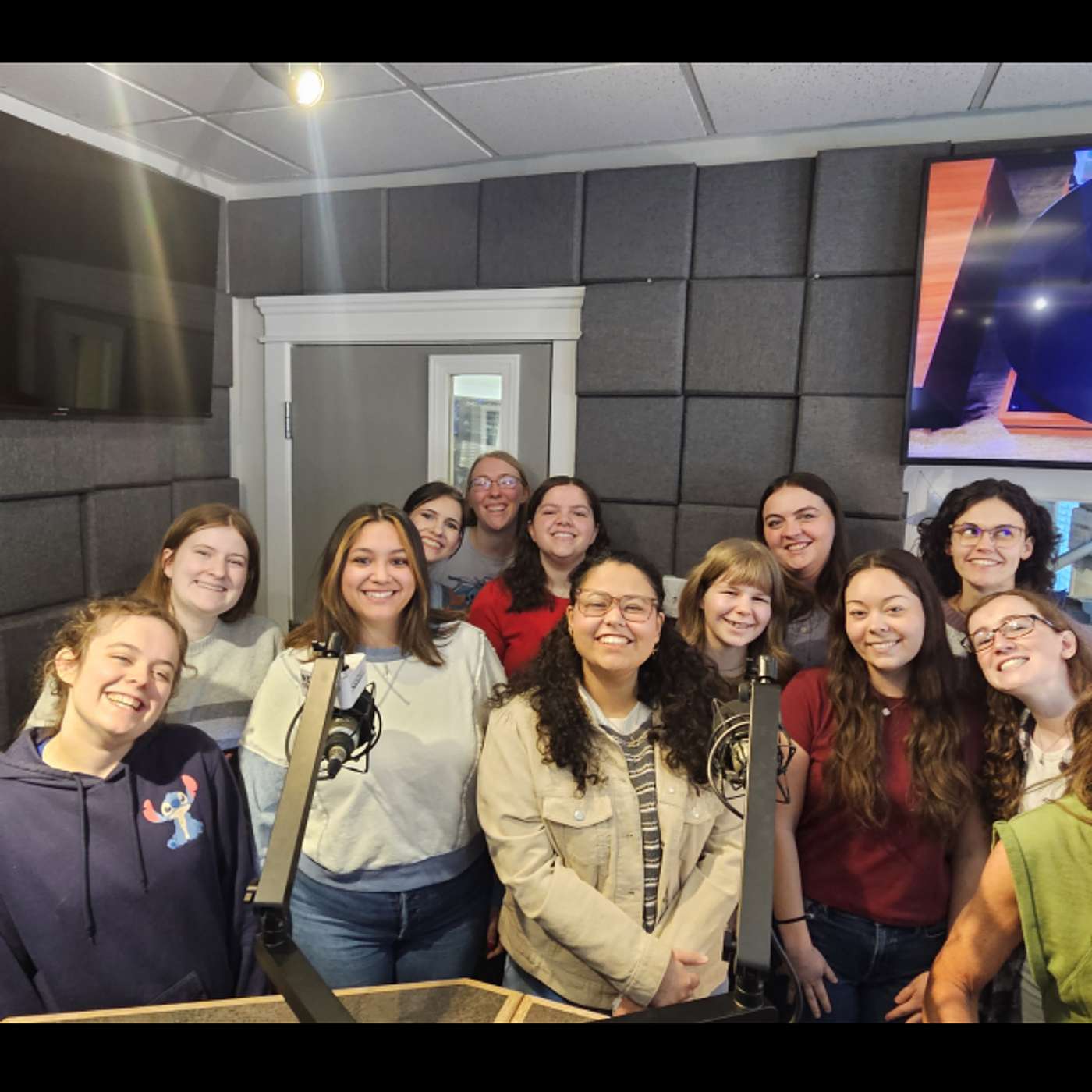
– Studio for Covers: BYU–Idaho a cappella group **Musai** performed “The Weather” (Lawrence)

Let’s talk advertising. When you want to advertise on the radio, you call the station, right? But what about Facebook, Instagram, Hulu, Disney+, Peacock, and other streaming platforms?

You could try clicking around, reading books, or taking online courses to figure it out—or you can let us handle it. At Sandhill Media Group, we’re your local experts in both radio and digital marketing.

Visit SandhillMediaGroup.com today.

Read More

scroll to top