A ‘dead bill’ and a close shave, local stylists push back against reduced licensing hours">A ‘dead bill’ and a close shave, local stylists push back against reduced licensing hours

A ‘dead bill’ and a close shave, local stylists push back against reduced licensing hours">

REXBURG, Idaho (KIFI) — A controversial bill meant to eliminate barriers to education for cosmetology licensing is going to have to go back to the drawing board.

The bill would have decreased the mandated minimum education hours from 1,600 to 1,000 and apprenticeship hours from 3,200 to 2,000 required to receive a cosmetology license in Idaho.

A local cosmetologist and business owner tells Local News 8 why these hours of education are so important. Idaho leaders are learning it’s not as simple as holding a pair of scissors and a few snip, snip, chop, chop motions.

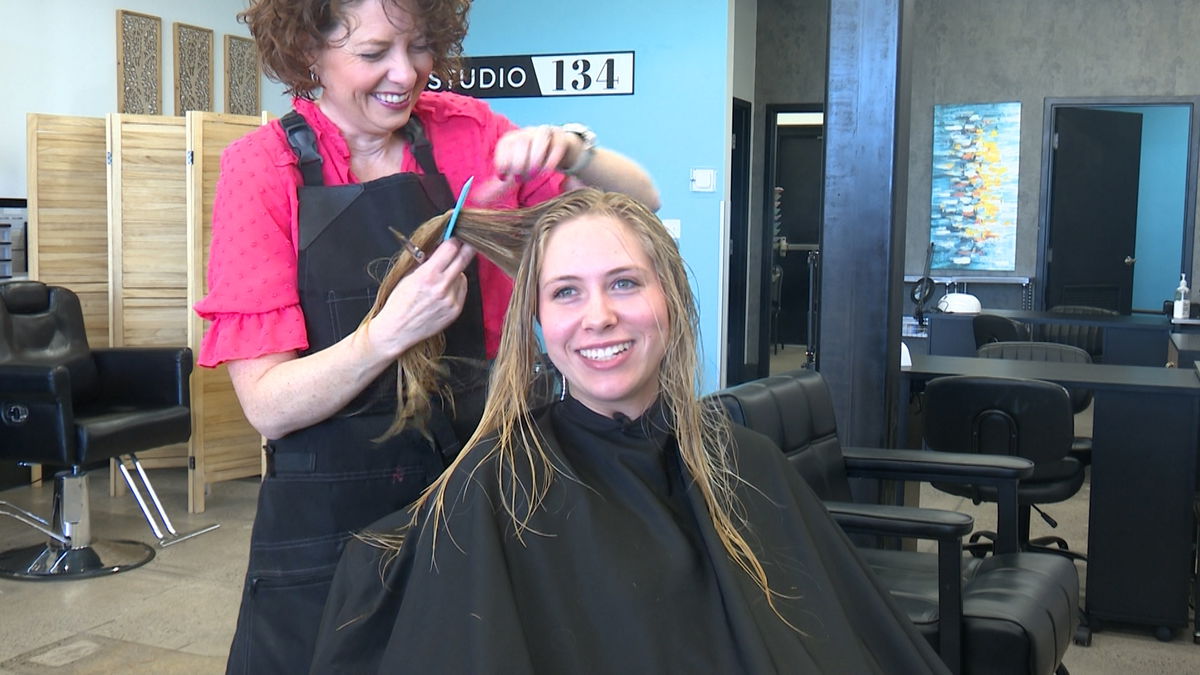
“It’s chemistry, biology, geometry, anatomy, physiology,” said cosmetologist and business owner Tiffany Judd of Studio 134 in Rexburg. She explains beauty licensing is an ongoing list that includes math, science, business education, communication, and cutting practice; so 600 hours to learn these skills would affect more than just the people working in the industry.

“The cost of my services within the salon will have to go up, which the consumer will have to pay for, because I have to pay for somebody to be trained to be here. And then I also have to pay my time to educate them,” said Judd.

Judd’s concerns that House Bill 547 would reduce the required hours for a cosmetology license from 1600 to 1000 were shared by many other salon owners and educators who turned out to testify against the bill in the House Business Committee. Posts were also shared on social media about the time needed to learn about chemical safety, sanitation, and infection control.

“We’re in the industry of taking care of people. And without the knowledge, I see industry professionals coming out of school [with] lower hours and making mistakes,” said Judd.

While the bill is now “effectively dead,” in its current form, according to KTVB’s interview with Representative Brent Crane of Nampa, east Idaho customers are still reflecting on what it’s like to be in the chair.

“I’ve had it happen where my hair has been cut way shorter than I wanted it to, and I wasn’t okay,” said a laughingly reflective Mattie Johnson, a customer at Studio 134. “I’d rather have someone with a little more experience who knows what they’re doing handle my hair.”

Judd wants to continue educating the public on what goes salon chair, and how cutting training hours, even for the cause of making it easier to start in the beauty industry, will impact ultimatley impact customer wallets. To learn more, visit here.


Gas Feuds: Utah-Idaho conflict simmering over proposed gasoline export tax">Gas Feuds: Utah-Idaho conflict simmering over proposed gasoline export tax

Gas Feuds: Utah-Idaho conflict simmering over proposed gasoline export tax">

BOISE, Idaho (KIFI) – Idaho and Utah have been having a not-so-quiet feud over a Utah plan to change its gas tax and share its tax burden with Idaho.

Plans by the Utah lawmakers to potentially place an export tax on gasoline shipped from Utah refineries to surrounding states – including Idaho – are drawing continued pushback from Idaho lawmakers.

In an interview with Local News 8 this week in Boise, Idaho Speaker of the House Mike Moyle said Idaho is proactively responding to the threats.

“I think that Utah will find some sanity and pull back. But we’ll see because if they don’t, we in Idaho will find ways to make it miserable for them,” Moyle said. 

Idahoans currently pay $2.90 per gallon of gas on average – 13 cents more than drivers in Utah.

The plan in Utah to impose a new tax on refineries for exported fuel could push Idaho prices at the pump even higher.

“So hopefully they do the right thing and don’t raise our fuel taxes,” Moyle said. “We’ll see though. They have control right because of the refineries. But I think we’re in good shape. I think we’re talking. We’ll find a path.”

The potential restructuring aims to cut Utah’s consumer gas tax up to 50 percent.

Moyle warned that the export tax could increase Idaho’s gas prices by twenty-five cents a gallon. 

About 75 percent of fuel exported from Utah is purchased by Idaho consumers, according to a draft Joint Memorial from the Idaho House of Representatives and Senate.

“I think that, on the front end, they thought it was going to be really easy to come tax Idahoans and make it miserable for us,” Moyle said. “But there’s more to the story, so we’ll see what they do. They’re supposed to introduce a bill. We’ll see what the next rendition is. Once we see that, we’ll know how to respond.”

However, Idaho lawmakers told Local News 8 this week they have a feeling it’s going to be water – or oil – under the bridge soon, and they are going to work things out with Utah.

“We will find a sensible diplomatic path through the conversation,” said Idaho Rep. Josh Wheeler, R-Ammon, whose district includes Bear Lake County, bordering Utah. “There are some slightly, outlandish ideas being bandied about right now – like charging more for lottery tickets in our border towns, or maybe it’s time to tax microchips that come out of Idaho, the same way they’re trying to tax fuel that comes out of Utah’s refineries.”

While the bill to restructure Utah’s gas tax has not been filed yet, Idaho legislators have introduced a joint memorial opposing Utah’s export tax.

The joint memorial states:

  •  “Idahoans pay Idaho fuel taxes and are not obligated to pay Utah’s fuel taxes except when in Utah;”
  • “Article I of the United States Constitution prohibits states from imposing ‘ any imports or duties on imports or exports’ without the consent of Congress;
  • “Imposition of such an export tax would result in hundreds of millions of dollars in annual costs borne by Idaho families, farmers, and businesses.”

The memorial is scheduled for debate after its third reading. 

“In the end, I think they’re going to recognize what they’re trying to do is unconstitutional, and it’s time for them to find solutions that are in their state, rather than trying to inflict damage on our Idaho citizens,” Wheeler said.

INTERVIEW: Rep. Barb Ehardt- HB93 Ruling, Anti-discrimination, Article V Conv">INTERVIEW: Rep. Barb Ehardt- HB93 Ruling, Anti-discrimination, Article V Conv

INTERVIEW: Rep. Barb Ehardt- HB93 Ruling, Anti-discrimination, Article V Conv">

State Representative Barbara Ehardt, R-Idaho Falls, recently provided an update on several high-profile legislative matters currently moving through the Idaho Capitol. In a wide-ranging discussion, Ehardt detailed the progress of a bill regarding local anti-discrimination ordinances, the debate over an Article V Convention of States, and the general mood of the legislature following recent judicial rulings.

A primary focus of the current session involves a bill aimed at standardizing anti-discrimination laws across the state. Ehardt, who chairs the relevant committee, noted that the legislation recently passed the House floor with a 53-vote majority after being approved in committee 13-3. The bill seeks to address city-level ordinances, particularly those involving “public accommodations.” Ehardt argued that while housing and employment protections are largely settled by state and federal law, local mandates regarding public accommodations can infringe upon First Amendment rights and religious freedoms.

If signed into law, the legislation would effectively nullify local ordinances previously passed by cities such as Idaho Falls. Ehardt noted that the Idaho Falls City Council passed its third tier of anti-discrimination protections during the pandemic, a move she criticized for lacking sufficient public discourse at the time. “You can buy anything in the store, you just can’t force someone to go against their conscience,” Ehardt stated, specifically citing concerns over mandates that might affect private businesses or religious organizations.

The conversation also turned to the Article V Convention of States, an issue that Ehardt admitted divides many conservatives. Despite support from some of her Republican colleagues, Ehardt expressed firm opposition to the movement. She cited historical concerns from the founding fathers and warned that such a convention could open a “can of worms” regarding the U.S. Constitution. Her primary objections include the lack of a clear mechanism to enforce new amendments and the potential for small states like Idaho to be overshadowed by larger states like California in a convention setting. “It is going to be contentious, and I worry that we end up with a changed Constitution,” she cautioned.

Additionally, Ehardt briefly touched on the reaction at the Capitol to a recent unanimous Supreme Court ruling regarding ballot access, describing the mood as “ecstatic” and noting that many legislators felt the decision was expected. She also dismissed a personal bill proposed by Representative Steve Berch, D-Boise, which sought to pause parental tax credits, labeling the proposal as “bad form” and unlikely to gain traction in the Republican-controlled legislature.

As the session continues, Ehardt indicated that the House will soon shift its focus to discussions on a balanced budget amendment and other committee work, including recent lengthy hearings on mosquito abatement districts. She concluded by emphasizing that while her colleagues are often divided on policy, there remains a mutual respect for the different perspectives held within the legislature.

scroll to top