Kouri Richins set to be sentenced for her husband’s murder on what would have been his 44th birthday">Kouri Richins set to be sentenced for her husband’s murder on what would have been his 44th birthday

Kouri Richins set to be sentenced for her husband’s murder on what would have been his 44th birthday">

By Nicki Brown, CNN

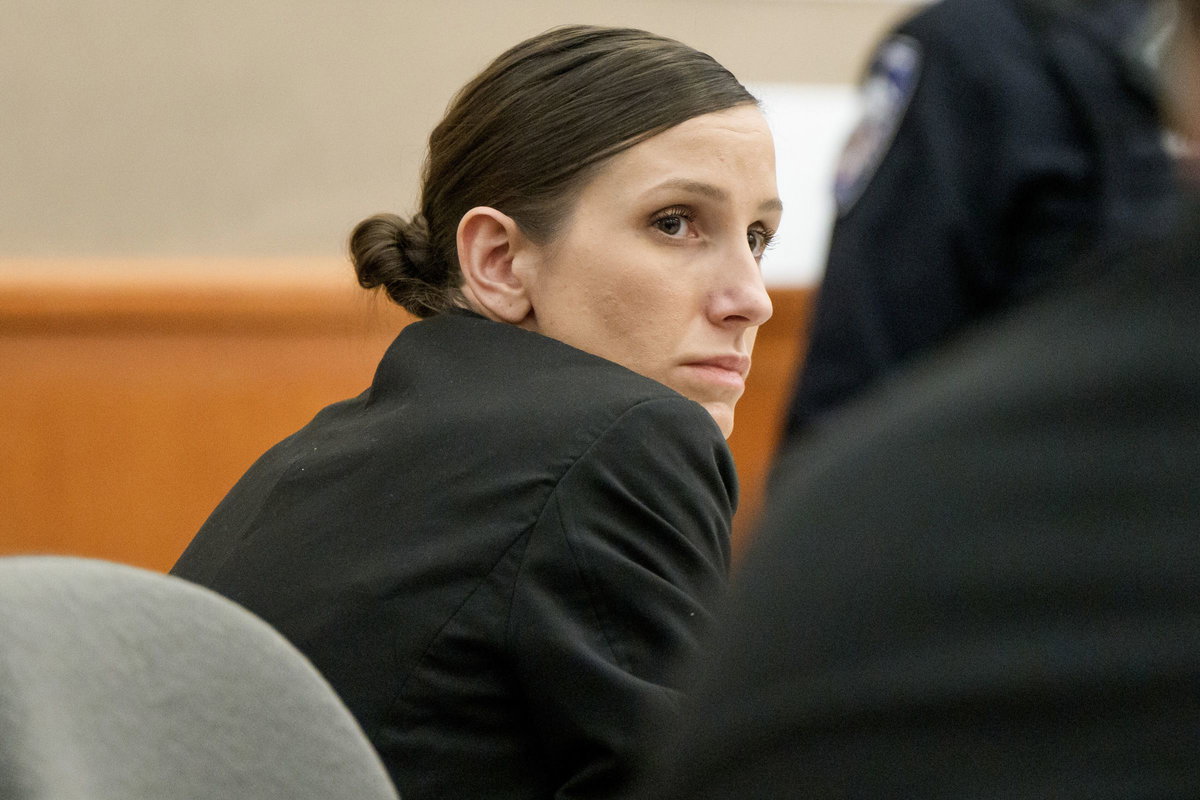
(CNN) — Eric Richins, a Utah father of three, would have turned 44 years old on Wednesday. Instead, his wife will be sentenced for his murder.

Watch the live sentencing below, starting at 9:30 a.m. MT:

After a weekslong trial earlier this year, an eight-person jury convicted Kouri Richins, 36, of aggravated murder for fatally poisoning her husband in March 2022. She was also found guilty of attempted aggravated murder for trying to kill him weeks before his death, on Valentine’s Day, and insurance fraud and forgery related to his life insurance coverage.

Kouri Richins – who published a children’s book about coping with grief following Eric Richins’ death – could be sentenced to 25 years to life or life in prison without parole for her aggravated murder conviction when she appears in court in Park City, Utah.

Family members and other witnesses are expected to address the court before Judge Richard Mrazik hands down the sentence.

In a court filing this week, the Summit County Attorney’s Office invoked the Richins’ three young sons while urging Mrazik to sentence Kouri Richins to life without parole, the maximum sentence for the aggravated murder charge.

“The boys deserve finality and should not have to revisit their father’s murder at future hearings or worry about the Defendant’s potential parole,” prosecutors wrote in the sentencing memorandum. “Given the tremendous trauma and upheaval that the Defendant inflicted upon their childhood, this Court should ensure that she does not harm their adulthood.”

Prosecutors are asking the judge to issue a protective order that would prohibit Kouri Richins from initiating contact with her sons and other members of her late husband’s family.

The couple’s eldest son – a 13-year-old identified in the filing as “C.R.” – said he misses his father but not his mother.

“I’m afraid if she gets out, she will come after me and my brothers, my whole family,” C.R. said, according to the memorandum. “I think she would come and take us and not do good things to us, like hurt us.”

During the trial, members of Eric Richins’ tight-knit family tearfully remembered him as a skilled outdoorsman, hardworking businessman and dedicated father to his three young sons.

“Eric was their coach, their father, but most important, was their very, very best friend,” his father, Eugene Richins, said on the stand.

Eric Richins would do anything for his children, one of his sisters testified, recalling how he often arrived early at their sporting events to hang up signs cheering them on.

“My dad can’t be my coach anymore and can’t be at any of my games,” the Richins’ middle son said in the state’s filing. “He won’t be at my birthdays. He can’t teach me how to drive. He won’t be at my graduation.”

How the trial unfolded

Eric Richins, 39, was found dead in the couple’s home in Kamas, Utah, during the early morning hours of March 4, 2022.

Earlier that night, Eric and Kouri Richins had a drink to celebrate a successful transaction with her real estate business, according to a statement she gave law enforcement. One of their sons was having nightmares, so Kouri Richins went to sleep in his room around 9:30 p.m., she told police.

When she returned to the master bedroom about six hours later, she said, she found her husband dead in their bed.

The autopsy revealed Eric Richins died of a fentanyl overdose, with roughly five times a lethal dose in his blood. Prosecutors argued Kouri Richins slipped the drugs into her husband’s drinks the night of his death, although they did not present evidence supporting this theory at trial.

Over 13 days of testimony, the Summit County Attorney’s Office called more than 40 witnesses, including Eric Richins’ grieving family members, people who exchanged the illicit drugs said to have killed him, Kouri Richins’ paramour and a private investigator hired by the victim’s family. The defense rested its case without calling any witnesses.

The prosecution’s star witness, a housecleaner named Carmen Lauber, testified she sold illicit pills to the Utah mother several times in early 2022. Cell phone data showed her phone near the location where she picked up the drugs on dates close to the attempted murder and fatal poisoning.

Other witnesses testified about Kouri Richins feeling “trapped” in her marriage, her yearslong affair and her business’s ballooning debt – all reasons prosecutors say she killed her husband.

Robert Josh Grossmann, with whom she was having an affair, became emotional on the stand as scores of their affectionate messages were displayed in court.

“I do want a future together. I do want you. Figure life out together,” Kouri Richins texted Grossmann roughly two weeks before her husband died. “If he could just go away and you could just be here! Life would be so perfect!!! I love you.”

Although her friends testified Kouri Richins appeared to be financially successful, a forensic accountant said she was caught in a relentless debt cycle and her real estate business was “imploding.” Eric Richins’ life was insured for about $2.2 million through several policies, including one Kouri Richins was convicted of applying for fraudulently.

“She murdered Eric Richins,” prosecutor Brad Bloodworth said in his closing argument, “and then she submitted a claim to get the money.”

Kouri Richins was also convicted of trying to murder her husband on Valentine’s Day 2022 – ten days after that insurance policy went into effect. Eric Richins called two friends that day and said he felt like he was going to die after eating a sandwich his wife gave him, according to charging documents.

Within weeks, he was dead.

At trial, prosecutors emphasized evidence they said demonstrated Kouri Richins’ guilty conscience after her husband’s death, including search history from her cellphone that showed queries about women’s prisons in Utah, remotely deleting cell phone data and life insurance payments.

The searches included: “what is a lethal.dose.of.fetanayl (sic),” “kouri richins kamas net worth,” and “if someone is poisned (sic) what does it go down on the death certificate as.”

Prosecutors argued that, amid the criminal investigation, Kouri Richins tried to deflect attention away from herself by publishing a children’s book about a year after her husband’s fatal overdose. Kouri Richins said she authored the picture book – titled “Are You With Me?” – to help her three young sons navigate the loss of their father.

“Just because he’s not present here with us physically, that doesn’t mean his presence isn’t here with us,” Richins said while promoting the book on a local news program in April 2023, weeks before her arrest. “Dad is still here. It’s just in a different way.”

The-CNN-Wire
™ & © 2026 Cable News Network, Inc., a Warner Bros. Discovery Company. All rights reserved.
EXCLUSIVE: Mark Fitzpatrick on Gubernatorial Run">EXCLUSIVE: Mark Fitzpatrick on Gubernatorial Run

EXCLUSIVE: Mark Fitzpatrick on Gubernatorial Run">

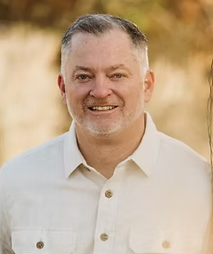
Idaho gubernatorial candidate Mark Fitzpatrick recently discussed the closing stages of his campaign to unseat incumbent Governor Brad Little, describing a surge in momentum and grassroots support. Speaking in an interview on Newstalk 107.9 with hosts Neal Larson and Julie Mason, Fitzpatrick highlighted his recent travel across the state and several key endorsements from Republican Central Committees and local straw polls.

During the interview, Fitzpatrick addressed a controversial “hidden camera” video in which Governor Little allegedly characterized some of Fitzpatrick’s supporters as “straight racist” regarding their views on immigration. Fitzpatrick dismissed the claim as a “leftist move” to avoid substantive debate. He argued that his platform focuses on the economic and social burdens of illegal immigration rather than country of origin, stating that his primary goal is to “fix the immigration problem” and remove those without legal status from the state’s education and health systems.

On fiscal matters, Fitzpatrick criticized the current administration for increasing the state budget by 70% over the last seven years, largely through federal COVID-19 funding. He proposed a return to pre-pandemic budget levels, which would involve significant spending cuts. Fitzpatrick cited his own independent investigations into the Department of Health and Welfare, claiming his efforts to expose fraud contributed to the closure of 28 daycare facilities. To replace lost revenue, he advocated for a ten-fold expansion of the state’s mining and logging industries, suggesting that Idaho’s natural resources could eliminate the need for certain taxes.

Addressing his potential relationship with the Idaho Legislature, Fitzpatrick described his governing style as a “populist” approach, comparing his intended bluntness and transparency to a “Christian Donald Trump.” He asserted that by operating in the open and engaging directly with the public, he could exert enough pressure on legislators to pass stalled bills, particularly concerning immigration and water rights.

Regarding water issues in East Idaho, Fitzpatrick proposed the construction of new basins to capture surface water as a long-term solution. He emphasized that resolving regional conflicts over water rights requires a government that prioritizes transparency over what he described as the current administration’s “history of misinformation.”

EXCLUSIVE: Larry Golden Challenges Incumbent Raybould">EXCLUSIVE: Larry Golden Challenges Incumbent Raybould

EXCLUSIVE: Larry Golden Challenges Incumbent Raybould">

In a recent interview on Newstalk 107.9, Larry Golden discussed his bid to unseat incumbent Representative Brit Raybould in Idaho’s District 34. Golden, a Navy veteran and former law enforcement officer, is positioning himself as a staunch conservative alternative for the Madison County district, which encompasses Rexburg, Sugar City, and unincorporated areas including Menan and Burton.

Golden, who previously challenged Raybould two years ago, cited several legislative actions during the most recent session as the catalyst for his return to the race. He expressed particular frustration with Raybould’s stance on Diversity, Equity, and Inclusion (DEI) initiatives and her proposal to abolish the Peace Officer Standards and Training (POST) Academy in Meridian. Golden argued that moving police training to Idaho State University would be detrimental to law enforcement, a sentiment he said is shared by local officers and his own son, who is currently in the police academy.

During the interview, Golden emphasized a “rule of law” approach to immigration, stating that illegal entry should not lead to state-funded benefits. While acknowledging that many farmers in Madison County rely on immigrant labor, he argued that the focus should remain on legal immigration pathways. He also voiced strong support for recent legislation that prohibits the use of taxpayer funds to collect teacher union dues, describing the move as a way to prevent unions from gaining a “stranglehold” on the state’s education system.

Social and cultural issues also formed a significant part of Golden’s platform. He defended the legislature’s focus on “bathroom bills” and restrictions on city flags, characterizing them as necessary battles to maintain traditional values and safety. Golden also reiterated his opposition to any form of marijuana legalization, including medical use, citing his experience as a narcotics officer in Washington state before moving to Idaho. On the topic of abortion, Golden stated he is 100% against the practice, including in cases of rape or incest, arguing that one heinous act should not be followed by another.

Reflecting on his campaign, Golden noted that unlike his previous run, he now has a full campaign team and significant local support. He stated his primary goal is to keep Idaho conservative and ensure that legislative decisions align with the values of his constituents.

5.11.2026 – INTEREVIEW: Judge Cody Brower, Idaho Primaries, PAC Money">5.11.2026 – INTEREVIEW: Judge Cody Brower, Idaho Primaries, PAC Money

5.11.2026 – INTEREVIEW: Judge Cody Brower, Idaho Primaries, PAC Money">

Send us Fan Mail

We’re in that familiar spot where the Idaho primary is the real election, and there’s simply more happening than any show can realistically hold. A big chunk of the conversation centers on the sudden, statewide panic over Jordan Redmond putting serious personal money into a PAC to support primary challengers—panic that feels a little rich considering how much anonymous, out-of-state “dark money” has been flowing into Idaho for years through friendlier-sounding front groups (like “Defend Public Lands”). The point we keep coming back to: either big money influencing elections is a problem across the board, or people need to stop melting down when the “wrong” side plays the same game—especially when Redmond is at least putting his name on it and daring everyone else to do the same.

We also dig into campaign dynamics closer to home: frustration with candidates ducking debates and controlling “forum” formats, with particular heat around Ben Fermann’s refusal to engage in tougher settings and the sense that momentum may be shifting toward Julianne Young. We touch on the Heart vs. Connor Cook race, the curious alignment of endorsements, and how voters can cut through the noise using tools like the Sunshine Report. Then we pivot to a rare contested judicial race with District Judge Cody Brower, who lays out his background, his courtroom philosophy, and—importantly—why sentencing outcomes (especially in child sex offense cases) often hinge on plea deals and charging decisions made before a case ever reaches a judge.

### Highlights
– The uproar over Jordan Redmond’s PAC vs. the relative quiet about long-running dark money and industry PAC influence in Idaho.
– Why “nice guy” politics doesn’t equal conservative voting—and why that’s driving primary challenges.
– Forum/debate drama in East Idaho races and how “meet the candidate” events are replacing real debates.
– Judge Cody Brower on judicial philosophy, constitutional rights, and how plea agreements can limit sentencing options.
– Practical advice: use the Sunshine Report to track who is funding which messages and candidates.

Let’s talk advertising. When you want to advertise on the radio, you call the station, right? But what about Facebook, Instagram, Hulu, Disney+, Peacock, and other streaming platforms?

You could try clicking around, reading books, or taking online courses to figure it out—or you can let us handle it. At Sandhill Media Group, we’re your local experts in both radio and digital marketing.

Visit SandhillMediaGroup.com today.

Read More

scroll to top