
The government shutdown has been a source of anxiety for educators, wondering how long grant money will last and who can help them interpret federal laws
Full Post Style
New deaths and illnesses reported in listeria outbreak tied to recalled pasta meals">New deaths and illnesses reported in listeria outbreak tied to recalled pasta meals
Two new deaths and more illnesses have been reported in an outbreak of listeria food poisoning tied to precooked pasta meals sold in grocery stores in many states
Daylight Saving Time is controversial. Here’s why the US kept it">Daylight Saving Time is controversial. Here’s why the US kept it

Originally Published: 05 NOV 22 10:22 ET
Updated: 29 OCT 25 13:54 ET
By Katia Hetter and Stephen Mays, CNN
Editor’s note: Sign up for CNN’s Sleep, But Better newsletter series. Our seven-part guide has helpful hints to achieve better sleep.
(CNN) — It’s almost time for clocks to “fall back” one hour, allowing many people across the United States to gain one hour of sleep.
On the first Sunday of November, at 2 a.m., clocks fall back an hour to standard time. On the second Sunday of March, at 2 a.m., clocks in most of the United States and many other countries move forward one hour and stay there for nearly eight months in what is called Daylight Saving Time.
The current March to November system that the US follows began in 2007, but the concept of “saving daylight” is much older. Daylight Saving Time has its roots in train schedules, but it was put into practice in Europe and the United States to save fuel and power during World War I, according to the US Department of Transportation’s Bureau of Transportation Statistics.
Pro tip: It’s Daylight Saving Time, with singular use of “saving,” not “savings.”
Reasons for Daylight Saving Time
The US kept Daylight Saving Time permanent during most of World War II. The idea was put in place to conserve fuel and keep things standard. As the war came to a close in 1945, Gallup asked respondents how we should tell time. Only 17% wanted to keep what was then called “war time” all year.
During the energy crisis of the 1970s, we tried permanent Daylight Saving Time again in the winter of 1973-1974. The idea again was to conserve fuel. It was a popular move at the time when President Richard Nixon signed the law in January 1974. But by the end of the month, Florida’s governor had called for the law’s repeal after eight schoolchildren were hit by cars in the dark. Schools across the country delayed start times until the sun came up.
By summer, public approval had plummeted, and in early October Congress voted to switch back to standard time.
In the US, states are not required by law to “fall back” or “spring forward.” Hawaii, most of Arizona and some territories in the Pacific and Caribbean do not observe Daylight Saving Time.
The twice-yearly switcheroo is irritating enough to lawmakers of all political stripes that federal lawmakers have tried to make Daylight Saving Time permanent over the past few years. New versions of the bill were introduced in the House and Senate this year.
Why do we need Daylight Saving Time
Studies over the past 25 years have shown the one-hour change disrupts body rhythms tuned to Earth’s rotation, adding fuel to the debate over whether having Daylight Saving Time in any form is a good idea.
The issue is that for every argument there is a counterargument. There are studies, for example, that show we have more car accidents when people lose an extra hour of sleep. There are also studies that show robberies decline when there is an extra hour of sunlight at the end of the day. We also know that people suffer more heart attacks at the start of Daylight Saving Time. But what about our mental health? People seem to be happier when there is an extra hour of daylight.
Of course, there’s the economy, which pays for all that outdoor fun in the sun. Although saving energy was often put out as a reason to have Daylight Saving Time, the energy saved isn’t much — if anything at all.
Instead, the lobbying effort for Daylight Saving Time came mostly from different sectors of the economy. In the mid-20th century, lobby groups for the recreational sports industry (think driving ranges) wanted more customers to come out after a day at the office. It’s easier to do so when there is more light at the end of the day.
But the movie industry didn’t like Daylight Saving Time. You’re less likely to go to a movie when it’s bright outside. Despite the myth, farmers didn’t like it either because it made it difficult to get their food to the market in the morning.
The bottom line: It’s not clear whether having that extra hour of sunlight at the end of the day versus the beginning is helpful. It just depends on who you are and what you want. And it doesn’t look like Daylight Saving Time in the US is going away anytime soon.
The-CNN-Wire & © 2025 Cable News Network, Inc., a Warner Bros. Discovery Company. All rights reserved.
ITD wraps up major summer construction as temps drop">ITD wraps up major summer construction as temps drop
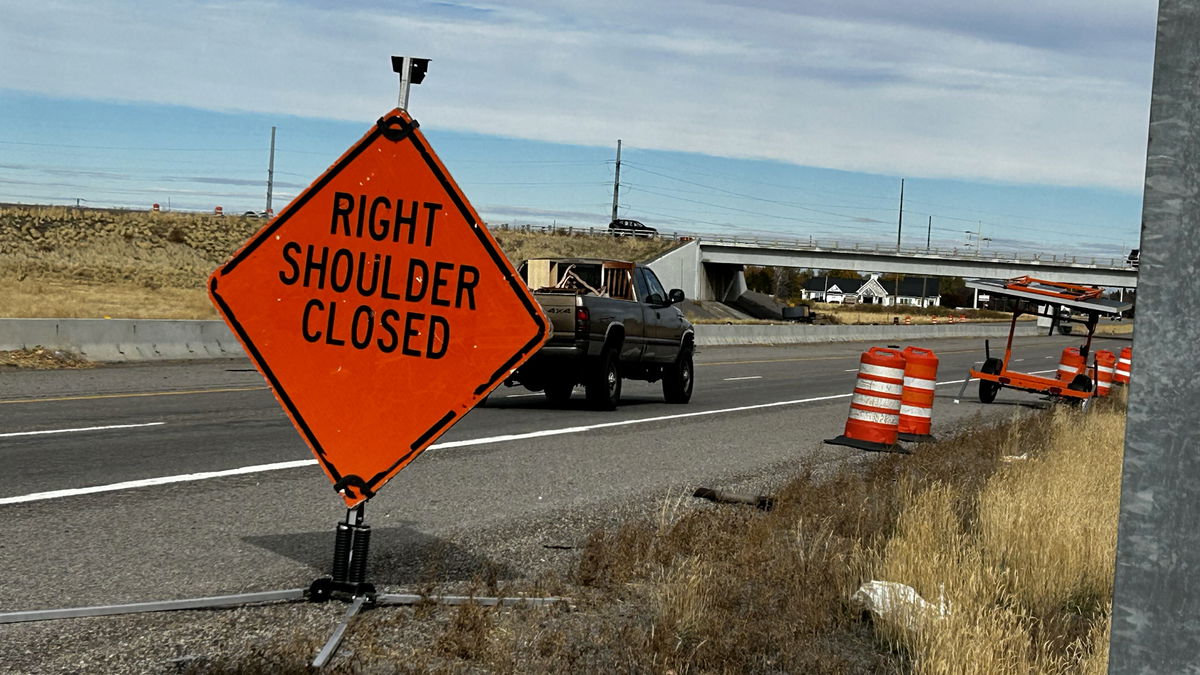

IDAHO FALLS, Idaho (KIFI) — Typically, the middle of the summer is considered the heaviest time for construction projects. But as temperatures drop, the Idaho Transportation Department works to wrap up some of its work before winter sets in.
One of its bigger projects in eastern Idaho this summer has been the reconstruction and repair overhauls on several bridges north of Idaho Falls on Interstate 15. These are in Spencer, Stoddard Creek, Hammer area in the direction toward Sage Junction.
“There’s less traffic out there, but they’re very well-used recreational areas, and those bridges needed some attention. So we’ve been able to do that all summer long and through last winter too. And right now on those I-15 bridges, we are trying to just finish those up, get the paving done while it’s still warm enough to be able to during those certain windows of the day,” said Sky Buffat, Public Information Officer for the Idaho Transportation Department.
There are still a few areas with lane closures as they continue work in preparation for next spring.
“We go back in the spring, we can immediately do what’s at hand quicker,” said Buffat. “Paving has to be done in a certain temperature window, and we just simply don’t pave when it’s too cold because it won’t last. So it would be a waste of money. And we’re really careful about those kind of specifications, making sure to meet them.”
Not all the projects will be completed before winter, but most roads will reopen for drivers.
“We really try to open up traffic as much as possible and not leave closures or traffic control in place all through the winter. There are occasions where it can’t be avoided, but for the most part, those work zones will be, cleared off so that winter traffic can get through and not have to worry about that,” said Buffat.
Other projects include one on State Highway 48 near Rigby, where they will install a traffic signal at one of the main intersections next spring.
They are also doing some repairs in Rexburg on the State Highway 33 near Pioneer Road, which is by Maverick.
Drivers are reminded to use caution while driving through construction zones and to keep workers safe.