Lemhi County Sheriff’s Office closes nearly 7-year-old missing person case">Lemhi County Sheriff’s Office closes nearly 7-year-old missing person case

Lemhi County Sheriff’s Office closes nearly 7-year-old missing person case">

LEMHI COUNTY, Idaho (KIFI) — The Lemhi County Sheriff’s Office has officially closed a nearly seven-year-old missing persons investigation after investigators positively identified human remains discovered late last year using DNA evidence.

The case began on November 8, 2019, when the Lemhi County Sheriff’s Office received a report from the Springdale (Arkansas) Police Department regarding Bobby Lee Rodriguez. Rodriguez had last been seen on September 30, 2019, near Wagonhammer Spring south of North Fork, Idaho.

According to investigators, a taxi driver dropped Rodriguez off at the location, with Rodriguez telling the driver he was meeting a relative who was camping nearby. Rodriguez was carrying a boxed firearm, which he claimed was intended as a gift for that relative.

A Lemhi County Sheriff’s Deputy immediately canvassed the area surrounding Wagonhammer, speaking with residents and local businesses to gather possible information about Rodriguez. However, no one in the area had seen Rodriguez or anyone matching his description.

While the Lemhi County Sheriff’s Office maintained contact with the Springdale Police Department and periodically checked to see if any new information had developed, the case eventually ran cold.

The breakthrough came six years later, when a fisherman on the Salmon River, west of North Fork, Idaho, discovered human remains while climbing a hillside to get warm.

The man led law enforcement to the remains, where investigators uncovered a rusted shotgun with a spent hull in the chamber and a note that suggested that suicide may have been a factor.

The Lemhi County Coroner’s Office took custody of the remains, which were recently confirmed to be those of Bobby Lee Rodriguez through a DNA match with a relative. LCSO states that no evidence of foul play was uncovered during the multi-jurisdictional investigation.

“The Lemhi County Sheriff’s Office would like to extend its deepest condolences to the family of Bobby Lee Rodriguez,” the office said in a news release.

The Lemhi County Sheriff’s Office expressed its gratitude to all of its state, regional, and Federal partners who had a hand in bringing this case to a close.

Idaho Sheriffs’ and Chiefs of Police Associations stand against controversial immigration bill">Idaho Sheriffs’ and Chiefs of Police Associations stand against controversial immigration bill

Idaho Sheriffs’ and Chiefs of Police Associations stand against controversial immigration bill">

IDAHO FALLS, Idaho (KIFI) – Idaho law enforcement associations continue to oppose an immigration enforcement bill that passed the Idaho House of Representatives on Friday.

The Idaho Chiefs of Police Association and Idaho Sheriffs’ Association testified against the measure during committee.

House Bill 659 would require “each law enforcement agency in this state to make an application for a section 287(g) program for which the local or county law enforcement agency is eligible.”

“You have the state government telling the local government to do the job of the federal government,” said Bonneville County Sheriff Sam Hulse, immediate past president of the Idaho Sheriffs’ Association. “It’s just the wrong pathway. Now, we should certainly support the law. We should work with the federal partners to make sure that we help them in their efforts, but make no mistake, these are federal efforts.

“That’s where this is going to be resolved. It should be resolved by federal resource in cooperation with local resource,” he said. “Having the state government tell the local government that you’re going to enforce federal law, I think is setting a precedence that we do not want to be on as the state of Idaho.”

You can watch our full 32-minute interview with Sheriff Hulse below for more information on immigration and law enforcement.

Section 287(g) of the Immigration and Nationality Act “enables specially trained local peace officers to perform specific functions relating to the investigation, apprehension or detention of noncitizens during a predetermined time frame and under federal oversight by immigration and customs enforcement,” the bill states.

The three distinct programs Section 287(g) includes are:

  1. Warrant Service Model

    This allows Sheriff’s deputies to “serve administrative warrants inside the jail facility,” on illegal immigrants, Hulse explained.

    Bonneville County Sheriff’s Office is already cooperating with Immigration and Customs Enforcement on this program.

  2. Jail Enforcement Model

    This provides additional training for jail personnel, providing further access to immigration systems so personnel can “research and place warrants themselves, without as much federal involvement,” according to Hulse.

    His office is also participating in this program.

  3. Task Force Model

    This involves sending officers or deputies out in the community to find individuals who are not in the United States lawfully and taking action against them.

    Bonneville County Sheriff’s Office is not currently involved in this program.

Hulse said this third program is more controversial than the other two.

“(Illegal immigrants) are not here lawfully, but they may not be committing any other crimes,” Hulse said. “So for a lot of communities, they see that as problematic. They feel like that is causing their local law enforcement to do things that are not really the focus of local law enforcement. We recognize that it’s certainly the focus of Immigration and Customs Enforcement and/or border protection, but it’s not really the job of local law enforcement to be on the front lines of that.”

While the Bonneville County Sheriff’s office currently participates in two 287(g) programs, the office will implement the law if the current bill passes.

H.B. 659 also obligates local law enforcement agencies to “participate in any future program or successor to an existing program,” without specifying what those programs are or what the requirements would be.

“Now we’re seeing a situation where the state government feels like the proper thing is to force local enforcement entities to just do this in a blanket approach. I think that’s a mistake, and I don’t think we need that law,” Hulse said. “I think the majority of sheriffs are doing what they can within their resources to cooperate and enforce the law.”

If this bill does become law, agencies that could not fully participate will be required to publish a statement declaring why.

Despite law enforcement’s opposition, the measure sailed through the House on a 41-27 vote.

Local News 8 reached out to the bill’s sponsor Rep. Dale Hawkins, R-Fernwood in north Idaho, for comment, but did not receive a response in time for this report.

Local legislators Reps. David Cannon, Barbara Ehardt, Marco Erickson, Rod Furniss and Mark Harris voted for the bill.

Reps. Erin Bingham, Rick Cheatum, Ben Fuhriman, Dustin Manwaring, Stephanie Mickelsen (via William Athay), Britt Raybould, Jerald Raymond, Michael Veile, Jon Weber, and Josh Wheeler voted against it.

The bill now advances to the State Affairs Committee in the Idaho Senate.

Local 12-Year-Old Battling Brain Cancer Finalist in National Art Contest">Local 12-Year-Old Battling Brain Cancer Finalist in National Art Contest

Local 12-Year-Old Battling Brain Cancer Finalist in National Art Contest">

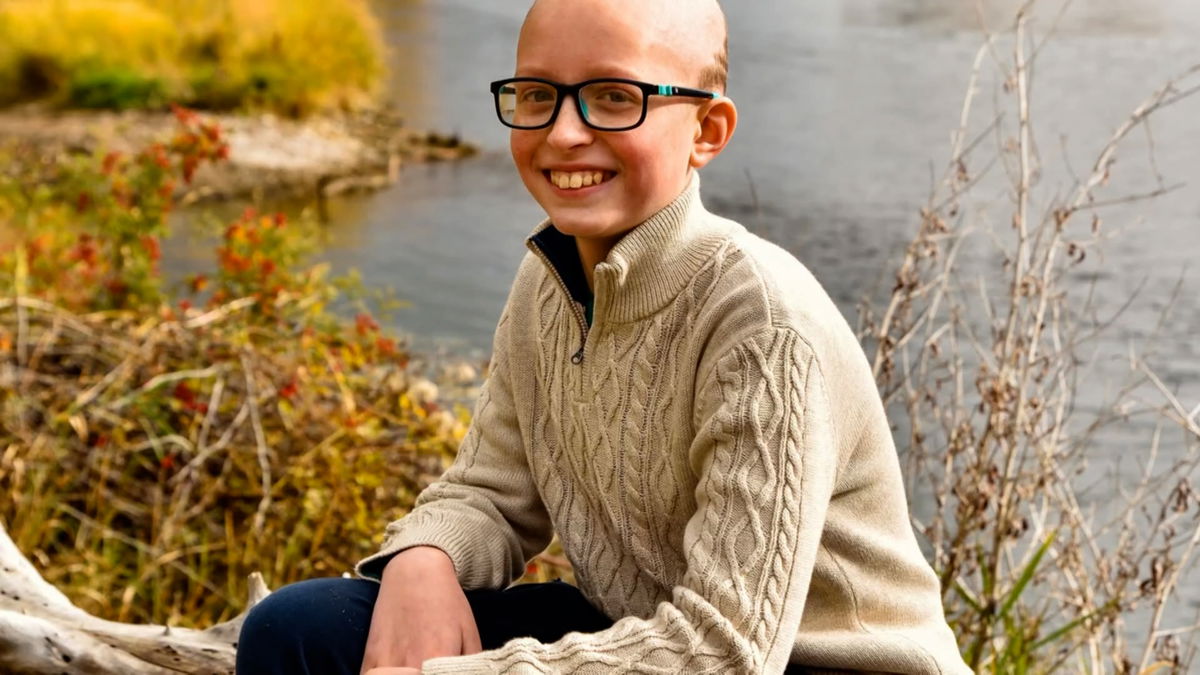
Roberts, Idaho (KIFI) — In a bedroom filled with sketches of apex predators and prehistoric giants, 12-year-old Caellum Hebdon is reclaiming a voice that cancer nearly took away.

For Hebdon, a middle-schooler from Idaho Falls, the last year has been defined by a battle more formidable than the dinosaurs he draws. After being diagnosed with brain cancer in 2025, his journey has been marked by emergency life-flights, life-saving surgeries, and a grueling recovery process that forced him to relearn the most basic human functions.

“They were able to tell us that he had a tumor that was bleeding,” said Jayc Hebdon, Caellum’s father. “They life-flighted him down to Primary Children’s Hospital. They performed the first surgery, which saved his life.”

The medical crisis was compounded by a stroke that occurred during his treatment, resulting in a loss of mobility on his right side and the loss of his ability to speak. What followed was three weeks of hospitalization and seven weeks of combined radiation and chemotherapy.

Through months of intensive speech and physical therapy, Hebdon began the slow process of recovery. He has since regained his ability to speak and, perhaps most importantly to him, his ability to draw.

“I drew that Spinosaurus drawing after my surgery,” Caellum Hebdon said. “It’s scary, but it’s also pretty… I’d say that he’s probably the strongest predator.”

While he often sketches to pass the time at home, his artwork is now vying for a national title. Hebdon is currently a finalist in the “America’s Most Artistic Kid” competition. For the Hebdon family, the contest represents more than just a trophy; the prize money would provide a significant dent in the mounting medical expenses accumulated over a year of emergency care and rehabilitation.

Despite the weight of the past year, those around him say he has maintained a positive outlook.

“I try to keep as happy as I can be,” Hebdon said when asked about hearing his parents discuss the hardships of his diagnosis.

The family reached a significant milestone in October 2025 when Hebdon was finally able to return home. Now, in March 2026, the focus has shifted from daily treatment to a pivotal moment of hope. This Friday, the family is scheduled to receive the results of a follow-up MRI. It is the first scan since the post-treatment inflammation has subsided, and it will determine if Hebdon is officially cancer-free.

“The weight is all the time,” said Kaylene Hebdon, Caellum’s mother. “Friday he has his first MRI since all the inflammation should be gone… we should get a clearer reading in a couple days. It’s highly stressful.”

As the community waits for the medical update, they can support Hebdon by voting for his prehistoric artwork in the national competition.

Details on how to vote for Hebdon and support the family’s medical fund

If you want to help Caellum bring home that national title and help his family with those medical bills, there are a few ways to get involved. The “America’s Most Artistic Kid” contest relies on community support. You can cast one free vote every 24 hours by heading to the contest website.

https://artistickid.org/2026/caellum-3f31

There is also an option to make a donation to “Blood Cancer United” through his profile page—those donations not only support cancer research, but they also act as “double votes” for Caellum. Every bit helps as he tries to maintain his spot at the top of the leaderboard.

https://www.crowdfunder.com/p/caellums-medical-fund

scroll to top