INTEREVIEW: Sen. Jim Risch on SAVE Act, Iranian Conflict">INTEREVIEW: Sen. Jim Risch on SAVE Act, Iranian Conflict

INTEREVIEW: Sen. Jim Risch on SAVE Act, Iranian Conflict">

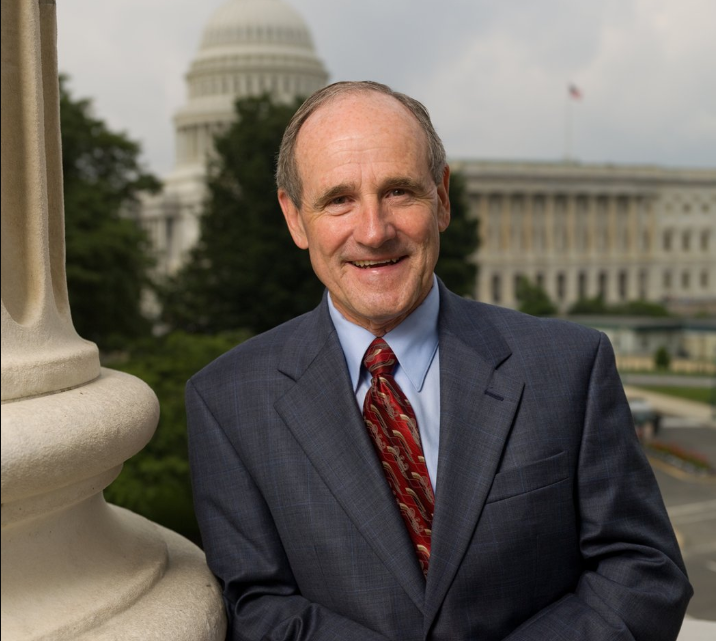
In a recent interview with Neal Larson from Newstalk 107.9, Senator Jim Risch addressed a range of pressing domestic and international issues, specifically focusing on the SAVE Act and the ongoing U.S.-Iran conflict following “Operation Epic Fury.” Regarding the SAVE Act, a bill intended to mandate voter identification and ensure only U.S. citizens participate in federal elections, Senator Jim Risch characterized the measure as a “common sense” initiative with broad public backing. However, he noted that Senate Democrats remain unified in their opposition to the legislation.

Senator Jim Risch also addressed internal Republican dynamics, acknowledging that some members of his own party have expressed reservations about the bill due to concerns over states’ rights. Risch stated that while states like Idaho maintain high election standards, he believes federal action is necessary to address what he described as significant fraud issues in other regions. He noted that former President Donald Trump has been applying pressure on Senate Majority Leader John Thune to pass the act, though he admitted that currently, the bill lacks the necessary votes to clear the Senate.

Shifting to foreign policy, Senator Jim Risch provided an assessment of the U.S. military strikes against Iran. He asserted that “Operation Epic Fury” successfully dismantled Iran’s naval and air defenses, leaving the regime’s airspace vulnerable. Risch warned that despite these military setbacks, the Iranian leadership remains ideologically stubborn. He identified the Strait of Hormuz as Iran’s final strategic tool, noting that any disruption there would likely cause a spike in global energy prices and impact U.S. public opinion.

Concluding his remarks, Senator Jim Risch distinguished between the Iranian government and its population. He estimated that roughly 70% of Iranians are under the age of 35 and largely favor a shift toward a Western-leaning democracy. However, he noted that the Islamic Revolutionary Guard Corps (IRGC) remains a significant barrier to regime change through its use of force to suppress dissent. While Risch declined to provide specific military details regarding the Strait of Hormuz, he maintained that keeping the waterway open remains a critical priority for the United States.
INTERVIEW: Sen. Kevin Cook on Budget, Legislative Session">INTERVIEW: Sen. Kevin Cook on Budget, Legislative Session

INTERVIEW: Sen. Kevin Cook on Budget, Legislative Session">

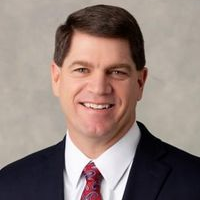
In an interview with Neal Larson on Newstalk 107.9, Idaho State Senator Kevin Cook characterized the current legislative session as unusually arduous, citing a significant revenue shortfall as the primary source of friction among lawmakers. Cook noted that while many legislators support the concept of fiscal restraint in principle, those convictions are often tested when specific spending cuts impact their individual priorities or local projects.

Cook detailed the ongoing work within the Joint Finance-Appropriations Committee (JFAC), explaining that the budget process has been bifurcated into “maintenance” and “enhancement” categories. While basic operational funding for state agencies has largely moved forward, enhancement requests—which cover growth and expanded services—remain under debate. Among the most significant hurdles remaining is the Department of Health and Welfare budget, which encompasses 12 separate budgets totaling approximately $5.7 billion. Cook estimated that enhancement budget work is roughly three-quarters complete.

To address the state’s budget gap, Cook indicated that tax increases are currently off the table. Instead, he is advocating for exhaustive searches for internal savings—a process he described as “looking under the sofa cushions”—before tapping into the state’s $1 billion rainy day fund. As part of this fiscal strategy, Cook is pursuing legislation to implement a 5% pay reduction for elected officials in both the legislative and executive branches starting in 2027, arguing that recent revenue figures suggest the state is not yet “out of the woods.”

The senator also addressed specific funding challenges at the Idaho School for the Deaf and the Blind. He clarified that while a new residential building was approved at a cost of $6 million, there is ongoing debate regarding approximately $108,000 requested for staffing and specialized equipment. Cook expressed concern that the new facility could not function effectively without adequate personnel to separate older students from younger residents.

Regarding his own legislative approach, Cook responded to data suggests he aligns with the minority party on 40% of partisan-split votes. He rejected the idea of tracking votes by party line, asserting that he evaluates each bill on its individual merits and constituent feedback. Cook concluded by inviting the public to attend an upcoming town hall meeting at the College of Eastern Idaho this Saturday.

INTERVIEW: ID Dem Chair Lauren Necochea -Legislature, election, Tim Walz">INTERVIEW: ID Dem Chair Lauren Necochea -Legislature, election, Tim Walz

INTERVIEW: ID Dem Chair Lauren Necochea -Legislature, election, Tim Walz">

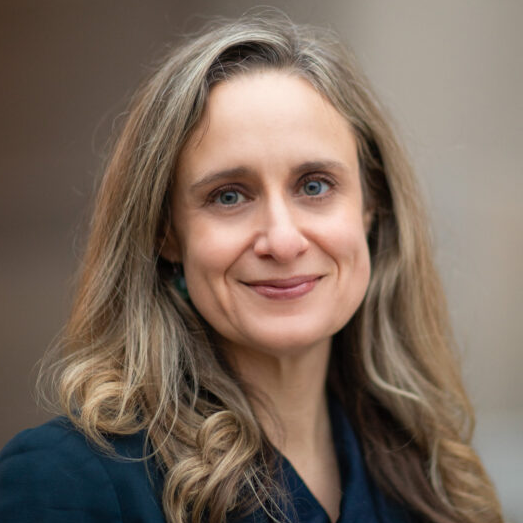
Idaho Democratic Chair Lauren Necochea

Credit: Idaho Democratic Party

In a recent interview with Neal Larson on Newstalk 107.9, Idaho Democratic Party Chair Lauren Necochea addressed what she described as an unusually contentious legislative session. Necochea attributed much of the friction to a significant budget shortfall and intensified Republican infighting, which she claims has led to a lack of investment in core public responsibilities.

Necochea argued that the state is facing a fiscal gap that the Republican supermajority has been hesitant to address. She pointed to proposed or actual funding reductions for wildfire prevention, public safety, Medicaid, and therapies for children with disabilities. To mitigate these pressures, Necochea suggested that Idaho should utilize its rainy day fund, particularly to prepare for summer wildfire costs that she expects will exceed current allocations. She also criticized the state’s new private-school tax credit policy, characterizing it as a “voucher” program that subsidizes private tuition without bringing in new revenue to cover the cost.

A significant portion of the discussion focused on tax policy. Necochea contended that recent income tax cuts have been skewed toward high-income earners while straining the state’s ability to fund essential services. She cited data indicating that households in the top 1% received roughly $20,000 in annual benefits from cumulative cuts over five years, compared to just $33 for those in the bottom 20%. Necochea further criticized the repeal of Idaho’s child tax credit, suggesting that the state should instead follow the lead of states like Minnesota, which has implemented larger credits for working families.

Regarding electoral strategy, Necochea emphasized the importance of fielding Democratic candidates in more districts to provide accountability and curb political extremism. She argued that when seats are left uncontested, Republican lawmakers are often incentivized to move further to the right to avoid primary challenges. When asked about “crossover voting,” Necochea stated her preference for Democrats to remain registered and active within their own party. She concluded by highlighting that Democratic votes have frequently been necessary to pass essential Medicaid funding, framing her caucus as a stabilizing force in the legislature.

Idaho Democrats blast GOP for blocking Minority Report criticizing bill on trans students">Idaho Democrats blast GOP for blocking Minority Report criticizing bill on trans students

Idaho Democrats blast GOP for blocking Minority Report criticizing bill on trans students">

BOISE, Idaho (KIFI) — Idaho House Democrats are decrying what they call an ‘egregious abuse of supermajority power’ after the Republican supermajority voted to suspend House rules to block a formal minority report from being entered into the official House Journal.

The move followed the passage of House Bill 822, a measure aimed at ending “secretive transitions” in Idaho schools and healthcare settings.

A “Supermajority” Maneuver

Though HB 822 passed the House floor 59-9, the primary conflict erupted after the vote. Idaho House Minority Leader Rep. Ilana Rubel moved to submit a Minority Report to the House Journal—the official daily record of proceedings.

In a swift counter-maneuver, Rep. Jason Monks (R-Meridian) moved to suspend Rule 27, which would have allowed the report’s inclusion. The House supported Monks’ motion in a 57-7 vote, effectively “censoring” the formal dissent from the record.

Rep. Rubel blasted the move as an egregious abuse of power.

“That report lays out exactly what they do not want on the record: that this bill invites constitutional challenge, imposes draconian penalties, and puts vulnerable children at risk,” Rubel said following the vote. “If Republicans were confident in the merits of this bill, they would not be afraid of a report in the journal. That is not transparency. That is censorship.”

Following the floor session, House Speaker Mike Moyle said the report took “personal stabs” and was “pushing inappropriate,” according to a report by IdahoEdNews.

To read the full Minority Report on House Bill 822 here.

Understanding House Bill 822

Also known as the Pediatric Secretive Transitions Parental Rights Act, HB 822 would mandate that healthcare providers, schools, and childcare entities notify parents within three days of any request by a minor to “participate in or facilitate a social transition.”

The bill would impose up to $100,000 civil penalties on schools or doctors that fail to notify parents when a student requests help in a “social transition.”

According to the bill’s text, social transition is defined as “the process by which an individual goes from identifying with and living as a gender that corresponds to the individual’s sex to identifying with and living as a gender different from the individual’s sex and may involve social, legal, or physical changes, including adopting a name, pronouns, appearance, or dress that does not correspond to the individual’s sex.”

The bill’s sponsor, Rep. Bruce Skaug, argues the legislation is a parental rights issue. 

“Hiding critical information for a child’s well-being from parents is not in the child’s best interest, nor does it allow for a holistic, well-rounded health decision,” Rep. Skaug told lawmakers ahead of Wednesday’s vote.

“It is the parents who know the child’s health history throughout that child’s life. A doctor or counselor only has a snapshot in time of that child’s health policies that forced teachers and others to hide this information are certainly anti-family in the Idaho sense.”

Testimony Cut Short in Committee

The floor debate followed a controversial committee hearing where acting chairman Rep. Joe Alfieri (R-Coeur d’Alene) cut off public testimony early after 14 minutes of limited debate. Democratic leadership noted that nearly three times as many people—including several Idaho Doctors—had signed up to testify against the bill as for it.

Opponents of the legislation argue that the bill violates the First Amendment rights of medical professionals by dictating how they communicate with patients.

In a statement released after Wednesday’s vote, Taylor Munson of the ACLU of Idaho called the bill “dangerously vague, overbroad, and unconstitutional.”

“Courts have repeatedly held that the First Amendment protects medical professionals when they provide information or referrals for patients,” said Munson. “Make no mistake: this bill will jeopardize the safety and well-being of all Idaho kids, regardless of their gender identity. Any time we have a law that forces people to express themselves in rigid ways dictated by the government, everyone is at risk. It is not the government’s place to decide how we look, what we wear or how we express ourselves. ”

scroll to top