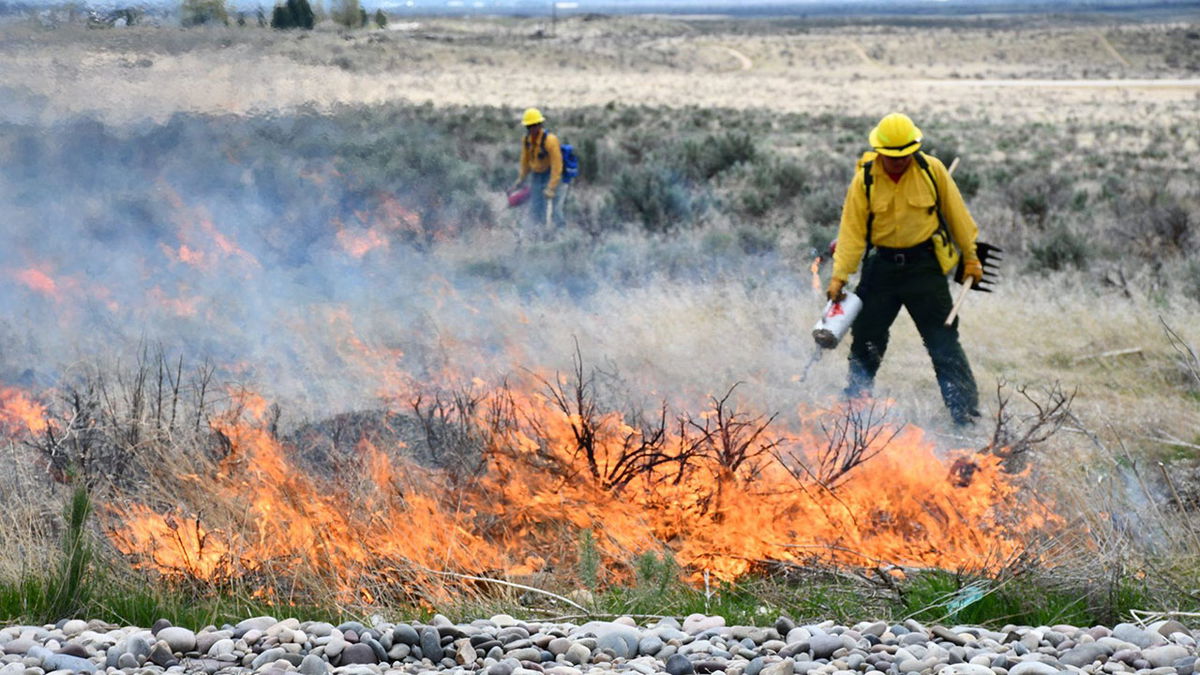
SWAN VALLEY, Idaho – The U.S. Forest Service will be conducting controlled burns Wednesday in the Rainey Creek area near Swan Valley.
Swan Valley Fire Chief Travis Crystal asks members of the public not to call 911 or emergency services if they see smoke or fire from these controlled operations.
The Caribou-Targhee National Forest Facebook page states that the prescribed fire is planned for Rainey Creek in the South Fork Zone’s Palisades Ranger District – encompassing 100 acres, five miles east of Swan Valley.
“We use prescribed fires to help reduce overgrown vegetation to help protect local communities, infrastructure and natural resources from wildfires,” the Forest Service posted.
Future planned burns will continue through May, covering:
South Fork Zone:
• South Valley – Mike Harris Pile Burning: 300 acres, three miles south of Victor, Idaho, Teton Basin Ranger District
• South Valley – Forest Boundary Pile Burning: 85 acres, four miles west of Victor, Idaho, Teton Basin Ranger District
• Hill Creek: 800 acres, five miles southeast of Driggs, Idaho, Teton Basin Ranger District
Bear River Zone:
• Strawberry: 500 acres, 15 miles west of Montpelier, Idaho, Montpelier Ranger District
For more information, you can visit the official Caribou-Targhee National Forest website.
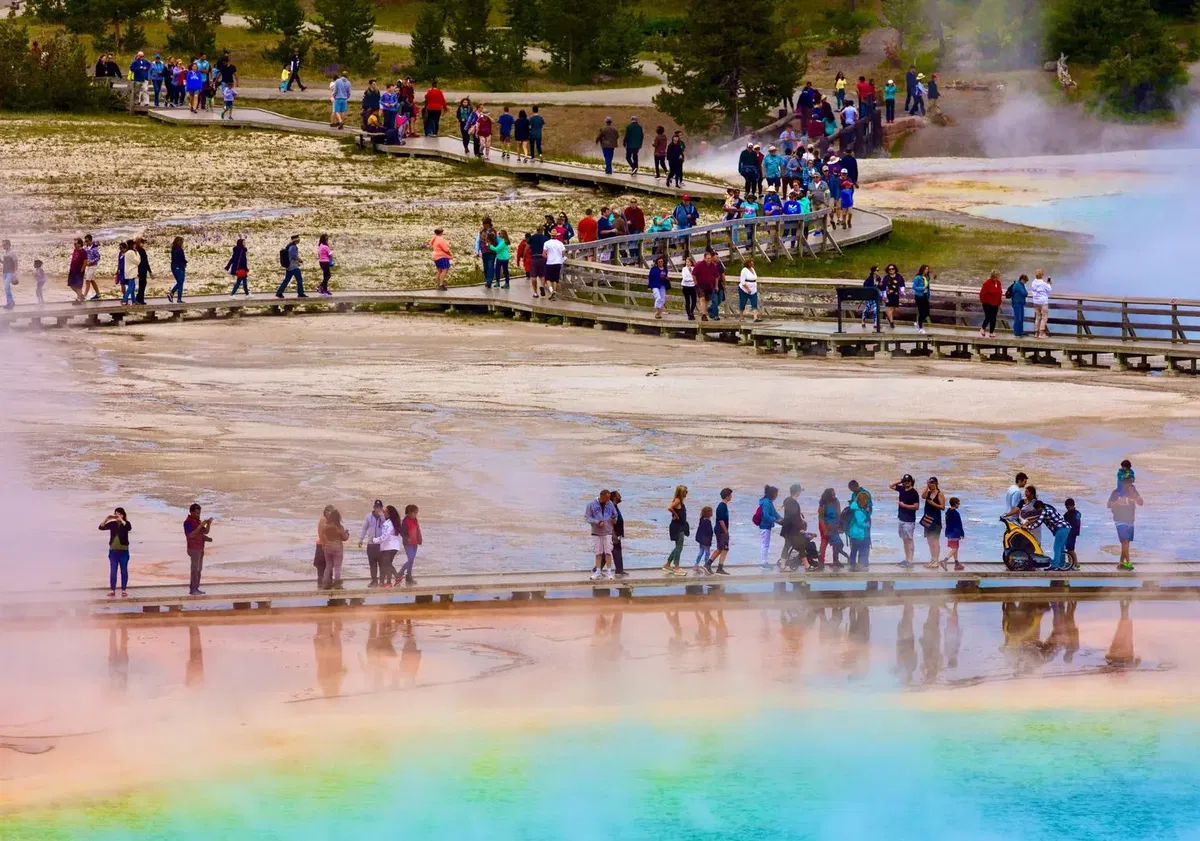
Yellowstone, Montana (KIFI) – Yellowstone National Park welcomed nearly 4.8 million recreation visits in 2025, according to a new release from the National Park Service.
The park recorded 4,762,988 visits over the year—an impressive number that comes despite a 43-day partial federal government shutdown, the longest in U.S. history. During that time, the National Park Service worked to keep parks open and accessible whenever possible, allowing visitors to continue accessing some of the nation’s most iconic landscapes.
2025 Visitation Highlights
4,762,988 recreation visits
86,891,452 total visitor hours spent in the park
1,238,983 overnight stays
Park officials say these numbers reflect not only Yellowstone’s enduring popularity, but also the importance of maintaining access to public lands—even during challenging circumstances.
courtesy of the Yellowstone National Park Service
Visitation data plays a key role in how the National Park Service manages park resources, staffing, and visitor experience. Officials use these trends to balance conservation efforts with public access, ensuring parks remain both protected and enjoyable.
That demand is also spilling into nearby communities like West Yellowstone, where in-town employees and locals like Cam Carter are already preparing for a busy summer. Carter, who helps operate the Holiday Motel in town, shared that they’ve seen rooms consistently booked out during the summer season.
“The whole town is only one square mile, so it can become very packed,” Carter shared. “We’ve had to turn away people in our motel room every single night at peak season. We definitely have felt that, in the last couple of years, especially since Covid, it’s been a lot busier in the park, since Covid.”
The National Park Service also noted that Yellowstone’s numbers are part of a broader national dataset. Of the 433 sites in the National Park System, 406 parks reported visitation in 2025, with records dating back to 1979 in some locations.
For visitors and park managers alike, the data offers a snapshot of how Americans continue to connect with the outdoors—even in uncertain times.
Neal Larson and Julie Mason kick off the week already feeling like it should be Thursday, bouncing between birthday banter and real frustration with how things are going—especially at the Idaho Legislature. They dig into the Senate’s blow-up over a major budget, agreeing Senator Doug Ricks is one of the few who shows up the same way in every room, and pushing back on the idea that one dramatic floor speech “changed everything.” In their view, the speech mostly raised the emotional temperature without offering a path forward, and now JFAC is stuck trying to find enough Senate votes without alienating the ones they’ve already got. From there, they pivot to a broader complaint: lawmakers and agencies kicking hard problems down the road, including the ongoing fight over ending automatic teacher union dues deductions—something they argue should be straightforward if lawmakers are actually in charge.
The show then swings national, reacting to the Iran conflict (Operation “Epic Fury”), skepticism of media narratives that lean on Iranian claims, and Caroline Leavitt’s criticism of anonymous-source reporting and subsequent “corrections.” They talk through divisions on the right, the weird incentives in political coverage, and why they see national security as worth short-term pain (including gas prices). Back home again, they call out loaded language in coverage of a bill requiring schools/health professionals to inform parents about transgender identification requests, arguing parents aren’t the villains and kids don’t have “privacy rights” from mom and dad. They also revisit oversight issues at Idaho Health and Welfare (and the AG’s authority to investigate COVID-era childcare grants), then close with a warning that a medical marijuana petition drive is using the same “compassion campaign” playbook as Medicaid expansion—and they think it could work.
**Highlights** – Why the Senate budget fight isn’t about one speech—and why JFAC is now negotiating in a minefield – Media vs. Iran narratives: distrust of Iranian “reporting,” anonymous sources, and why corrections matter – “Outing” vs. “informing parents”: the loaded language battle over schools and parental rights – Idaho Health and Welfare oversight concerns and the ongoing authority fight for investigations – Medical marijuana petitions: the “compassion” pitch, and why they think it may pass
Let’s talk advertising. When you want to advertise on the radio, you call the station, right? But what about Facebook, Instagram, Hulu, Disney+, Peacock, and other streaming platforms?
You could try clicking around, reading books, or taking online courses to figure it out—or you can let us handle it. At Sandhill Media Group, we’re your local experts in both radio and digital marketing.
ROBERTS, Idaho (KIFI) — Painter Bob Ross once said, “You need the dark in order to show the light.” For 12-year-old Caellum Hebdon, who is battling brain cancer, that light is now coming in the form of encouraging news about his treatment.
The update comes days after Hebdon’s story first aired on Local News 8, highlighting the Idaho Falls middle schooler’s battle with brain cancer and his passion for drawing prehistoric creatures.
Brain scans show encouraging results. Courtesy Hebdon family.
Caellum Hebdon and his family recently received results from a follow-up MRI that showed his chemotherapy and radiation treatments are working better than doctors expected.
“We just see minimal cancer in there now — just two little spots left,” said his mother, Kaylene Hebdon. “So much has cleared up. It’s just amazing.”
Hebdon was diagnosed in 2025 after he suffered a stroke. He was life-flighted to Primary Children’s Hospital in Salt Lake City, where doctors discovered a bleeding tumor in his brain and performed emergency surgery to save his life.
The stroke temporarily took away his ability to speak and move the right side of his body. This became an obstacle that Caellum had to overcome, because he was right-handed and art is his passion in life.
When asked what he wants to be when he grows up, Hebdon had a quick answer. “Artist.”
Months of therapy helped him regain those abilities — including the ability to draw. His artwork has since earned him national attention as a finalist in the “Bob Ross presents: America’s Most Artistic Kid” competition.
Following the Local News 8 story, his family says the community support helped push Hebdon back into first place in his contest group.
“He’s back at number one in his group of about 60 people,” said father JayC Hebdon. “All the extra votes people have been giving have made a really big difference.”
Doctors say the radiation therapy Hebdon completed last fall will continue working over the next year as his body clears damaged cancer cells.
His family says the latest scan results have given them something they’ve been waiting months to feel.
“Before, we didn’t know what was going to happen,” said his mother, Kaylene Hebdon. “Now we know the treatment is working. There’s hope.”
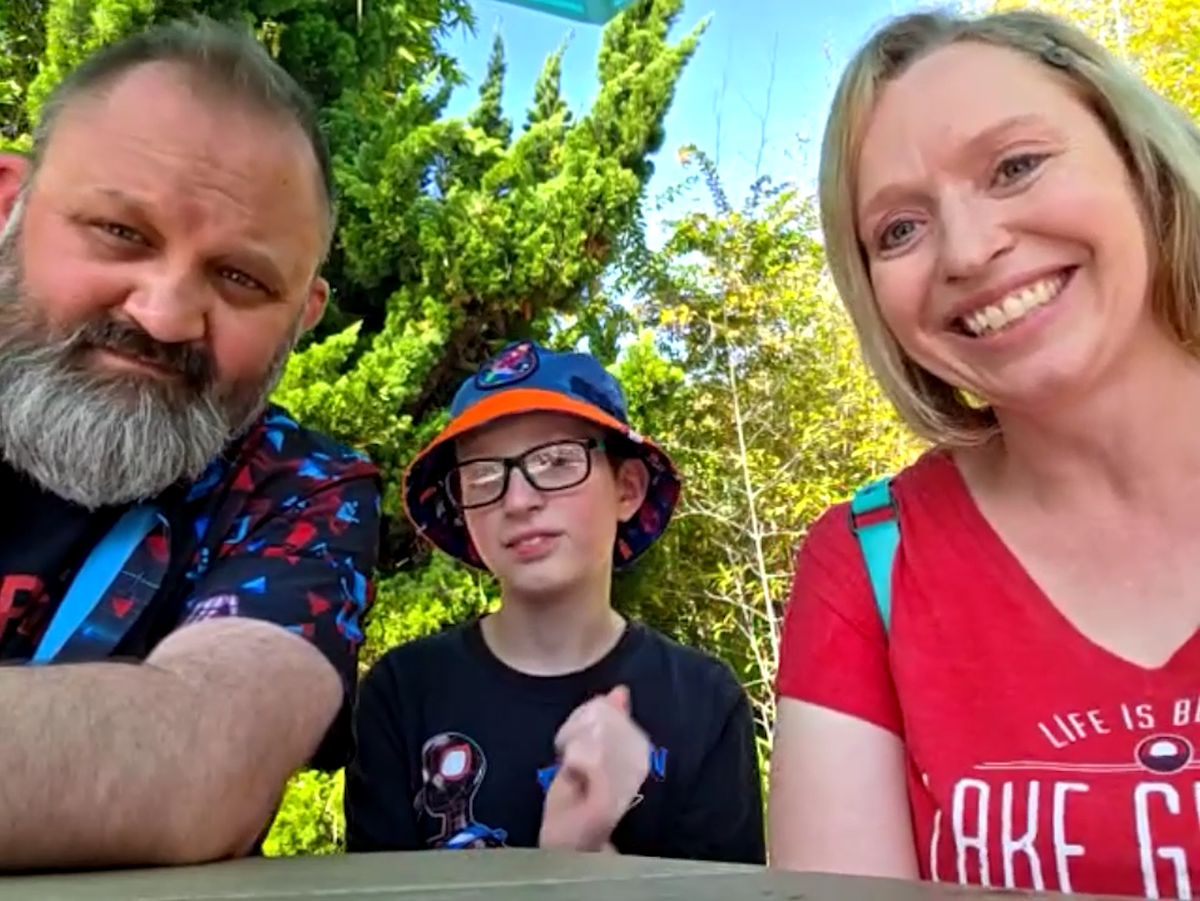
To celebrate the encouraging news, the family took a spring break trip to California, visiting Legoland and SeaWorld before heading to Universal Studios.
Caellum, who remains quiet but appreciative of the support, offered a simple message to the community, helping him stay in the contest.
“Thanks for all the votes,” Caellum said.
If Bob Ross taught generations that painting can bring calm in difficult moments, Caellum is Eastern Idaho’s living proof.
Voting for Hebdon in the national art competition remains open, with the top contestants advancing to the next round.
If you want to help Caellum bring home that national title and help his family with those medical bills, there are a few ways to get involved. The “America’s Most Artistic Kid” contest relies on community support. You can cast one free vote every 24 hours by heading to the contest website.