
IDAHO FALLS, Idaho (KIFI) – Each year, Idaho invests $2.5 billion in public education. Yet the attendance-based funding formula that allocates those dollars is 32 years old, and the education landscape has evolved dramatically.
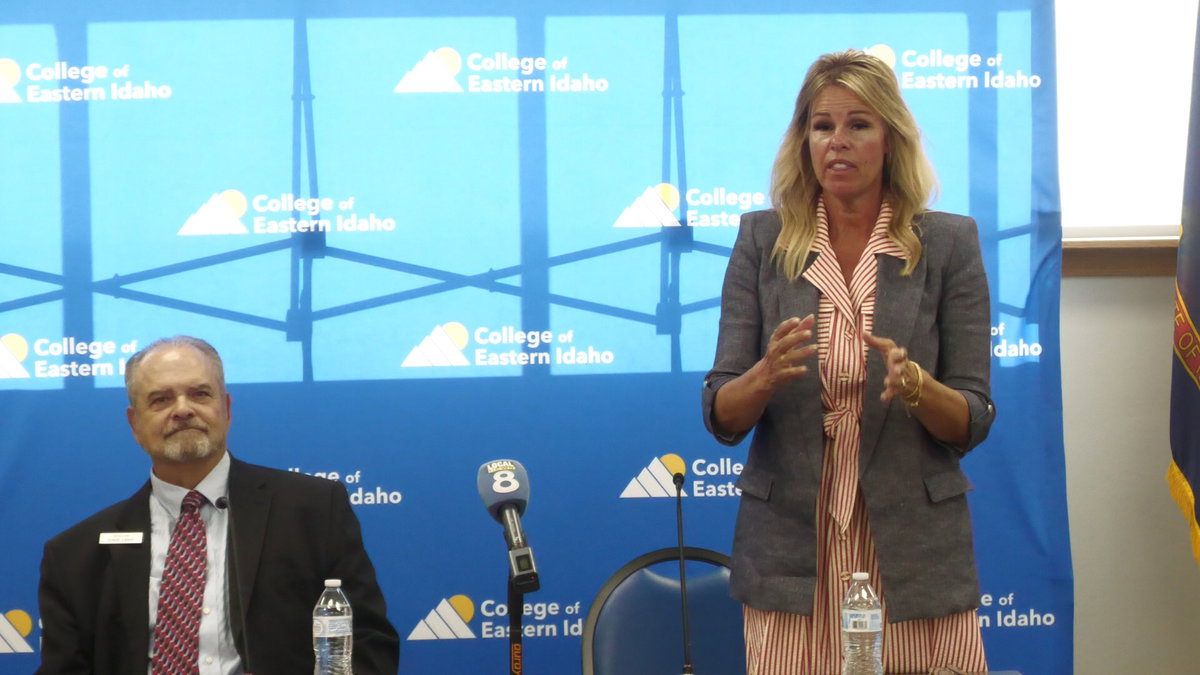
Idaho Superintendent of Public Education Debbie Critchfield and Idaho’s Senate Education Committee Chairman Dave Lent met with education stakeholders Thursday at the College of Eastern Idaho to discuss options for modernizing the public school funding formula.
“When we talk about modernizing the funding formula, what we’re trying to do is catch up as our society and culture has evolved,” State Senator Dave Lent (R-Idaho Falls) said. “We were just talking before this about all the different ways we educate folks now – all of those options. We have to be able to accommodate that and have a funding formula then that matches up and allows us to thrive.”
The Idaho Legislature passed Senate Concurrent Resolution 121 this year requesting modernization of the public school funding formula and asking “the Idaho State Superintendent of Public Instruction to present draft legislation to the Legislature that revises” how schools are funded.
“Our current funding distribution isn’t getting the job done,” said Idaho Superintendent of Public Education Debbie Critchfield. “How do we know that? Well, I know that because I hear constantly from communities that they’re tired of being asked for supplemental levies or other types of levies or school bonds.”
According to the memorial, previous “educational delivery models and student needs differ substantially from those of today, including traditional brick-and-mortar schools, rural and remote districts, small and large districts, public charter schools, virtual education programs, and blended learning models.”
Multiple school administrators and parents emphasized the need for enrollment-based funding.
Today’s attendance-based formula doesn’t account for schools’ fixed costs when students are absent and imposes significant paperwork requirements, teachers shared.
“Base funding should follow the students. Extra funding should follow the need. That’s my belief there,” said parent Jacob Petersen. “Rural and small schools, especially because I’m here on the east side of the state… – I’d would love for those students here to be considered and factored in.”
Marcy Curr, a former Pocatello speech and debate teacher with 18 years of experience, also emphasized the unique challenges rural schools face providing for infrastructure and programs on a more limited tax base.
“Over 50 percent of the high schools in the state are rural,” Curr said. “They are not in Boise. [Consider] the way that these funding formulas impact places like Soda Springs, Grace, Marsh Valley, American Falls, Pingree.”
These schools in smaller communities face dramatically different pressures than urban schools.
“My parents live up in Swan Valley. What that looks like there is so profoundly different than what it looks like in Boise,” Curr said. “The issues that the teachers face, the training that the teachers need, and even to an extent, the priorities that the kids have. We need to take those things into account when we’re looking at the formula.”
Listening sessions are being held in Idaho Falls, Boise and Coeur d’Alene.
Additional comment will be accepted at a Virtual Funding Formula Modernization listening Session on June 25 from 6 to 8 PM at https://idahosde.zoom.us/j/96901934245#success.