
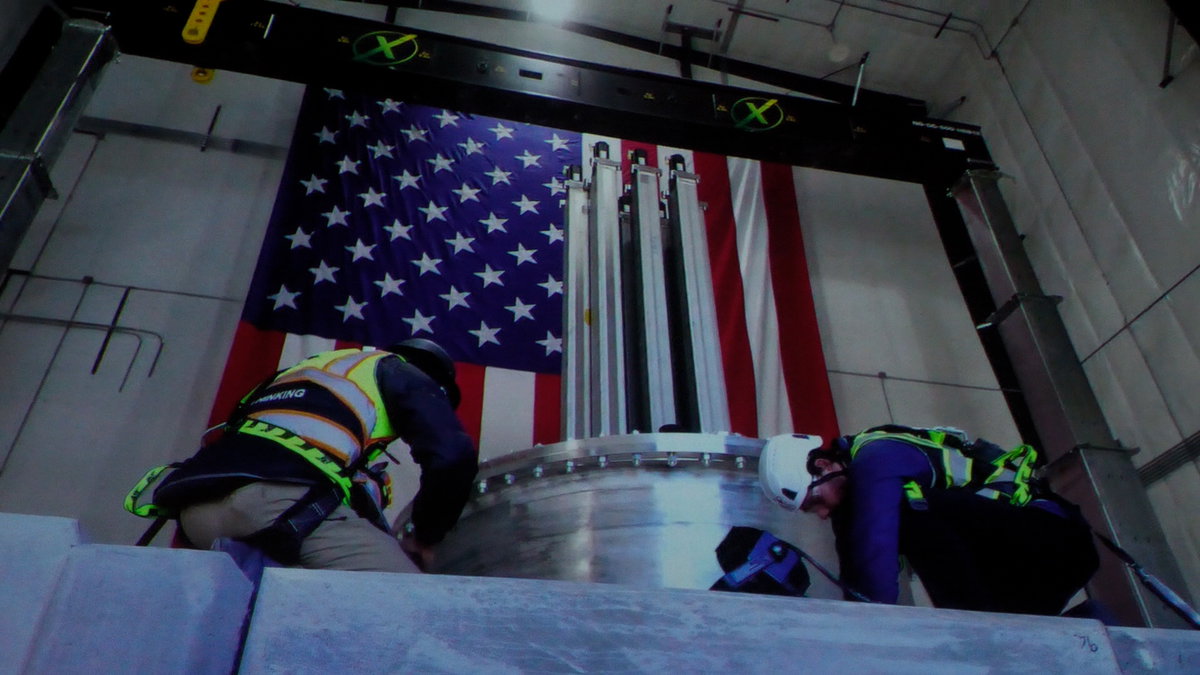

IDAHO FALLS, Idaho (KIFI) – The world premiere of Idaho National Laboratory’s “The Road to Advanced Nuclear” documentary hit the big screen Wednesday at the Frontier Center for the Performing Arts.
The more than 25-minute documentary dives into the laboratory’s role at the helm of a surging advanced nuclear movement in the U.S.
“Nuclear got its start in Idaho, and the documentary shows the history of it, and so we’re now doing it again. This shows that we’re ready, we’re getting into the next-generation of nuclear reactors,” said Film Producer Donna Kemp Spangler, an INL communications specialist for nuclear science and technology.
Antares Nuclear’s Mark-0 Reactor was the first advanced nuclear reactor to achieve criticality this year on June 4.
“That’s ultimately the goal of nuclear fission is that you want to create that reaction, control it, and then get usable energy from it,” said Antares Nuclear Licensing Director Jason Andrus. “I will say for Antares, that was a huge moment because for so long, the entire focus of the company had been to produce a system that could in fact do that.”
A panel of experts moderated by Idaho Falls Mayor Lisa Burtenshaw featured INL Director John Wagner, College of Eastern Idaho President Lori Barber, Marvel Reactor Lead Abdalla Abou-Jaoude, Regulatory Research and Plant Optimization Division Director Katya Le Blanc and Andrus, who responded to questions from the audience.
“What we’ve done here now is not sacrifice, safety or security, but focused on the things that really matter,” said Wagner. “We just had not been able to do that for the last five decades. And so being able to do that, to sort of break through and I’m going to say right size our approach to safety and security to get all that to come together and then demonstrate not just one, not just two, not just three – we now have five across the country – is breaking through that longstanding barrier.”
Idaho is one of five states vying to become a Nuclear Lifecycle Innovation Campus, which could bring up to 25,000 jobs to the region.
You can watch the full documentary here.