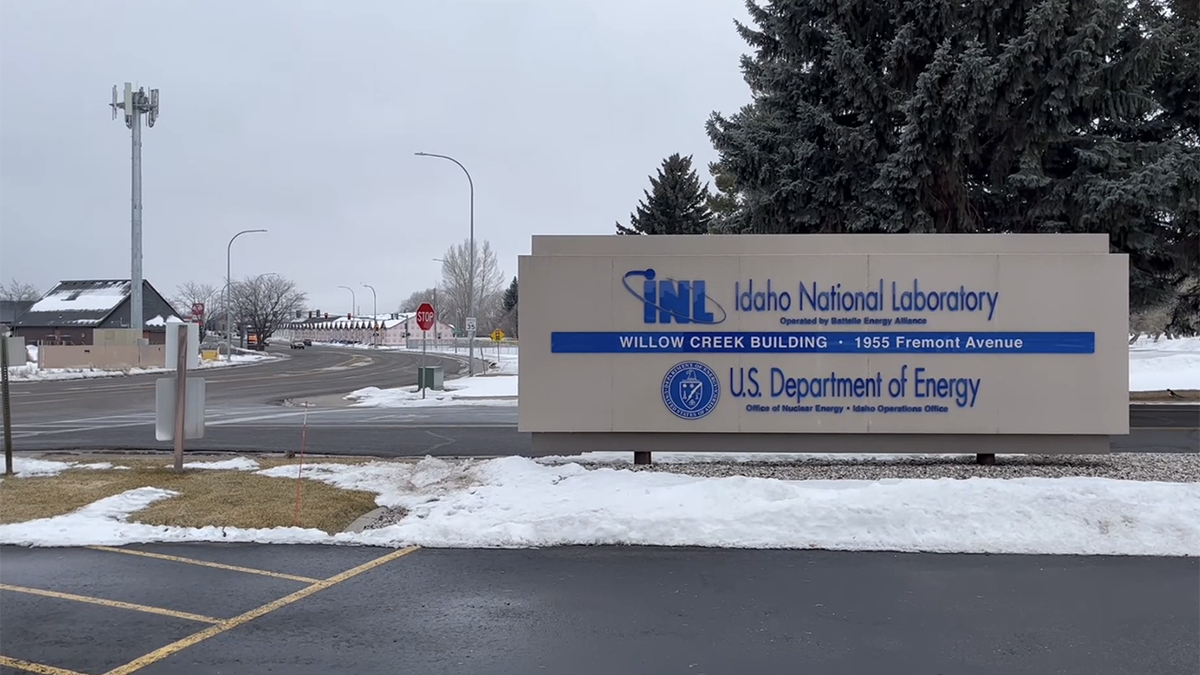

IDAHO FALLS, Idaho (KIFI) – The need for water at Idaho National Laboratory is butting up against Idaho’s system of water rights under prior appropriation in the “U.S.A. v. State of Idaho’ lawsuit filed in the U.S. District Court of Idaho on September 11.
In its complaint, the federal government states that the U.S. Department of Energy is entitled to 35,000 acre-feet per year, according to the Snake River Basin Adjudication (SRBA).
The case arises after Idaho Department of Water Resources (IDWR) Director Mat Weaver issued a curtailment order on May 14 requiring the Department of Energy to “cut water use to zero,” the complaint states, because its water rights were junior to October 11, 1900.
Idaho said that the order did not “require use of water to be cut to zero.”
The U.S. Department of Energy’s water rights go back to April 7, 1950.
Attorneys for the Energy and Natural Resources Division of the U.S. Department of Justice argue that the “order is invalid as applied to the United States, that IDWR lacks the authority to administer federal water rights,” and asks to be exempted from future curtailment orders.
But in a statement, Idaho Attorney General Raul Labrador responded, “Water is the lifeblood of Idaho, and my office will protect the water rights of Idahoans who depend on it. Our sovereign authority to administer those rights has been established for more than 100 years, and it applies to every water user in this state, including the federal government. The federal government gets no special treatment under Idaho law. We will work with federal agencies to meet their needs, but we will not sacrifice the water rights of Idaho farmers, ranchers, and families to do it.”
On July 14, the U.S. Department of Energy (DOE) joined the Big Lost River Ground Water District “only for the 2026 water year.”
The curtailment order was lifted on July 24 for the DOE.
The federal government’s case
The federal government argues that the curtailment “order, and Idaho’s statutory scheme which authorized it, unconstitutionally and unlawfully seeks to require the United States to participate in a state administrative proceeding for which the United States has not waived its sovereign immunity, and to directly regulate federal agencies contrary to the Supremacy and Property Clauses of the United States Constitution and the principle of federal sovereign immunity.”
The federal attorneys argue that curtailing INL’s water right could cut off groundwater used to cool the Advanced Test Reactor and run emergency safety operations.
They also stated that such curtailment “poses nuclear safety risks and would halt research support for the Navy’s nuclear-powered warships and commercial advanced reactor licensing.”
It would “suspend development of new reactor technologies and fuel fabrication projects at INL at a critical juncture in the nation’s nuclear energy renaissance,” the attorneys assert.
Idaho’s response
In its Oct. 16 response, the state of Idaho, represented by Idaho Attorney General Raúl Labrador and his office, argues that the federal government’s case amounts to “an unconstitutional taking of decreed water rights,” by seeking to protect federal water rights at the “expense of decreed water rights held by both senior and junior appropriators, which are vested property rights.”
This is the first time the federal government has claimed “its decreed water rights were not subject to administration by IDWR,” the counterclaim states.
The state argues that the Desert Land Act, passed by Congress in 1877, “‘severed’ non-navigable waters within the public domain in the Western states and made these waters subject to … control of the Western states.”
Idaho denies that the federal government’s water rights were granted “in support of this energy dominance and national security mission.”
The state also contends that Idaho Department of Water Resources has “the authority to administer federal water rights,” citing the McCarran Amendment.
Labrador and his office argue that “the U.S. waiver of sovereign immunity in the SRBA … makes the United States fully subject to Idaho water law, both substantive and procedural.”
Idaho cited United States v. United States Board of Water Commissioners (9th Circuit 2018), which found that “fundamental principles of federalism vest control of water rights in the states…. Decreed rights are administered under applicable state law.”
Additionally, the state asserts that DOE’s water right doesn’t allow for “ground water to be pumped out of priority.”
“The DOE Water Right does not authorize the United States to pump ground water that is needed to satisfy senior-priority surface water rights,” the counterclaim states.
Finally, Idaho also asserts that jurisdiction for the case belongs in the Twin Falls District Court, rather than the District Court of Idaho.
The case comes on the heels of a May 2025 executive order from President Trump creating the Reactor Pilot Program, and as Idaho pushes forward in its bid for a Nuclear Lifecycle Innovation Campus in the state.