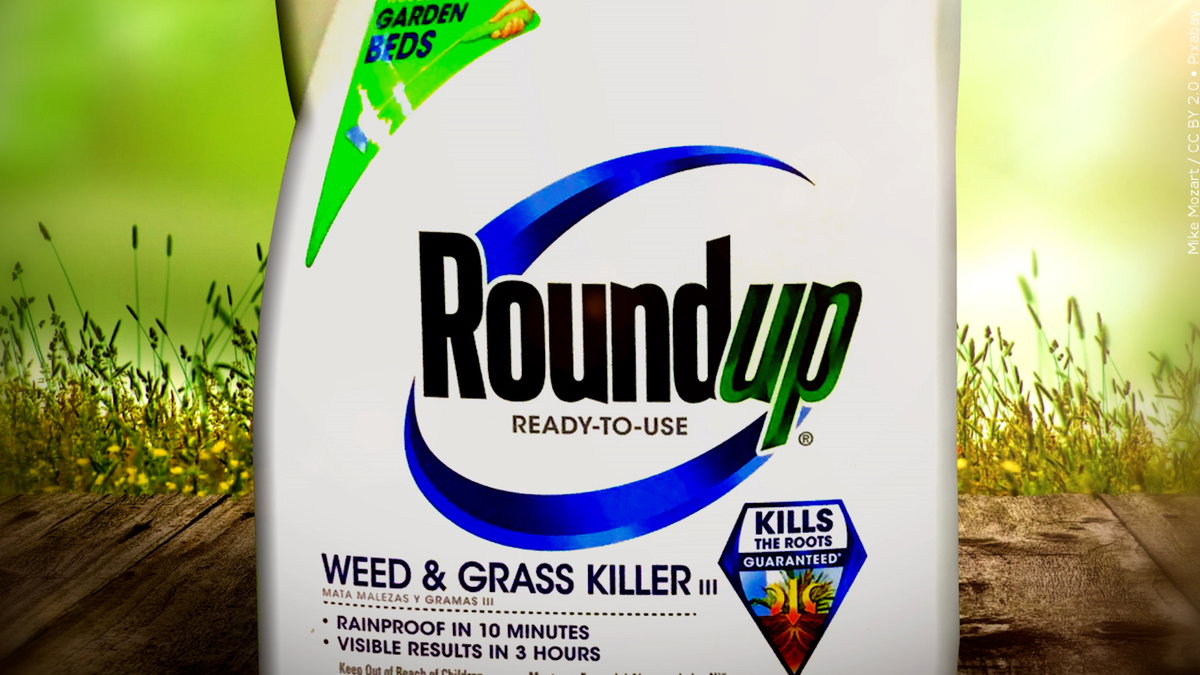

WASHINGTON, D.C. (KIFI) – The U.S. Supreme Court released a consequential decision Thursday in Monsanto v. Durnell for America’s agriculture industry.
“This is a landmark ruling from the Supreme Court. They ruled 7 to 2 in favor of Monsanto,” said Snake River Sugarbeet Association Executive Director Samantha Parrott.
The case centered around John Durnell, a Missouri man who was diagnosed with non-Hodgkin’s lymphoma. He argued the cancer was caused by spraying parks with Roundup for almost two decades in his neighborhood.
Durnell filed a “failure-to-warn” claim, stating “Monsanto should have included a cancer warning on Roundup’s label,” court syllabus states.
He sued Monsanto in 2019 and was awarded $1.25 million in damages by a Missouri jury.
However, in a 7-2 decision, Justice Brett Kavanaugh wrote for the majority that federal law overrides “Durnell’s state law failure-to-warn claim because the claim would require Monsanto to add a cancer warning to Roundup’s label.”
Parrott called the ruling a victory for farmers.
“The court case is not about whether Roundup causes cancer or not. That’s not what this ruling is about. It’s just simply about who has the authority to determine what goes on those pesticide labels,” Parrott said. “Our opinion is that it should be EPA that is the law of the land, and that we have the federal government making this decision, and so that we don’t have a patchwork of states having different requirements in each state.”
Since 1974, the U.S. Environmental Protection Agency has approved Roundup for use as a herbicide.
“Because EPA has repeatedly concluded that glyphosate is not likely to cause cancer, the agency has not required a cancer warning on Roundup’s label,” Kavanaugh wrote in the court’s decision. “Importantly, EPA’s regulations require a pesticide manufacturer such as Monsanto to use the EPA-approved pesticide label—here, the Roundup label without a cancer warning—unless and until EPA approves or requires a different label. Moreover, to ensure ‘[u]niformity’ in labeling, the Federal Insecticide, Fungicide, and Rodenticide Act (FIFRA)’s preemption clause prohibits States from imposing any pesticide labeling requirements that are ‘in addition to or different from’ the federal labeling requirements.”
In opposition to the ruling, Justice Ketanji Brown Jackson was joined by Justice Neil Gorsuch in her dissent.
“The Court misunderstands FIFRA’s requirements, misinterprets the scope of FIFRA’s preemption, and ultimately leaves Durnell without a remedy for the significant harms he has suffered,” she wrote.
Deep Idaho Roots
Monsanto’s parent company, Bayer AG, owns a mine in Soda Springs that is a major employer in the region.
“It’s the country’s only elemental phosphorus mine,” Parrott said. “That is basically the beginning ingredient in Roundup. We’re really proud that’s here in Idaho, and it provides lots of jobs in that rural community.”
She emphasized that the herbicide is essential for improving yields and fighting weeds in agriculture, and that no trace of glyphosate is found in the final sugar product produced by sugarbeet growers in Idaho.
“It’s safe to use it when you use it as directed. Our farmers jump through a lot of hoops to ensure that they are applying this product correctly, and our farmers would not do anything that would harm the consumer,” Parrott said. “The same product that they grow on their farm, they feed to their family too. So I just really hope that folks can trust our farmers.”
Local News 8 has reached out to individuals opposing herbicide use and companies selling both conventional and organic products, and will update this story as additional information is received.
Tune in tonight for our 10 PM broadcast.