
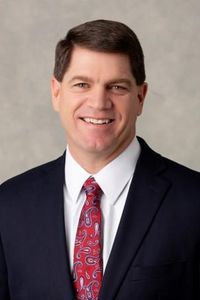
In a recent interview with Neal Larson and Julie Mason on Newstalk 107.9, Idaho State Senator Kevin Cook (R-Idaho Falls) provided an in-depth look at the current legislative session, focusing on artificial intelligence in education, contentious state budget strategies, and the rebranding of higher education institutions. As a member of the Joint Finance-Appropriations Committee (JFAC), Cook highlighted the internal friction regarding how the state manages its fiscal responsibilities and prepares students for a changing workforce.
Senator Cook is currently advocating for a bill that establishes a state-guided framework for AI education in schools. The legislation, which recently passed the Senate floor with significant support, aims to balance technological advancement with student safety. Cook emphasized that the bill prioritizes “local control,” allowing individual districts to implement AI curricula that suit their specific needs. Comparing AI to the historical introduction of the calculator, Cook argued that students must understand the technology to remain competitive. He noted that while AI is a pattern-based tool rather than a human entity, it is essential for preparing children for future careers that may not yet exist.
The conversation turned to state fiscal policy, where Cook expressed strong opposition to a recent JFAC decision to implement 1% to 2% across-the-board budget cuts for the 2026 fiscal year. Cook characterized these broad cuts as “fiscally irresponsible,” suggesting they penalize efficient agencies while barely affecting “bloated” ones. He argued that surgical, line-item reductions would be more effective, claiming his research identified $60 million in potential savings compared to the $15 million generated by the broad cuts. Cook warned that neglecting specific costs, such as deferred maintenance for state buildings, ultimately leads to higher expenses for taxpayers in the long run.
Addressing the status of essential services, Cook clarified that education funding has faced indirect challenges. While some suggest education was protected from cuts, Cook noted that university funding tied to population growth was withheld. Conversely, he described the Idaho State Police (ISP) and local law enforcement as high priorities for protection, citing severe staffing shortages that require officers to rotate across the state to maintain basic patrols.
The Senator also voiced support for rebranding Lewis-Clark State College as a university. He argued the change is necessary for marketing and public perception, as many mistakenly view the institution as a two-year community college. According to Cook, the college president has indicated that the transition would be cost-neutral, funded through existing savings. Finally, Cook addressed the Idaho Supreme Court’s ruling on House Bill 93, which provides tax credits for alternative K-12 education. While the court found the bill constitutional, Cook maintained his original concerns regarding legislative oversight, though he acknowledged the legislature must now focus on monitoring how those funds are utilized.