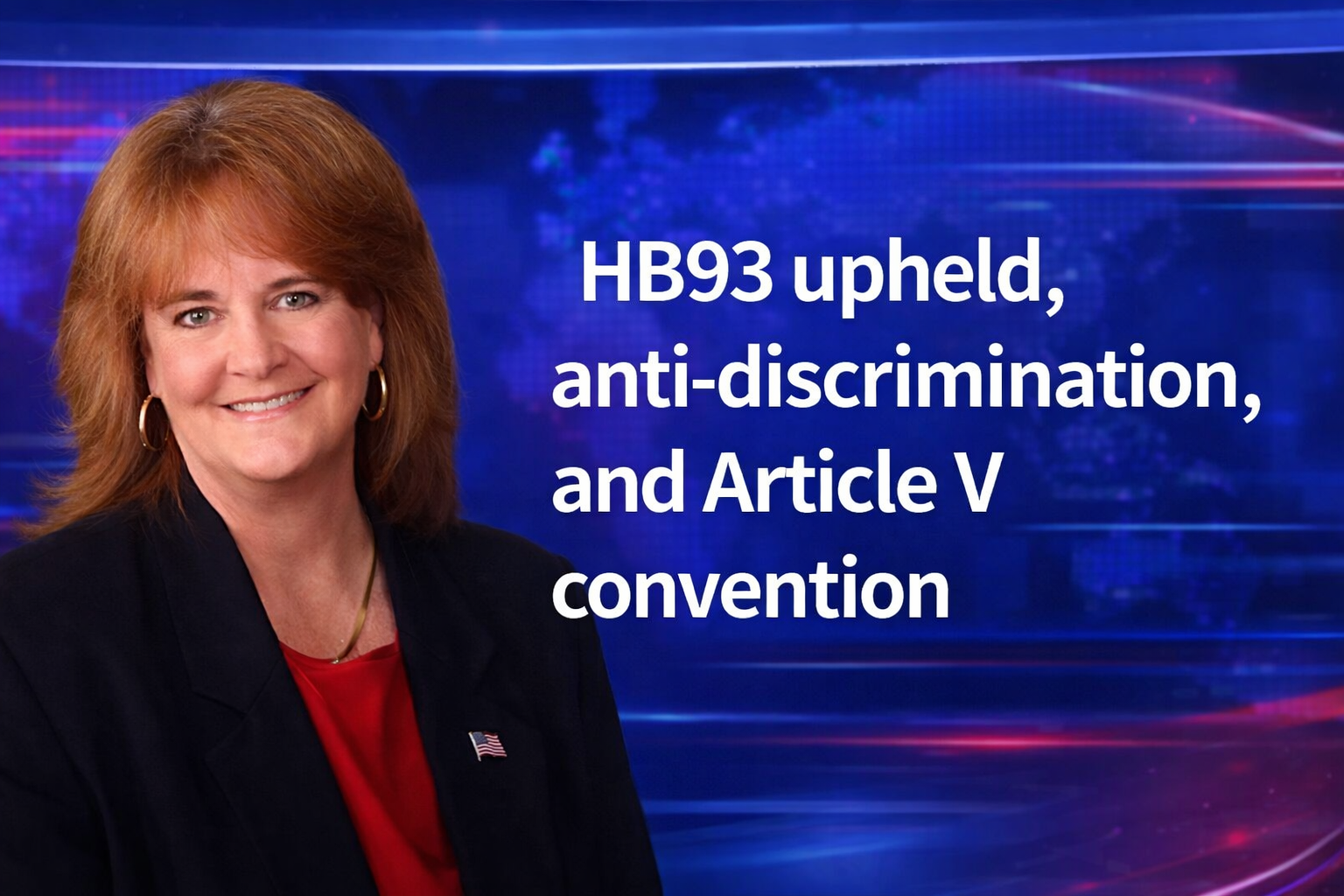
State Representative Barbara Ehardt, R-Idaho Falls, recently provided an update on several high-profile legislative matters currently moving through the Idaho Capitol. In a wide-ranging discussion, Ehardt detailed the progress of a bill regarding local anti-discrimination ordinances, the debate over an Article V Convention of States, and the general mood of the legislature following recent judicial rulings.
A primary focus of the current session involves a bill aimed at standardizing anti-discrimination laws across the state. Ehardt, who chairs the relevant committee, noted that the legislation recently passed the House floor with a 53-vote majority after being approved in committee 13-3. The bill seeks to address city-level ordinances, particularly those involving “public accommodations.” Ehardt argued that while housing and employment protections are largely settled by state and federal law, local mandates regarding public accommodations can infringe upon First Amendment rights and religious freedoms.
If signed into law, the legislation would effectively nullify local ordinances previously passed by cities such as Idaho Falls. Ehardt noted that the Idaho Falls City Council passed its third tier of anti-discrimination protections during the pandemic, a move she criticized for lacking sufficient public discourse at the time. “You can buy anything in the store, you just can’t force someone to go against their conscience,” Ehardt stated, specifically citing concerns over mandates that might affect private businesses or religious organizations.
The conversation also turned to the Article V Convention of States, an issue that Ehardt admitted divides many conservatives. Despite support from some of her Republican colleagues, Ehardt expressed firm opposition to the movement. She cited historical concerns from the founding fathers and warned that such a convention could open a “can of worms” regarding the U.S. Constitution. Her primary objections include the lack of a clear mechanism to enforce new amendments and the potential for small states like Idaho to be overshadowed by larger states like California in a convention setting. “It is going to be contentious, and I worry that we end up with a changed Constitution,” she cautioned.
Additionally, Ehardt briefly touched on the reaction at the Capitol to a recent unanimous Supreme Court ruling regarding ballot access, describing the mood as “ecstatic” and noting that many legislators felt the decision was expected. She also dismissed a personal bill proposed by Representative Steve Berch, D-Boise, which sought to pause parental tax credits, labeling the proposal as “bad form” and unlikely to gain traction in the Republican-controlled legislature.
As the session continues, Ehardt indicated that the House will soon shift its focus to discussions on a balanced budget amendment and other committee work, including recent lengthy hearings on mosquito abatement districts. She concluded by emphasizing that while her colleagues are often divided on policy, there remains a mutual respect for the different perspectives held within the legislature.