
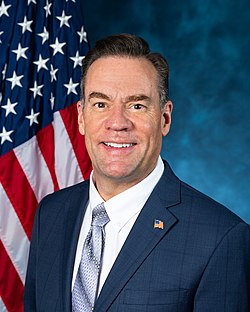
U.S. Representative Russ Fulcher of Idaho’s 1st Congressional District recently outlined his primary legislative objectives, focusing on the intersection of election integrity, federal agency funding, and middle-class tax relief. During a broadcast interview, Fulcher detailed his support for the SAVE Act, a legislative measure intended to mandate proof of citizenship and identification for participation in federal elections. The congressman argued that current immigration trends necessitate stricter verification processes to ensure the eligibility of the voting population and the stability of the electoral process.
Fulcher noted that while the SAVE Act has successfully passed the House, it faces significant procedural challenges in the Senate, where it requires a 60-vote supermajority to advance. He also raised concerns regarding the long-term impact of migration on congressional apportionment following future census cycles. Beyond election issues, the representative addressed the current partial shutdown affecting the Department of Homeland Security (DHS), which has primarily impacted operations for the Federal Emergency Management Agency (FEMA) and the Transportation Security Administration (TSA).
The congressman clarified that Immigration and Customs Enforcement (ICE) remains funded for the next two years under previous legislation. However, he emphasized his opposition to any funding agreements that would reduce ICE’s enforcement capabilities as a condition for reopening other agencies. Fulcher suggested that if legislative stalemates continue, House Republicans might seek to utilize the budget reconciliation process to bypass the Senate’s 60-vote threshold and advance their specific policy priorities regarding border security and agency oversight.
Turning to economic policy, Fulcher highlighted several tax adjustments aimed at increasing disposable income for working families during the current tax year. These include an increased standard deduction—setting the first $31,500 of income as non-taxable—and an expansion of the child tax credit. He specifically championed the elimination of federal taxes on overtime pay and tips, an initiative he described as a way to prioritize individual earnings over federal program funding. To engage further with his district, Fulcher announced a telephone town hall to allow for broader participation on topics ranging from international affairs to federal agency funding.