
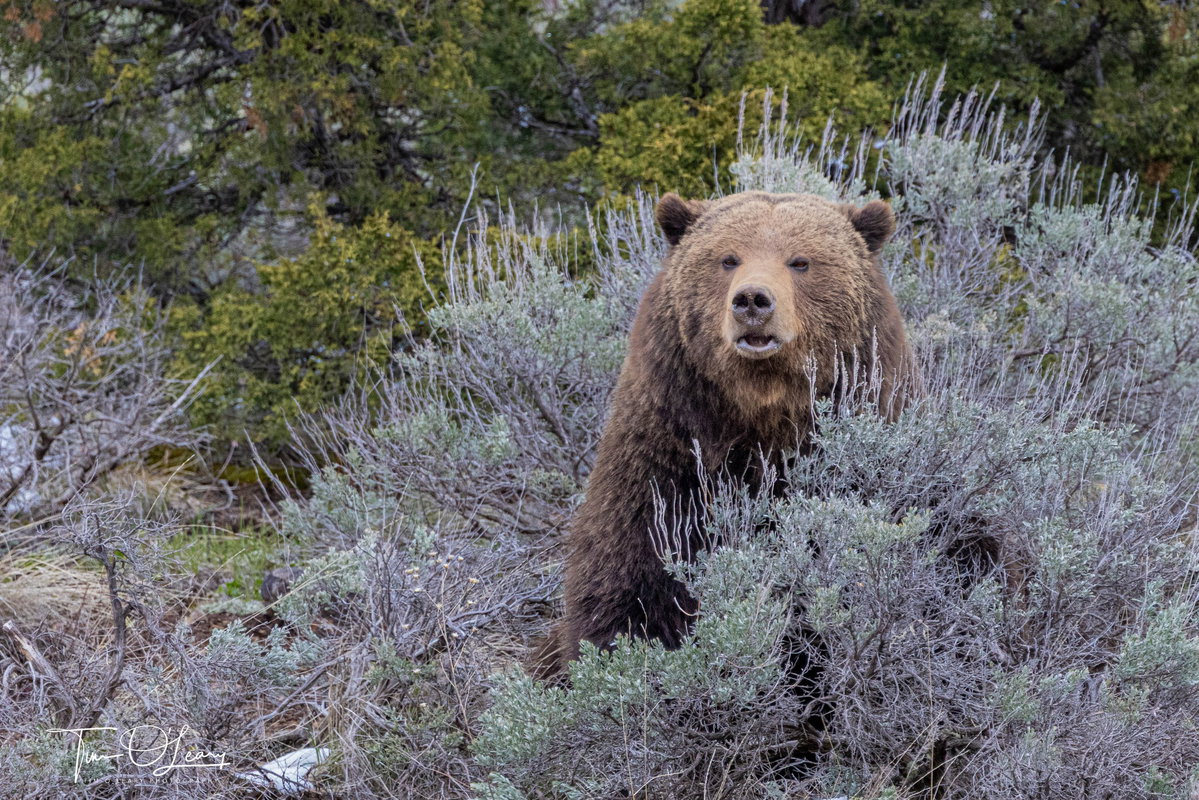

YELLOWSTONE (KIFI) – As warmer temperatures arrive earlier than usual across the Greater Yellowstone Ecosystem, wildlife experts say the current spring conditions are creating a dangerous rise in human-bear encounters heading into the busy summer tourism season.
Bears emerged from hibernation early this spring after a mild winter with below-average snowpack, while millions of visitors and locals are already returning to Yellowstone National Park and surrounding recreation areas. Wildlife officials say the combination is increasing the likelihood of potentially deadly encounters.
Earlier this month, two hikers were seriously injured in a bear attack near Yellowstone’s Mystic Falls Trail, a popular southern bowl pathway close to Old Faithful. Park officials believe a mother grizzly with cubs may have been involved in the attack. The incident prompted temporary trail closures and renewed safety warnings from the National Park Service and Idaho Fish and Game.
“Did they come out maybe earlier than they usually do? Yeah, that’s probably the case,” said Eric Freeman, regional wildlife manager. “Lack of snow on the landscape and warmer temperatures likely contributed.”
Wildlife experts say bears are especially active during the spring as they search for food after months of hibernation. While some animals have benefited from the warm winter conditions, the overall food chain in the Yellowstone ecosystem has been affected by a decline in weakened prey, leading to significant changes in movement and behavioral patterns.
“It’s always a great idea just to give animals their space,” said James Brower with Idaho Fish and Game. “Any animal — whether it’s a bear, moose, or even a deer — if they feel cornered or think their young are being threatened, they may become aggressive.”
A recent encounter in eastern Idaho is also highlighting how quickly outdoor recreation can become dangerous during peak wildlife activity.
According to Idaho Fish and Game, a father fishing with his young son near Ashton in the Targhee National Forest was forced to shoot a charging grizzly bear in what officials described as a split-second decision to save their lives.
Wildlife educators say even experienced outdoorsmen can find themselves in unpredictable situations.
“Obviously, there have been recent incidents, and there are going to be risks that are outside of our control,” said Tut Fuentevilla, curator of education at the Grizzly & Wolf Discovery Center in West Yellowstone. “You can do everything right, and things can still go wrong.”
Fuentevilla says the region’s mild winter may also be affecting natural food sources that bears rely on in the spring.
“We didn’t really have a strong snow year this winter,” Fuentevilla explained. “That means there are fewer stresses on elk and bison populations. Carcasses from animals that don’t survive winter are usually a significant spring food source for bears. This year, there’s a lot less of that.”
As a result, hungry bears may be traveling farther in search of food — including near campsites, trails, neighborhoods, and improperly secured garbage.
Officials are urging anyone spending time outdoors in bear country to carry bear spray, properly dispose of trash in bear-proof containers, make noise while hiking, and never leave food unattended.
“At the end of the day, be bear aware,” Brower said. “Don’t pretend like they don’t exist.”
Experts also stress the importance of knowing how to use bear spray before heading into the wilderness.
“Bears have an extremely reliable fight-or-flight response to bear spray,” Fuentevilla said. “If a bear approaches, use quick bursts aimed low. And if the bear gets close enough, empty the canister into its face.”
With outdoor activity expected to increase throughout the summer, officials say awareness, preparation, and keeping a safe distance from wildlife could save lives.
“Let animals be animals,” Brower added. “Let them be wild.”