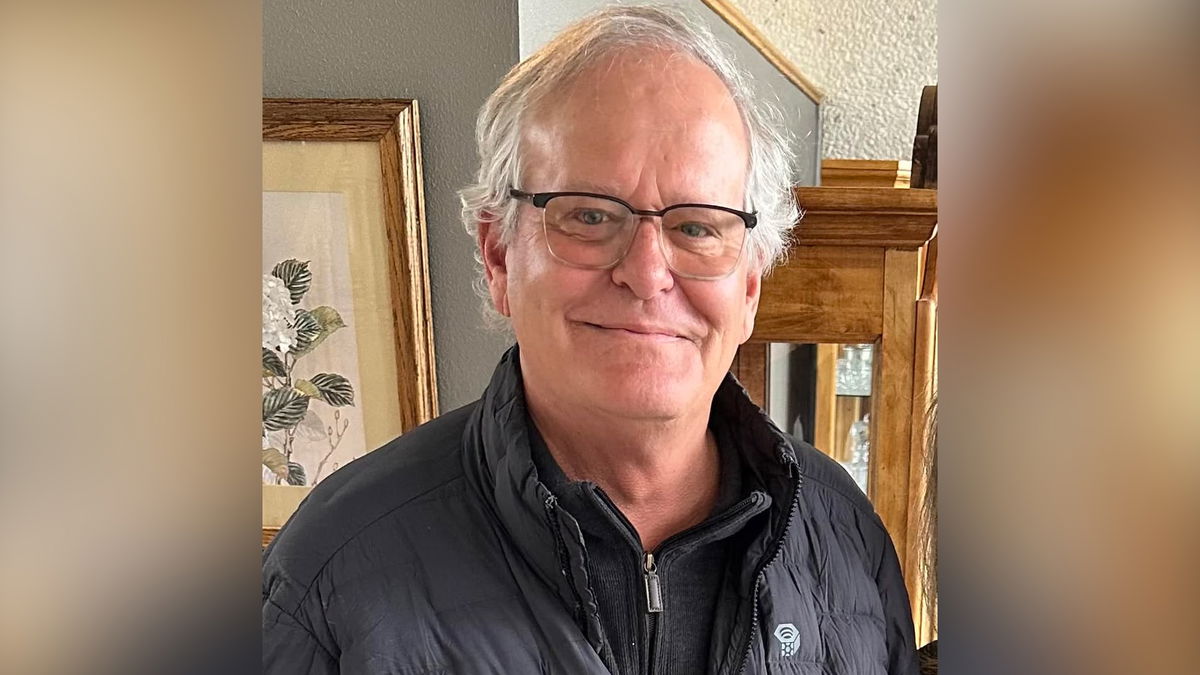
Shoshone-Bannock Tribes honor the life and service of Judge Bill Bacon after fatal car crash">Shoshone-Bannock Tribes honor the life and service of Judge Bill Bacon after fatal car crash

Shoshone-Bannock Tribes honor the life and service of Judge Bill Bacon after fatal car crash">

FORT HALL, Idaho (KIFI) — The Shoshone-Bannock Tribes are mourning the loss of William “Bill” F. Bacon, a longtime Tribal Judge and “tireless advocate” who passed away following a car accident on Thursday, March 26. While details surrounding the accident are unconfirmed, Tribal Leadership says Bacon will be deeply missed, and his legacy will continue to guide and benefit the Tribes for generations to come.

Bacon is remembered for 37 years of transformative service to the Tribes.

A “Steadfast Protector” of Tribal Rights

Bacon’s career was defined by his commitment to tribal sovereignty, serving 24 years as General Counsel and 12 years as Tribal Judge.

In a Facebook post, the Shoshone-Bannock Tribal leadership shared several of Bacon’s notable achievements, characterizing him as a “steadfast protector” of Tribal rights. Alongside his legal team, he secured landmark victories that fundamentally reshaped the legal landscape for Indigenous people.

  • Restoring Treaty Rights: Bacon played a pivotal role in the U.S. Supreme Court effort that overturned the 1896 Ward v. Racehorse decision, restoring off-reservation hunting and fishing rights denied since Idaho’s statehood. Tribal leadership says he also successfully defended those rights in multiple Idaho Supreme Court challenges.
  • The FMC Landmark Case: He served as counsel in the historic FMC Corporation litigation regarding hazardous waste storage. To this day, Tribal leadership says it remains unique in U.S. legal history as the only one to satisfy both Montana exceptions for tribal jurisdiction over non-Indians.
  • Tribal Independence: Bacon also secured a multi-million-dollar fuel tax victory, further supporting the Tribes’ fiscal independence.

A graduate of Northwestern University and the University of Idaho, Bacon was a member of the U.S. Supreme Court Bar Association and, in 2023, received the Martindale-Hubbell Distinguished Attorney award.

Beyond the courtroom, Bacon deeply embraced Shoshone-Bannock culture, participating in traditional sweat lodge and sundance ceremonies. In a statement released Friday, Tribal leadership expressed deep gratitude for Bacon’s lifetime of dedication.

“Bill Bacon’s legacy is written in restored treaty rights, protected sovereignty, and resources secured for our people through his leadership and collaboration with his legal team,” said Chairwoman Donna Thompson. “He has been more than counsel—he has been a steadfast guardian of our future and a dear friend of the Tribes.”

Bill Bacon is survived by his wife, Lisa, and their three daughters.
Idaho Senate passes bill criminalizing use of public bathrooms not matching biological sex">Idaho Senate passes bill criminalizing use of public bathrooms not matching biological sex

Idaho Senate passes bill criminalizing use of public bathrooms not matching biological sex">

BOISE, Idaho (KIFI) — A controversial proposal that would criminalize those using public bathrooms that don’t match an individual’s biological sex is heading to Governor Brad Little’s desk. House Bill 752 passed the Idaho Senate on Friday morning. Should Governor Little sign it, it would mark a significant expansion of the state’s existing trans bathroom ban.

While the 2023 law already mandates that Idaho schools regulate bathrooms and locker rooms based on biological sex, HB 752 would extend these restrictions to all government and public buildings.

Under the proposed legislation, it would be illegal for any individual to “knowingly or willfully” enter a bathroom or locker room that does not correspond with their biological sex. The bill introduces strict criminal consequences. A first-time violation is classified as a misdemeanor, while a second offense would be a felony.

The bill has sparked a fierce divide within the Statehouse. Opponents have lambasted the legislation as an ‘unacceptable and discriminatory misuse of the criminal justice system.’

Supporters argue the bill is meant to keep women and girls safe and keep biological men out of areas designed for women. The bill’s sponsor, Senator Ben Toews, R-Pocatello, says he believes the legislation is a matter of protecting Idahoans.

“Actually, what we are trying to solve here is not targeting any group of people or one person. It’s dealing with sexual predators and very real issues,” Toews told lawmakers.

The bill faced unanimous opposition from the Senate’s six Democrats, joined by one Republican holdout, Senator Jim Guthrie (R-Pocatello). Guthrie questioned the practicality and humanity of the mandate, arguing that transgender people will get in trouble no matter what they do.

“We seem to be really focused on this space and ignoring the fact that there are people just like us,” Guthrie argued. “What are they supposed to do? I think stuff like this is harmful.”

ACLU Calls for Gubernatorial Veto

Immediately following the vote, the ACLU of Idaho issued a statement calling on Governor Brad Little to veto the bill, labeling it “dangerous and unprecedented.”

“This bill’s proposed punishments for using public facilities are extreme and unnecessary. A trans person who enters a restroom that aligns with their gender identity could receive the same punishment as someone convicted of a violent crime,” said ACLU of Idaho spokesperson Taylor Munson.

The ACLU further argued that the government’s responsibility is to protect the dignity and freedom of all Idahoans, regardless of gender identity. Governor Little now has 5 working days to sign or veto the bill. If the governor does not sign or veto the bill within five days, while the legislature is in session, the bill automatically becomes law without a signature.

Idaho’s 2026 push to legalize medical marijuana enters final stretch">Idaho’s 2026 push to legalize medical marijuana enters final stretch

Idaho’s 2026 push to legalize medical marijuana enters final stretch">

IDAHO FALLS, Idaho (KIFI) — The Natural Medicine Alliance of Idaho is entering what organizers describe as a “final big push” to place medical cannabis on the November 2026 ballot, following years of gridlock in the legislature.

The proposed Idaho Medical Cannabis Act would legalize the use of marijuana for patients with pre-approved medical conditions. Amanda Watson, Communications Lead for the Alliance, says the initiative is popular despite legislative opposition.

“We see lots of different people reaching out with various conditions. And there are lots of really incredible stories. And I think it’s a privilege not to have one of those stories. I hope that we can see some empathy from those, those folks who may or may not necessarily understand it as much, to be open-minded about what this could really do for patients in Idaho.” Watson said.

The Alliance has modeled its proposal after Utah’s medical cannabis law, though Watson notes they have made it more conservative. These measures include a limited number of production licenses to prevent market saturation and a total ban on public advertisements.

“We knew that we needed to have a very conservative approach that allowed for oversight, that allowed for restrictions that did not make this a free-for-all,” Watson said.

The push comes as the Idaho Legislature introduced new measures Friday to further restrict the citizen initiative process. Additionally, voters will decide on HJR 4 in 2026, a constitutional amendment that would give the legislature exclusive authority over the legalization of controlled substances.

Despite the legislative resistance, Watson points to internal polling showing that 83% of Idaho voters support a medical cannabis program. She says the campaign has seen particularly strong momentum in eastern Idaho and is now focused on meeting the requirements for the initiative to be placed on the ballot.

“This is our opportunity in a democracy to voice our opinion,” Watson said. “While disappointing that we were not able to get any traction with our legislature, we have it with the voting public, and we believe this will pass.”

The initiative was inspired in part by the experience of the late Dr. Dori Tunney, a pediatrician and cancer patient who advocated for legal access to medical cannabis for pain management before she died in 2024.

“It was a very difficult thing to manage,” said Watson. “And that kind of set off a light bulb where she felt this should be accessible.”

The Alliance has until the end of April to collect signatures from 6% of registered voters in each of Idaho’s 35 legislative districts. Organizers say they are maintaining regional offices and a presence at major community events across the state to meet the deadline.

“We are pushing and pushing and pushing until that final bell rings,” Watson said. “We really want people to be able to vote on this in November.”

For more information on how you can support the measure, click HERE.

Governor signs bill cutting $21.8 million from disability housing; funding still exceeds 2022 levels">Governor signs bill cutting $21.8 million from disability housing; funding still exceeds 2022 levels

Governor signs bill cutting $21.8 million from disability housing; funding still exceeds 2022 levels">

BOISE, Idaho (KIFI) – Gov. Brad Little made the difficult decision to sign legislation impacting disabled Idahoans on Thursday – cutting the Medicaid budget by $21.8 million dollars.

The cuts impact housing programs and services for people with disabilities – reducing the rates paid to residential habilitation providers by 10 percent.

“It’s been a tough year, and it’s not easy for anybody in the Statehouse to make these cuts or to make these decisions,” said State Sen. Julie VanOrden, R-District 30, who serves as Health and Welfare Committee Chairwoman.

The program serves disabled individuals who require various levels of care, including people with Down Syndrome or severe mental illnesses whose families can’t care for them.

Many of these individuals require intensive, 24-hour care, but the program also benefits individuals who simply require additional help to be independent.

“The money flows from the state to the providers to either the caregivers directly or to the clients, and then they pay their caregivers. I would hope somewhere along that line that if a reduction was going to be made, that it would not be to the caregivers or the clients,” VanOrden said. “I would hope it would be made somewhere else, so they would not be affected by these reductions.

Idaho spends more than $176 million each year on residential habilitation.

The 10 percent cut includes last year’s four percent holdback on Medicaid.

But even with the reduction, overall funding is 33 percent higher than it was four years ago, VanOrden said.

In 2022, the Legislature allocated an additional $70 million to the program, plus $22 million to provide additional services.

In passing House Bill 863, the Idaho House and Senate voted to advance the Governor’s original budget recommendations.

“I would hope that people understand that if we receive more income, I would like to be able to take those funds and use them to restore some of these reductions that are being made,” she said.

VanOrden has a record of restoring programs if funding is available.

This year, she succeeded in securing opioid settlement funds to bring back funding for the ACT mental health program that had been cut earlier in the session.

Local News 8 will follow up with next week with providers who offer housing to individuals with disabilities to learn more about how the cuts will impact those they serve.

In this file image, Gov. Brad Little signs a bill into law.
scroll to top