Idaho death row inmate Erick Hall dies of natural causes">Idaho death row inmate Erick Hall dies of natural causes

Idaho death row inmate Erick Hall dies of natural causes">

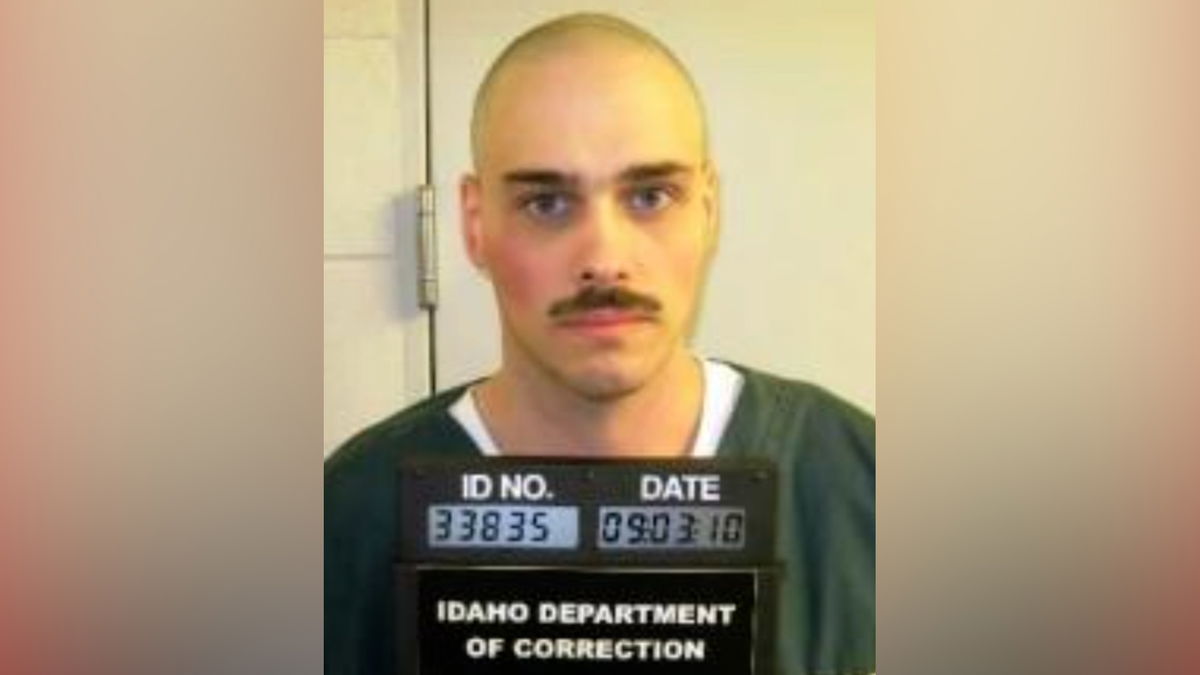
BOISE, Idaho (KIFI) — Erick Hall, the convicted murderer behind two of Idaho’s most notorious cold cases, will not face the state’s execution chamber. The Idaho Department of Correction announced Tuesday that Hall passed away from natural causes at a local hospital on Feb. 9, 2026, at 9:58 p.m.

At the time of his death, Hall was serving two death sentences for the first-degree murders of Lynn Henneman and Cheryl Ann Hanlon in Ada County.

The Crimes that Haunted Boise

In 2000, Hall raped and murdered flight attendant Lynn Henneman, originally from Bozeman, Montana. Adding to the tragedy, the murder took place less than a month after the young flight attendant had married Walter Us.

According to the Bozeman Daily Chronicle, Henneman was in Boise on a layover for United Airlines when she went missing for two weeks before her body was discovered in the river on Oct. 7, 2000.

It unfortunately took yet another tragedy to solve the case. In March 2003, a teenager found the body of Cheryl Ann Hanlon of Boise along a trail in the foothills. According to reports by the Spokesman Review, Hanlon had been raped and beaten so severely that she looked like the victim of a traffic accident.

The breakthrough came after a witness reported seeing Hanlon walking with a man in downtown Boise the night before her death. The resulting composite sketch led to Hall’s arrest. Once in custody, investigators used DNA evidence to definitively link the then-transient Hall to the 2000 murder of Henneman.

Hall spent decades fighting the sentences. In 2018, he appealed to the Idaho Supreme Court, claiming he had received an unfair trial. However, the justices upheld the death sentence in a majority ruling, stating Hall had been provided with adequate representation and a fair legal process.

National Guard officer behind religious discrimination lawsuit challenges Sen. Jim Guthrie">National Guard officer behind religious discrimination lawsuit challenges Sen. Jim Guthrie

National Guard officer behind religious discrimination lawsuit challenges Sen. Jim Guthrie">

Originally posted on IdahoEdNews.org on February 10, 2026

by Sean Dolan:

An Idaho Army National Guard officer who claims he faced religious discrimination for his opposition to a Pocatello drag queen story hour announced he is running for Idaho Senate against Sen. Jim Guthrie.

David Worley, a Republican, writes on his campaign website that he believes the government should protect children and not normalize “radical sexual ideology” that undermines family life. He commits to protecting parental rights in education.

“Our schools, libraries, and public institutions should be places that reinforce what is good, true, and beautiful, not places where innocence is targeted and boundaries are erased,” Worley wrote.

He is challenging Guthrie, R-McCammon, in the May 19 primary in District 28. Guthrie voted against House Bill 93 last year, which created the $50 million Idaho Parental Choice Tax Credit.

David Worley and Sen. Jim Guthrie (Photos courtesy of their campaign websites)

At a Save Our Schools event last summer in American Falls, Guthrie said the tax credits are “contrary to the Constitution.”

“I don’t think there’s any doubt about that,” said Guthrie, a rancher and business owner.

As of Tuesday, Worley’s campaign has raised $3,000 to Guthrie’s $24,825.

Worley in 2022 ran for Idaho Senate in District 29. He lost the general election to Sen. James Ruchti, D-Pocatello, by an 8-point margin.

Federal lawsuit

Worley, in January 2025, filed a federal district court lawsuit against three defendants in their capacities with the Idaho National Guard:

  • Gov. Brad Little, commander-in-chief of the Idaho National Guard
  • Maj. Gen. Timothy Donnellan
  • Brig. Gen. James Packwood

Worley, a major in the Army National Guard, claims he faced discrimination, retaliation and punishment for exercising his First Amendment right to “exercise his sincerely held religious beliefs.”

According to court documents, a guardsman under Worley’s command filed a hostile work environment complaint against him. The guardsman, who identified as homosexual, wrote in the complaint that he felt Worley had discriminated against him due to his sexual orientation. He then Googled Worley’s name and found press reports showing Worley’s opposition to a drag queen story hour and his involvement with the “extremist/hate group” MassResistance.

The officer who investigated the guardsman’s complaint substantiated the hostile work environment claim and recommended Worley’s permanent removal from command.

The Idaho State Journal reported in February 2023 that Worley and local church members staged a peaceful sit-in during a “Reading Time with the Queens” event at the Marshall Public Library in Pocatello.

The Journal reported that some usual attendees of the event — parents and young children — were turned away because the church members filled the room up to its maximum capacity of 40 people.

The sit-in event was to “protect children from being exposed to sexual deviancy,” Worley said, according to the Idaho State Journal.

Worley has served over 22 years in the Army National Guard. The complaint against him led to “the derailment of his career,” according to the lawsuit. 

Worley’s attorneys wrote in court documents that he believes a failure to speak out against things he knows are wrong would result in the “eternal condemnation of his soul.”

The lawsuit asks the U.S. District Court of Idaho to require the defendants to cease all investigations and restore Worley to his position. The last filing in the case was in September.

Daniel Schmid, a lawyer with Florida-based Liberty Counsel representing Worley, told EdNews on Tuesday that they are waiting on the judge to take action in the case.

“I’ve never seen a judge sit on a temporary restraining order for over a year,” Schmid said.

According to its website, Liberty Counsel is “a Christian ministry that proclaims, advocates, supports, advances, and defends the good news that God in the person of Jesus Christ paid the penalty for our sins and offers forgiveness and eternal life to all who accept him as Lord and Savior.”

Bill to void local LGBTQ protections sparks fight over local control in Idaho">Bill to void local LGBTQ protections sparks fight over local control in Idaho

Bill to void local LGBTQ protections sparks fight over local control in Idaho">

POCATELLO, Idaho — A bill moving through the Idaho Legislature would wipe out local LGBTQ anti-discrimination protections in cities across the state. While supporters argue the bill protects religious freedom and creates a uniform business environment, critics warn that it “opens the door for discrimination” and betrays the state’s supposed commitment to local control.

A Challenge to Local Autonomy

House Bill 557 would negate local ordinances in 14 cities and two counties that currently bar discrimination in housing and employment based on sexual orientation and gender identity. Those protections include cities such as Pocatello and Idaho Falls.

Sen. James Ruchti, D-Pocatello, said he opposes the bill and plans to speak against it when it comes before the Senate State Affairs Committee, where he is the lone Democrat.

“This bill confuses me and surprises me in a lot of ways,” Ruchti said. “Its intention seems to be to protect individuals and businesses who want to discriminate, so that they can discriminate against others. And I don’t get that.”

Ruchti said the measure contradicts the Legislature’s own stated support for local control. He pointed to a Senate concurrent resolution passed last year that praised local governments and urged the state to let communities make decisions based on their own needs.

“Out of one side of your mouth, the Idaho Senate can say local governments are important, and we should let them determine what’s best for their communities,” he said. “And then out of the other side say, ‘except in situations we don’t agree with you on.’ That’s not how this should work.”

If HB 557 becomes law, existing local ordinances would become unenforceable, leaving state law as the only standard. Ruchti said that would send a clear and harmful message to LGBTQ residents.

“It sends the message to our communities that they are open for discrimination against a class of people that live there,” he said. “It allows discrimination in housing and employment. These 14 communities have come together and made a conscious decision to say, we don’t want discrimination. It’s gone well for the last 12 years, so there’s no reason to change it.”

Pocatello’s non-discrimination ordinance was adopted in 2013 after a heated local debate. Opponents forced a referendum to try to repeal it, but voters narrowly chose to keep the law. Ruchti co-chaired the campaign to defend the ordinance.

“The community came out to support the ordinance, to make sure we kept it,” he said. “We were able to win when we had the election, and it was a community effort.”

The Case for Religious Freedom

Supporters of HB 557 argue that a patchwork of local rules creates confusion and hurts economic growth by making it harder for businesses to operate uniformly across the state. Ruchti rejects that claim, pointing to Idaho’s strong economy in recent years.

“There’s no evidence that these ordinances have hampered our economic growth,” he said. “Idaho’s economy is vibrant, and I think part of that is because people don’t have to worry about being discriminated against when they look for a job or a place to live.”

Supporters of HB 557 say the issue is about protecting religious freedom and ending what they see as unfair legal exposure for people of faith.

Blaine Conzatti, president of the Idaho Family Policy Center, said most Idahoans want the Legislature to act.

“More than 71% of likely Idaho voters want this legislation, and it’s not hard to understand why,” Conzatti said in a written statement. “SOGI ordinances are frequently weaponized against people of faith, who are often forced by law to participate in same-sex weddings, pride festivals, and other LGBT activities that violate their convictions.”

In Idaho Falls, violations of the local ordinance can bring a $100 fine for a proven discriminatory violation and up to $1,000 for repeated violations. The city in 2020 repealed an earlier misdemeanor penalty that allowed for up to six months in jail.

Conzatti said other Idaho cities still attach potential jail time to their ordinances and pointed to the example of Don and Evelyn Knapp, a Christian couple in Coeur d’Alene who said they were threatened with enforcement action under that city’s law if they refused to perform same-sex ceremonies at their family-owned wedding venue.

“No small business owner should ever have to choose between living out their faith or going to jail (or paying a fine),” Conzatti said. “Religious freedom – including the ability to run our businesses according to the dictates of our conscience – is a fundamental right.”

The Path Forward: The Committee Battleground

Ruchti said communities like Pocatello tend to value practical governance over party labels, focusing on basic services and everyday concerns.

“People are just very practical,” he said. “They want their government officials to make their lives easier: make sure we can get a good education, make sure we can go to work, make sure we’ve got a place to live — then get out of the way and let us do our thing. In my opinion, House Bill 557 works against that principle.”

The bill has already passed the House and is expected to be taken up by the Senate State Affairs Committee in the coming weeks. Ruchti said the committee is likely the key battleground.

“If it makes it to the Senate floor, it’s passing,” he said. “Our best opportunity is at the committee level to kill it.”

“Sometimes I debate, and my debate is not successful in changing anybody’s mind,” he said. “But I’m going to believe that it’s possible.”

Across-the-board cuts or ‘a chainsaw to the budget?’: Idaho budget committee implements one and two percent cuts">Across-the-board cuts or ‘a chainsaw to the budget?’: Idaho budget committee implements one and two percent cuts

Across-the-board cuts or ‘a chainsaw to the budget?’: Idaho budget committee implements one and two percent cuts">

BOISE, Idaho (KIFI) – Budget cuts are the talk of the town in Boise, but what lawmakers decide touches every corner of the state.

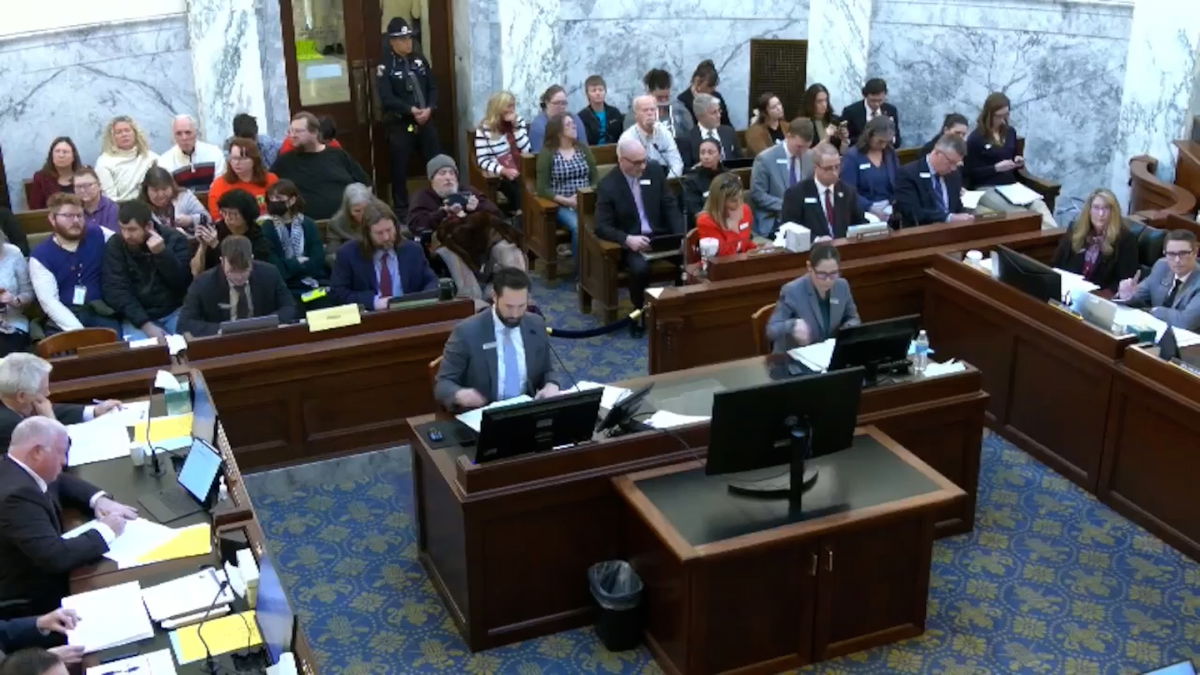
On Friday, the Joint Finance-Appropriations Committee (JFAC), Idaho’s budget-setting committee, ordered one percent cuts for Fiscal Year 2026 and two percent cuts the following year.

This is in addition to the three percent cuts ordered by Governor Little in August 2025.

K-12 schools, the Division of Medicaid, Idaho State Police, Idaho Department of Health and Welfare and Idaho Department of Corrections are spared from these further cuts, according to the Idaho Legislative Services Office.

Local News 8 spoke with elected officials in Boise about the impact of these additional cuts.

“Some agencies are a lot more operations verses personnel,” said Idaho Controller Brandon Woolf. “Those that have a heavy personnel budget, it’s going to be harder. They’re going to have layoffs. There’s going to be furloughs or positions vacant for part-time. So it’s hitting each agency a little bit different, and that’s the key thing to watch.

But JFAC Committee member Sen. Kevin Cook, R-Idaho Falls, argued that near across-the-board cuts target muscle and bone, not fat in state government.

“We started looking at ways to make some cuts – not cuts that hurt people, not cuts that will come back in two to four months and cost the state millions of dollars at our jails, and our hospitals, and our emergency centers and all of that,” said Senator Kevin Cook, R-Idaho Falls. “Those aren’t real cuts. Those are transfers. I wanted cuts that were real cuts.”

In Friday’s JFAC hearing, Cook referred to the committee’s across-the-board cuts, saying, “That approach is not precision. It is taking a chainsaw to a budget.” 

However, JFAC Co-Chairman Senator C. Scott Grow, R-Eagle, disagreed, stating, “This does not in any way prevent the work you’ve been doing to come to fruition. All this is doing is saying, ‘Look, there is a certain level of cuts that would be appropriate at this point in time.’”  

In the end, the committee voted 14-6 and 13-7 to adopt the one and two percent cuts across the majority of state agencies.

We’ll continue to watch the Legislature’s actions and their ramifications throughout this year.

“Obviously, it’s a heavy lift for the legislators from JFAC to be able to help identify – is it based just across the top?” said Woolf. “Are they going to make winners and losers?  Are they holding education harmless or this one or Medicaid? Those are the big ones (decisions).”

scroll to top