
2.12.2026 – INTERVIEW: IFPD Chief Bryce Johnson, Legislative Battles, Police Insights, Marijuana Morality">2.12.2026 – INTERVIEW: IFPD Chief Bryce Johnson, Legislative Battles, Police Insights, Marijuana Morality

2.12.2026 – INTERVIEW: IFPD Chief Bryce Johnson, Legislative Battles, Police Insights, Marijuana Morality">

Send a text

We kicked off with a deep dive into the buzzing Idaho legislative session, focusing on how many new bills, often with minimal fiscal impact, are moving forward. A hot topic was Senator James Ruchti’s push to “gut” House Bill 93, a $50 million program designed to offer educational choices, which has predictably stirred up some serious debate among lawmakers. A significant portion of the conversation revolved around RS33193, a bill aiming to shift Idaho’s presidential primary to March. We explored the strategic upsides of an earlier primary, such as boosting candidate attention and media engagement, while also touching on Representative Stephanie Mickelson’s concerns about the $2.5 million cost of a special election—an argument we felt missed the mark given the 2028 timeline. Chairman Brent Crane’s unusually candid comments about past friction with Secretary of State Phil McGrane over previous primary issues added an unexpected layer of drama. Ultimately, Mickelson’s attempt to derail the March primary was overwhelmingly defeated 13-1, signaling a strong legislative intent to put Idaho on the early primary map.

Later, we were joined by Idaho Falls Police Chief Bryce Johnson, who offered valuable insights into local law enforcement’s responsibilities, particularly concerning immigration. He clarified the distinct roles of local police versus federal immigration enforcement, emphasizing how Homeland Security Investigations (HSI) collaborates on severe cases like human trafficking and drug operations, showcasing a clear division of labor that prioritizes public safety. Chief Johnson also provided an update on Idaho Falls’ crime trends, noting a welcome decline in property and violent crime last year. His professional take on legislative proposals, like removing license plate stickers (which he noted would make officers’ jobs harder) and the “phenomenal” utility of license plate readers, was particularly informative. The show wrapped up with a passionate, multi-faceted debate on marijuana legalization in Idaho, referencing Colorado’s experience as a “cautionary tale” due to alarming increases in traffic deaths, youth usage, and a negligible boost to school funding from tax revenue. Callers contributed with personal stories, including one who linked a motorcycle accident to marijuana use, and others discussing “rights” and the potential strain on welfare. While acknowledging the legitimate medical benefits, we reiterated our strong opposition to widespread legalization, proposing a tightly controlled medical framework—like THC inhalers or tablets, dispensed only through established pharmacies with strict prescriptions—as a potential solution to prevent the “collateral damage” and inevitable abuse that typically follows broader legalization efforts.

### Highlight List:

*   Idaho’s legislative session is heating up with debates on the presidential primary’s move to March and the fate of House Bill 93, an education choice initiative.
*   Idaho Falls Police Chief Bryce Johnson provided clarity on local law enforcement’s role with federal immigration and shared positive trends in local crime, while highlighting the efficacy of license plate readers.
*   A robust discussion on marijuana legalization used Colorado’s negative outcomes (e.g., increased traffic deaths, minimal tax revenue for

Let’s talk advertising. When you want to advertise on the radio, you call the station, right? But what about Facebook, Instagram, Hulu, Disney+, Peacock, and other streaming platforms?

You could try clicking around, reading books, or taking online courses to figure it out—or you can let us handle it. At Sandhill Media Group, we’re your local experts in both radio and digital marketing.

Visit SandhillMediaGroup.com today.
Read More

LDS Church names Elder Clark G. Gilbert to Quorum of the Twelve Apostles">LDS Church names Elder Clark G. Gilbert to Quorum of the Twelve Apostles

LDS Church names Elder Clark G. Gilbert to Quorum of the Twelve Apostles">

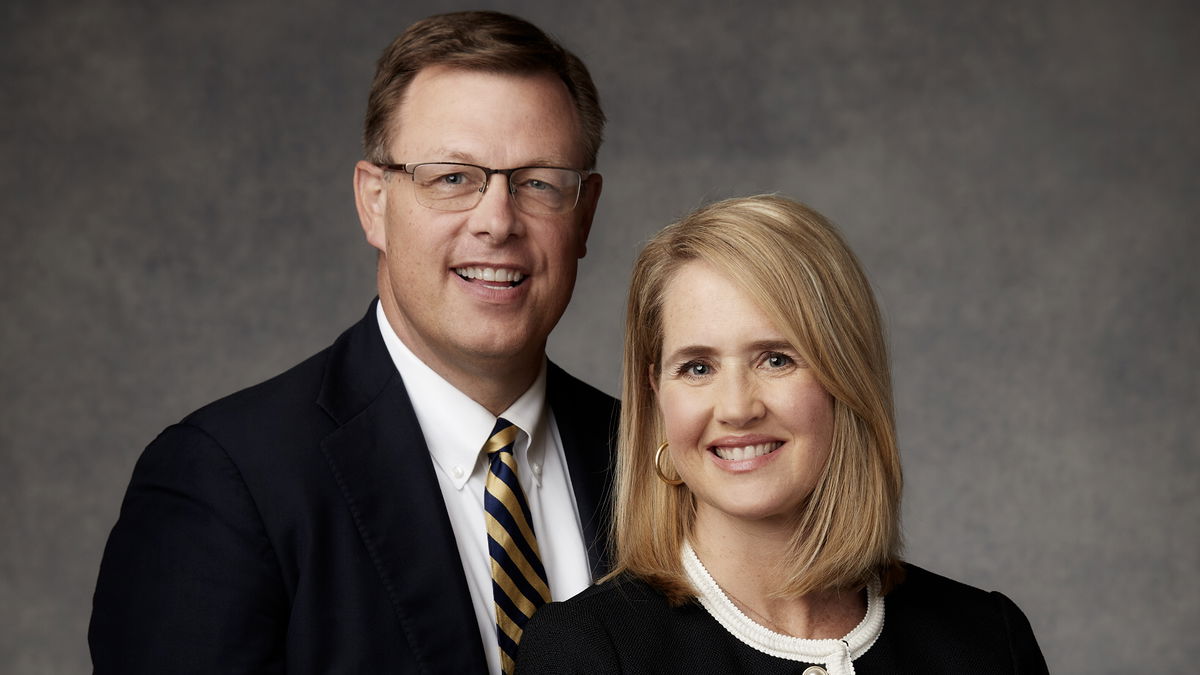
SALT LAKE, Utah (KIFI) — The Church of Jesus Christ of Latter-day Saints announced today the calling and ordination of Elder Clark G. Gilbert to the Quorum of the Twelve Apostles. At 55, the former Oakland, California native becomes the newest member of the faith’s second-highest presiding body.

Elder Gilbert was formally called to the apostleship on Wednesday, February 11, 2026. His ordination took place today, February 12, overseen by President Dallin H. Oaks and the First Presidency, the highest presiding body of the faith, alongside the remaining members of the Quorum of the Twelve.

Following his ordination, Elder Gilbert emphasized a message of spiritual optimism and focus.

“This is an amazing time to point people to the Savior Jesus Christ,” Elder Gilbert said on Thursday. “When we do that, we can find joy and comfort and peace in Him. As President [Russell M.] Nelson once said, it’s much harder to find happiness where it doesn’t exist. And we’re so grateful that I have this calling now to witness that Jesus is the Christ. If people all across the world will look to Him, He will make their lives better, more meaningful, more joyful. And it happens in and through our Savior Jesus Christ.”

For more information, click HERE

Lookout Credit Union donates $125,000 for Ammon park upgrades">Lookout Credit Union donates $125,000 for Ammon park upgrades

Lookout Credit Union donates $125,000 for Ammon park upgrades">

AMMON, Idaho (KIFI) — Lookout Credit Union is donating $125,000 to the City of Ammon to fund a new playground in McCowin Park.

The investment aims to modernize the city’s recreational infrastructure and provide enhanced play spaces for local families.

The planned upgrades include a new play structure, inclusive elements designed for children of all abilities, safety surfacing, and swings.

“This is a meaningful investment in Ammon families,” Mayor Brian Powell said. “Parks are where our community gathers, where kids play, and where memories are made.”

Powell said the city is grateful for the credit union’s decision to “step forward in a big way” to improve the park, which is a central hub for the city’s residents.

The project is currently scheduled for installation in summer 2026.

Lookout Credit Union representatives characterized the donation as part of a broader commitment to regional well-being.

BJ Fillingame, Vice President of Marketing at Lookout Credit Union said “We’re proud to partner with the City of Ammon on a project that supports families, encourages healthy play, and strengthens the neighborhoods we serve.”

‘A difficult moment’: ISU announces sweeping changes amid budget constraints ">‘A difficult moment’: ISU announces sweeping changes amid budget constraints 

‘A difficult moment’: ISU announces sweeping changes amid budget constraints ">
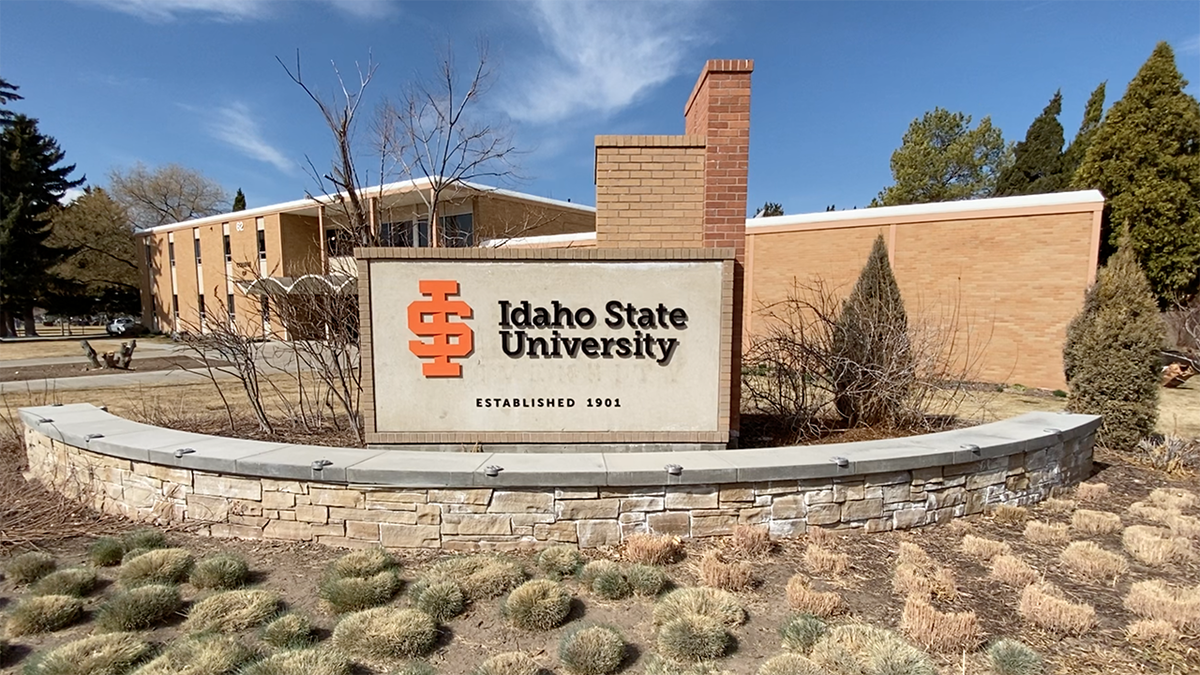
Idaho State University in Pocatello, ID

Originally posted on IdahoEdNews.org on February 12, 2026

by: Devin Bodkin

POCATELLO, Idaho — Idaho State University is reshaping itself with sweeping changes in the face of current and looming state budget cuts.

That includes merging colleges, restructuring programs, “modest” student fee hikes and a range of other changes starting July 1 to try and save and generate millions by year’s end. The university released a complete budget restructuring plan Wednesday. ISU President Robert Wagner overviewed the changes in an accompanying video

The overhaul, which follows news of 44 position cuts at the university, reflects campus feedback, Wagner announced.

Details are still emerging, and EdNews will interview Wagner Friday to try and garner more clarity. Still, the latest update brings the university’s roadmap into clearer focus — and underscores what’s at stake for the 125-year-old institution: cutting costs without cutting its core mission. 

“This is a difficult moment in our university’s history,” Wagner said in the nearly 20-minute video. “It is appropriate to recognize that openly and honestly.” 

What’s changing — and why now 

The university’s scramble to adjust its budget follows state cuts that started with a 3% holdback for state agencies — including colleges and universities — last year. 

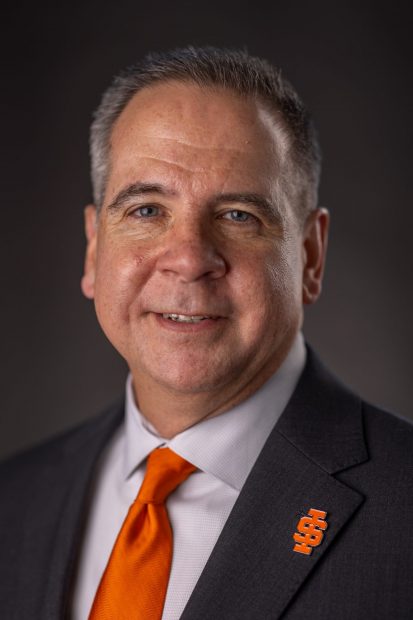
Robert Wagner

To add to the unease, more proposed cuts are moving through the Statehouse at a rapid pace this legislative session — and higher ed remains on the chopping block.

With those cuts in view, ISU’s adjustments span the gamut: 

Colleges are merging. 

It’s a major reorganization in the university’s academic affairs: 

  • The College of Arts and Letters will combine with the College of Education to become the College of Humanities, Education, and Social Sciences. 
  • The College of Health will become the College of Nursing and Rehabilitative Sciences. 
  • The College of Science and Engineering will consolidate departments.
  • Arts programs will merge into a new School of Arts

Wagner and other leaders are banking on added revenue from performances through the new arts school. Projected savings include some $1.8 million from the College of Humanities, Education, and Social Sciences merger.

Other cost savings stem from restructuring and eliminating positions at the university’s library, graduate school and Bengal Success Center.

Position reductions are in place. 

The university posted details — including projected dollar amounts — tied to previously announced position cuts.

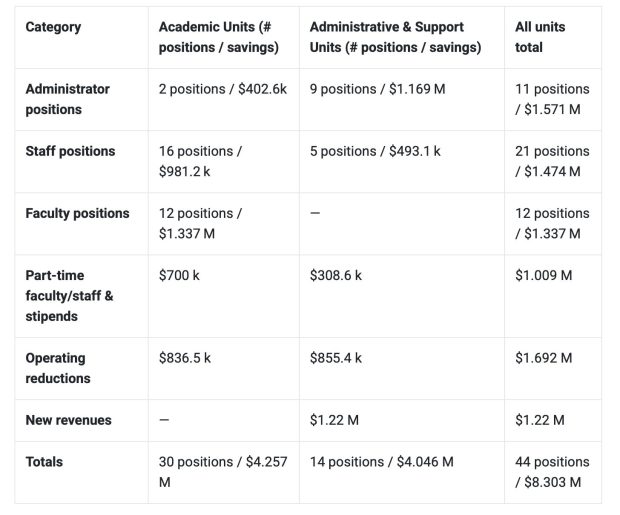
The breakdown lists 44 positions within administrative, staff and faculty roles. Projected savings are $8.3 million

Here’s a closer look:

About 40% of these positions were vacant or planned retirements at the time of the announcement, the univAbout 40% of these positions were vacant or planned retirements at the time of the announcement, the university says.

Tuition and fee increases are on the table.

The University says it will set tuition and fees according to State Board of Education processes ahead of fee hearings set for March 2026.

The board will set fiscal year 2027 tuition rates in April of next year. ISU will share any changes in tuition following board approval, the university’s budget restructuring plan reads.

Meanwhile, some “modest” fee hikes will go into effect. But these are “market-aligned,” Wagner said, without mentioning a dollar amount. Rather, this new pricing will match the university’s “sister institutions.” 

A range of other changes are coming.

These include:

  • A heavier reliance on local auxiliary revenue and philanthropy for the athletics budget
  • A six-center “Innovation Hub” to help buoy an entrepreneurial push, including a new unit to manage health clinics and the Idaho Accelerator Center
  • Closure of ISU’s Research Data Center
  • Shifting computing efforts to the state-owned Collaborative Computing Center in Idaho Falls, which the Idaho National Laboratory leases. 

Click here for the entire budgeting plan.

Uncertainty still looms 

Wagner and his university’s budget plan peg financial impacts from the moves at $8.3 million in savings and revenue by 2026. 

But, he added in his video recording, this is the first phase. More cuts could come, and final impacts will depend on lawmakers. 

The prospect of more cuts from the Legislature this session fueled a recent request from state budget writers for ISU and other institutions to lay out scenarios in the event of further belt-tightening. University leaders told lawmakers a second batch in addition to the 3% holdbacks that hit last year would mean mandatory furloughs this fiscal year, affecting employees who make more than $60,000 annually. 

The plan released Wednesday acknowledges that possibility.

Staff reductions and restructuring would also apply if further cuts happen, university leaders told lawmakers, further impacting student services and in-demand workforce programs. 

scroll to top