The podcast opens with a discussion of the ongoing government shutdown, with the host placing blame squarely on Democrats for refusing to pass a simple seven-week funding bill. He argues that public opinion is shifting against the Democrats, partly because the mainstream media no longer has a monopoly on the narrative due to the rise of independent platforms like X and podcasts. The host also touches on intra-party politics, specifically President Trump backing a primary challenger to Representative Thomas Massey, whom the host criticizes for a rigid libertarian approach that he feels is often counterproductive to achieving conservative goals.
The second half of the show features a detailed interview with school superintendent Scott Woolstenhulme about his opposition to Idaho’s House Bill 93, a new law providing tax credits for parents to use for private education. Superintendent Woolstenhulme’s primary objection is that the law directs public funds to private institutions without requiring them to meet the same constitutional standards of uniformity and accountability as public schools. The host challenges this, framing the law as an expansion of parental freedom and choice. Their debate covers whether the program provides an escape for parents dealing with student behavior issues in public schools and the fundamental differences in their interpretation of the state’s constitutional duty to provide education.
Let’s talk advertising. When you want to advertise on the radio, you call the station, right? But what about Facebook, Instagram, Hulu, Disney+, Peacock, and other streaming platforms?
You could try clicking around, reading books, or taking online courses to figure it out—or you can let us handle it. At Sandhill Media Group, we’re your local experts in both radio and digital marketing.
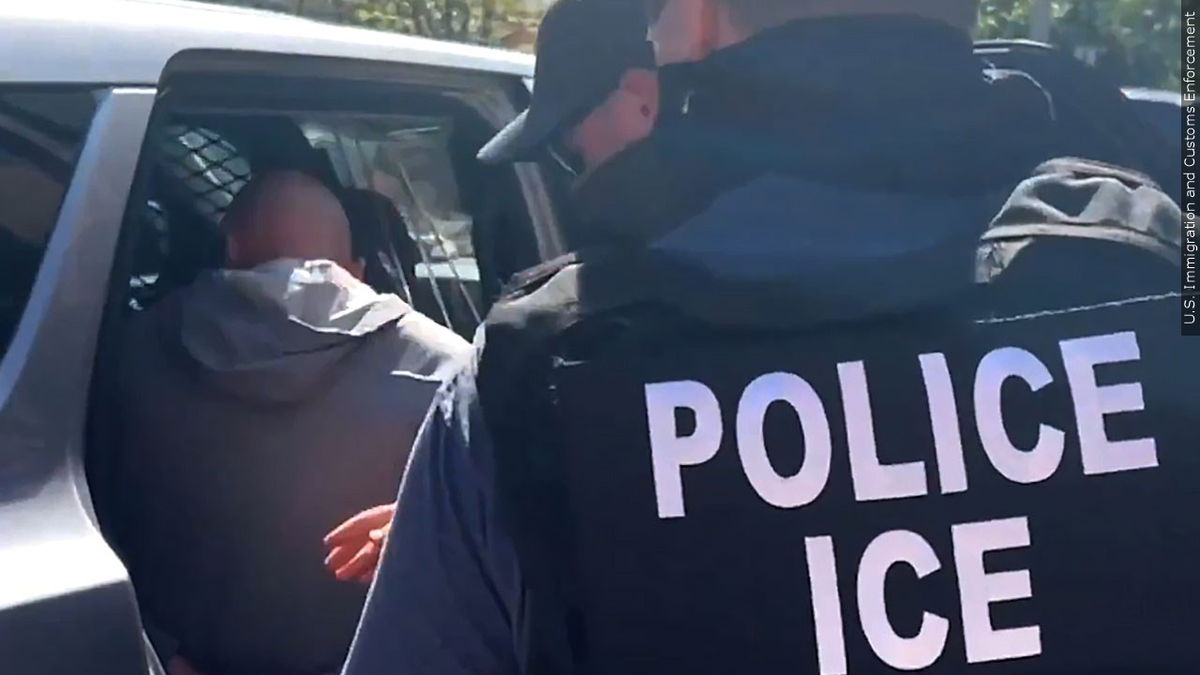
IDAHO (KIFI) — The Department of Homeland Security is defending a large-scale operation in Wilder, Idaho, over the weekend that resulted in the arrest of 105 individuals on immigration and criminal charges. The raid targeted an alleged illegal horse-racing, animal fighting, and gambling operation and has drawn sharp criticism from the American Civil Liberties Union of Idaho and the Idaho Democratic Party.
The raid took place while a public horse racing event was in progress, with a large crowd in attendance, according to a report by KIVI. Eyewitnesses reported a significant law enforcement presence, noting that several officers were wearing masks, stating that ICE detained a larger number of people than the FBI during the operation.
Tuesday, DHS Assistant Secretary for Public Affairs Tricia McLaughlin released a written statement confirming the operation and its focus.
“Over the weekend, ICE dismantled an illegal horse-racing, animal fighting, and a gambling enterprise operation …,” McLaughlin stated. “As part of the operation, ICE law enforcement officers arrested 105 illegal aliens. Under President Trump and Secretary Noem, we are dismantling criminal networks in the United States.”
ACLU of Idaho Denounces Arrests
In the wake of the arrests, the operation has sparked a torrent of online speculation regarding legal and civil rights concerns.
On Monday, the ACLU of Idaho held a press conference to publicly denounce the raid.
“The government came in full force, military-style, helicopters, drones and arrested and handcuffed, everyone … including children,” ACLU of Idaho Executive Director Leo Morales told journalists, as reported by the Idaho Capital Sun. “No person, no Idahoan, no American should ever accept whenever a government does this to its own people.”
In a written statement, Idaho Democratic Party Chair Lauren Necochea called the action in Wilder “government overreach at its worst.”
“Hundreds of agents descended on a small community, zip-tied adults and minors, fired rubber bullets into a peaceful crowd, and separated children from their parents, all over an alleged unlicensed betting operation involving only a handful of people,” said Necochea. Those few could have been arrested directly. The vast majority of those detained had nothing to do with the alleged crime. It was inhumane, unnecessary, and dangerous.”
Necochea also criticized Governor Little’s backing of the Idaho State Police (ISP) partnership with ICE under the 287(g) program, which allows state and local law enforcement to perform certain federal immigration functions.
“Governor Little promised that coordination with Immigration and Customs Enforcement and state police would focus on criminals. Instead, innocent families, including U.S. citizens and children, were targeted and traumatized,” she added. “The Trump regime’s reckless approach to immigration closes legal pathways and punishes law-abiding people, tearing families apart for no purpose other than fear and control… If the government can treat families like this in Wilder, what stops them from doing it anywhere else?”
Governor Little comments on arrests in Wilder
Governor Brad Little issued a written statement Tuesday supporting the action by DHS and U.S. Immigration and Customs Enforcement (ICE).
“Illegal gambling operations involving animals often accompany drug trafficking, animal abuse, illegal weapons trafficking, and large sums of money that end up in the hands of cartel bosses,” Governor Little said.
The Governor also confirmed the state’s involvement, noting, “The State of Idaho provided support in the service of a warrant issued by a federal judge in connection with the illegal activities taking place in Wilder.”
The release by the Governor’s office also clarified that the operation was the culmination of a month-long investigation led by the Federal Bureau of Investigation (FBI) in coordination with the Treasure Valley Metro Violence Crime and Gang Task Force. The Governor’s office also confirmed that of the 105 people taken into custody, none of whom were children.
REXBURG, Idaho (KIFI) —The Rexburg Police Department is trying to educate and answer voter questions ahead of the vote on the new police station bond, which would cover the construction cost for a modern facility.
The department is hosting a special open house next Tuesday, October 28th, from 4 to 6 P.M., to give Rexburg residents a chance to check out and tour the aging building firsthand and get their questions answered by officers and city officials. Attendees will be able to tour the existing station and learn more about the proposed project.
“This is their city,” said Rexburg PD Chief Finance Officer Matt Nielson. “It’s just an opportunity for them to make a decision on a future asset, in my opinion, that can benefit their community.”
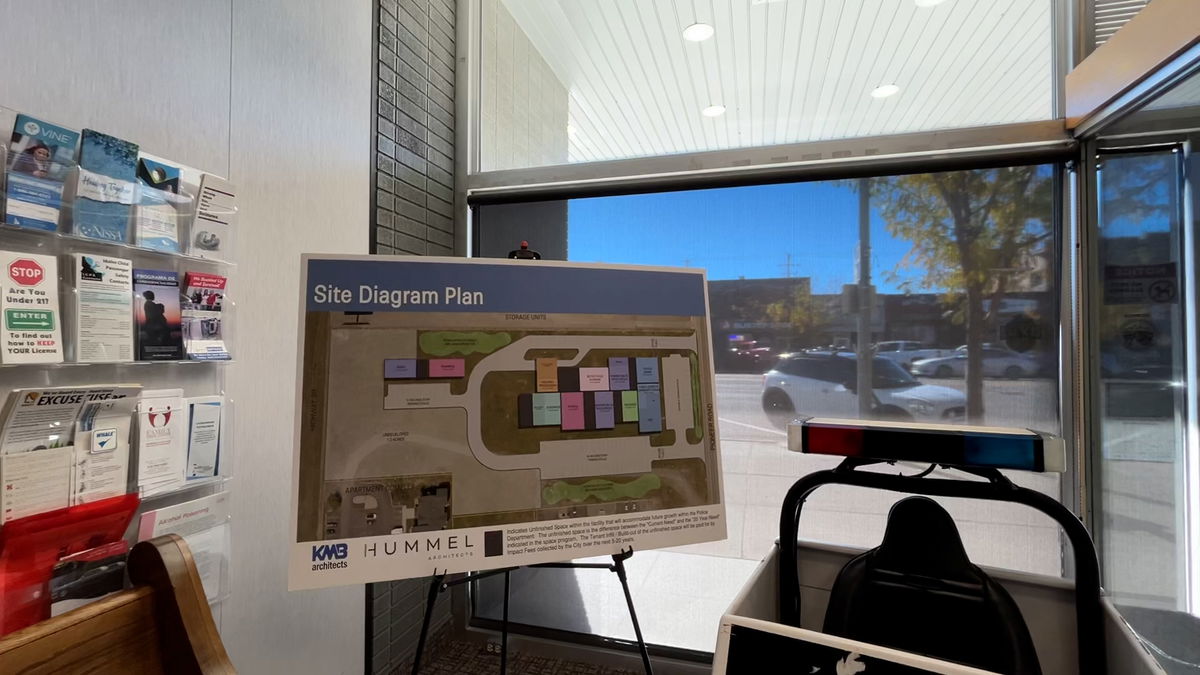
To help voters visualize the project, the department has released a model of the proposed floor plan for the public to review.
Rexburg Police Chief Rhodes previously told Local News 8 that the current building is severely outdated and plagued with numerous issues. The department believes a new facility, featuring significantly more space, is essential for them to effectively and safely serve the growing population of Rexburg.
City council members say this is something that cannot be done without the support of the community.
The city has set up a website to explain more about the bond. For more information, click HERE.
Eastern Idaho, Idaho (KIFI) – The Catholic community in Idaho is advocating for Congress to pass a bipartisan bill aimed at protecting foreign-born religious workers from deportation. Currently, the Diocese of Boise hosts 79 active priests, 22% of whom are foreign-born and originate from 15 different countries.
“They love our country, and they love serving here in our country,” Father Flores of the Holy Rosary Church said. “But they are still individuals of their own country.”
Since January 2025, two priests in Idaho have been forced to leave the U.S. due to expired R-1 visas, and the Diocese of Boise is projected to lose its first parish priest in November 2025. An additional 14 priests are at risk of deportation, with estimates suggesting that over 25% of the clergy in Idaho may face this issue by 2026.
“Our Lord Jesus himself was a refugee and an immigrant, so we have to be helpful to them and open to them” Fr. Flores said. “At the same time, respecting the laws – the laws of our country.”
Concerns regarding R-1 visas have escalated since March 2023, when the U.S. State Department merged religious worker (EB-4) applicants into the broader “all other” immigration queue while maintaining the five-year cap on R-1 visas. This change has led to significant backlogs for EB-4 applicants, with some facing waits of up to 20 years for approval.
“People who aren’t affected by this don’t realize how complex it is,” Fr. Flores said. “I’ve had some people [ask] me why these priests don’t become citizens…they can’t become citizens, because you have to follow this process. You have to be here on a visa status first, and then you follow the steps.”
Consequently, R-1 visa holders nearing their visa limit may lose their legal status if they cannot secure permanent residency in time. Those forced to leave the U.S. must wait 12 months before reapplying, which would reset their five-year limit.
Some members within the Diocese of Boise have expressed concerns regarding the State Department’s 2023 decision to merge these categories, particularly the lack of a designated visa category for religious workers that could have protected their status and reduced delays in green card applications. The United States Conference of Bishops has even been looking for solutions on an international scale.
“The Pope is aware of it,” Fr. Flores said. “But the Pope has very little influence on politics in America.”
As a result of this domestic issue, Senators Jim Risch and Mike Crapo introduced two bipartisan proposals, S. 1298 and H.R. 2672, this April. The goal: addressing challenges within the religious worker visa program.
The Religious Workforce Protection Act (RWPA) aims to empower the Secretary of Homeland Security to extend R-1 nonimmigrant status beyond the existing five-year limit for religious workers already in the U.S. This extension would allow individuals to continue their services while their permanent residency applications are processed. Additionally, it would facilitate the return of previously deported religious workers as they await their EB-4 applications.
“So this isn’t just a Catholic problem,” Fr. Flores said. “It’s a problem for any religion that brings in ministers or clergy from other countries.”
The Diocese of Boise has publicly supported the RWPA, citing concerns that current visa policies could disrupt religious services across its region. Other religious organizations, including the U.S. Conference of Catholic Bishops (USCCB), the National Association of Evangelicals, the U.S. Council of Muslim Organizations (USCMO), and the Hindu American Foundation, have also voiced their support.
“Another benefit that might come from this is maybe some push in fixing immigration law at a national level,” Fr. Flores said. “It seems so distorted, confusing, and difficult.”
As of now, there have been no significant developments regarding the approval process for these proposed bills. As the bill moves through the legislative process, stakeholders across the country remain focused on its potential impact on religious organizations and their capacity to serve their communities. The legislation seeks to ensure that religious workers can continue to fulfill their roles without unnecessary interruptions, maintaining the stability of faith communities and providing consistent spiritual leadership across congregations nationwide.
Father Flores encourages anyone interested in raising awareness about this act to contact their government representatives and even address the White House.
“Write to any politician you know here in Idaho,” Fr. Flores said. “I tell people to write to the President and Vice President just to get their attention because both bills are in the chambers and not moving very quickly.”
Father Flores also encouraged members of the religious community to continue prayers for change, and gave a message of hope for those who question the pace of the bill’s passing.
“Anything that is difficult that we will overcome will make us stronger,” Fr. Flores said. “My hope is that people will appreciate when they have a foreign-born priest who has left his own culture and left his own home to serve here.”
To learn more about the Religious Workers Protection Act and Father Flores’s official statement regarding the act, click here.