

Ban of kratom sales passes unaminously in Idaho Falls">Ban of kratom sales passes unaminously in Idaho Falls

Ban of kratom sales passes unaminously in Idaho Falls">

Idaho Falls, ID (KIFI) – The sale of Kratom will be banned in Idaho Falls in a new law set to take effect on July 1, after a unanimous vote was passed in the Idaho Falls City Council meeting Thursday evening.

This comes after local health officials and leaders linked the substance to multiple deaths in Bonneville County. Bonneville County Coroner Shante Sanchez released a statement in October of 2025 that her office confirmed six kratom-related deaths over the last 18 months, including four cases where the primary active compound, mitragynine, in kratom was determined to be the sole cause of death.

Those findings prompted city leaders and council members to begin discussions this week about whether kratom should continue to be sold in Idaho Falls. City Council members heard compelling testimony from the county coroner, local law enforcement, medical professionals, and members of the public who argued the product poses a growing public health risk.

The ban was passed unanimously, with all five council members approving the ordinance, following public commentary on the proposal.

Before making the motion to adopt the ordinance, Councilor Michelle Ziel-Dingman acknowledged the limits of the local ban. “I’ve recognized that kratom will continue to be sold online in other cities and counties,” she said. “But this ordinance makes it clear where our community stands on this drug, and if our ordinance saves one life, as Councilor Jim Freeman said, or serves as a tool for educating our community, I believe this ordinance is therefore appropriate.”

Mayor Lisa Burtenshaw announced that the city will begin an awareness campaign to inform the public about the new kratom ban.

“I do sympathize with parents who have no idea that these products are sitting on the shelf,” Burtenshaw said. “That is something that we will address with the Idaho Falls Police and through the mayor’s office and through the school district.”

While Idaho Falls has moved forward as one of the largest cities in Idaho with a local ban, kratom remains legal statewide for now. At the state capitol, lawmakers have been debating whether to ban the substance altogether or to regulate its sale and distribution. Several competing proposals have been considered during the 2026 legislative session.

For Idaho Falls retailers, the city’s action to ban kratom products means it will soon be removed from store shelves inside the city limits, even as statewide debates continue into the future.

To see previous stories linked to Idaho Falls’s kratom-related deaths, visit here.
Eyewitness Recalls Narrow Escape During Teton Dam Failure">Eyewitness Recalls Narrow Escape During Teton Dam Failure

Eyewitness Recalls Narrow Escape During Teton Dam Failure">

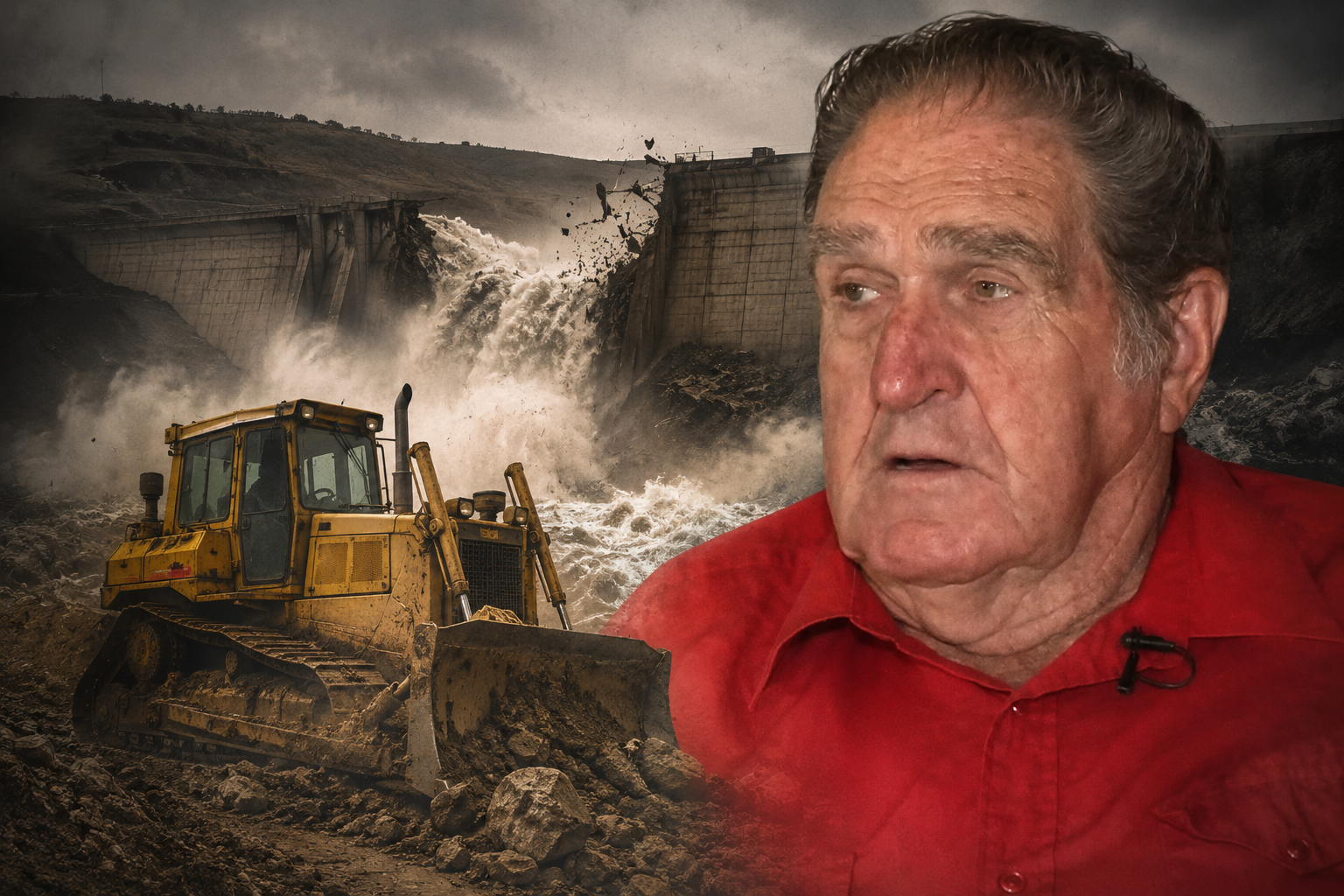
In a recent interview on Newstalk 107.9, Jay Calderwood shared a harrowing first-hand account of the Teton Dam collapse as Idaho observes the 50th anniversary of the catastrophe. Calderwood, who was working as a general excavation foreman at the time, was one of the last people on top of the dam before it gave way on June 5, 1976.

Speaking with hosts Neal Larson and Julie Mason, Calderwood described arriving at the site after receiving reports of a leak. He operated a D9 bulldozer, attempting to push massive rocks into a growing whirlpool in a desperate bid to slow the breach. Despite the crew’s efforts, the structural integrity of the dam failed rapidly. Calderwood recalled the moment the general superintendent felt the ground tremble and signaled for an immediate evacuation.

The escape was a matter of seconds and inches. Calderwood described backing his bulldozer toward the south abutment while the ground in front of him began to fall away. “I thought, oh man, I’m not going to make it,” Calderwood said, noting that 20-foot sections of the dam were sloughing off as the gap widened. He told the program that he considered jumping from the machine but realized he could move faster by staying in the cab and backing up at full speed. He reached the safety of the canyon wall just moments before the section he had been occupied on vanished into the rushing water.

From his vantage point on the side of the river, Calderwood watched the floodwaters engulf a two-story powerhouse and a nearby concrete plant. He described the sight of the water moving down the canyon, mowing down large cottonwood trees “like a haymower.” While 11 people lost their lives in the subsequent flooding of Sugar City and Rexburg, Calderwood noted that the project engineer assured him at the time that downstream residents had been notified as soon as the leak was discovered.

In the months following the disaster, Calderwood led a crew to reconstruct the railroad grade that had been destroyed by the surge. Reflecting on the personal impact, he described the emotional reunion with his family in Victor, Idaho, who spent hours without any means of knowing if he had survived the collapse.

50 Years Later: Researcher Explores Teton Dam’s History and Lessons">50 Years Later: Researcher Explores Teton Dam’s History and Lessons

50 Years Later: Researcher Explores Teton Dam’s History and Lessons">

Marking the 50th anniversary of the catastrophic collapse of the Teton Dam, dam safety engineer Dr. Nathaniel Gee joined Newstalk 107.9’s Neal Larson and Julie Mason to discuss his new book, “Failure and Fortitude.” In the interview, Gee detailed how a combination of political pressure, unconventional engineering, and poor geology led to one of the most significant engineering failures in United States history.

Gee, who works for the Bureau of Reclamation—an agency whose modern safety programs were heavily influenced by the Teton disaster—highlighted the political maneuvering that fast-tracked the project. According to Gee, former Congressman Ralph Harding prioritized the dam’s authorization in 1964 as a political strategy. Despite warnings about the site’s fractured geology, the project moved forward. To keep the dam financially viable under emerging environmental regulations, engineers utilized an experimental “key trench” design that lacked traditional filtration layers. This decision ultimately allowed water to erode the dam’s core, leading to the breach on June 5, 1976.

The interview also touched on the human element of the tragedy. Gee recounted the harrowing experience of Daryl Griggs and David Benson, who were fishing downstream when the breach occurred. While Benson was the first fatality of the disaster, Griggs survived after being swept into a tree. Despite 25,000 people being displaced by the floodwaters, only 11 lives were lost. Gee attributed this relatively low death toll to the timing of the collapse on a clear Saturday afternoon and the rapid, informal communication networks within the local community.

Regarding the possibility of rebuilding, Gee stated that while modern engineering could safely construct a dam at the site today, the costs would be significant due to the foundation requirements. He emphasized that the subsequent recovery effort was a testament to regional resilience, noting that many residents were initially reluctant to file federal claims for their losses. Gee concluded that the disaster serves as a permanent reminder of the importance of both engineering rigor and community preparedness, noting that while infrastructure can fail, the strength of a community remains a primary defense during a crisis.

6.3.2026 – McGrane Complaint, Rubio Clashes, Teton Dam Stories">6.3.2026 – McGrane Complaint, Rubio Clashes, Teton Dam Stories

6.3.2026 – McGrane Complaint, Rubio Clashes, Teton Dam Stories">

Send us Fan Mail

Neal Larson and Julie Mason kick off the morning with some light banter—vacation plans to Seattle, food quirks, and a reminder that National Donut Day is coming (with a throwback to Neal’s infamous donut-choking moment). Then we dig into the bigger issue: Senator Scott Herndon filing a complaint against Idaho Secretary of State Phil McGrane over election-season mailers and how those costs were allocated. We talk through why this matters—less about “gotchas” and more about the unique optics of the state’s top elections official getting deeply involved in endorsements, donations, and political network-building. Since the Secretary of State can’t investigate himself, the complaint heads to Attorney General Raul Labrador, and we kick around what the “why” might be behind McGrane’s unusually active primary season (including the possibility he’s plowing the field for a future statewide run).

From there, the show bounces between serious and spirited: we unpack the “retroactive standards” people apply to policies like House Bill 93 (parental choice tax credit), push back on a clip claiming “Christianity is a feminist religion” with a candid discussion about scripture, doctrine, and political co-opting of faith, and then hit national politics with Marco Rubio’s sharp exchanges in a Senate hearing—especially his no-nonsense framing that the U.S. government isn’t a “charity” and his detailed rebuttal to senators trying to score points for social media. The hour also includes a moving preview of Friday’s pre-taped special with Dr. Nathaniel Gee on the 50th anniversary of the Teton Dam collapse, plus powerful listener call-ins sharing firsthand memories of the flood’s devastation, miracles, and aftermath.

### Highlights
– Senator Scott Herndon’s complaint against Secretary of State Phil McGrane and why it automatically routes to AG Raul Labrador  
– The “propriety vs. legality” question: endorsements, campaign spending, and the elections-referee optics problem  
– A gripping preview of the Teton Dam 50th anniversary coverage—and emotional listener stories of survival and loss  
– Marco Rubio’s Senate hearing moments: “We are not here to play social worker…we are here to win”  
– Calling out political re-framing: when critics grade policies against standards they were never designed to meet  

Let’s talk advertising. When you want to advertise on the radio, you call the station, right? But what about Facebook, Instagram, Hulu, Disney+, Peacock, and other streaming platforms?

You could try clicking around, reading books, or taking online courses to figure it out—or you can let us handle it. At Sandhill Media Group, we’re your local experts in both radio and digital marketing.

Visit SandhillMediaGroup.com today.

Read More

scroll to top