‘A difficult moment’: ISU announces sweeping changes amid budget constraints ">‘A difficult moment’: ISU announces sweeping changes amid budget constraints 

‘A difficult moment’: ISU announces sweeping changes amid budget constraints ">
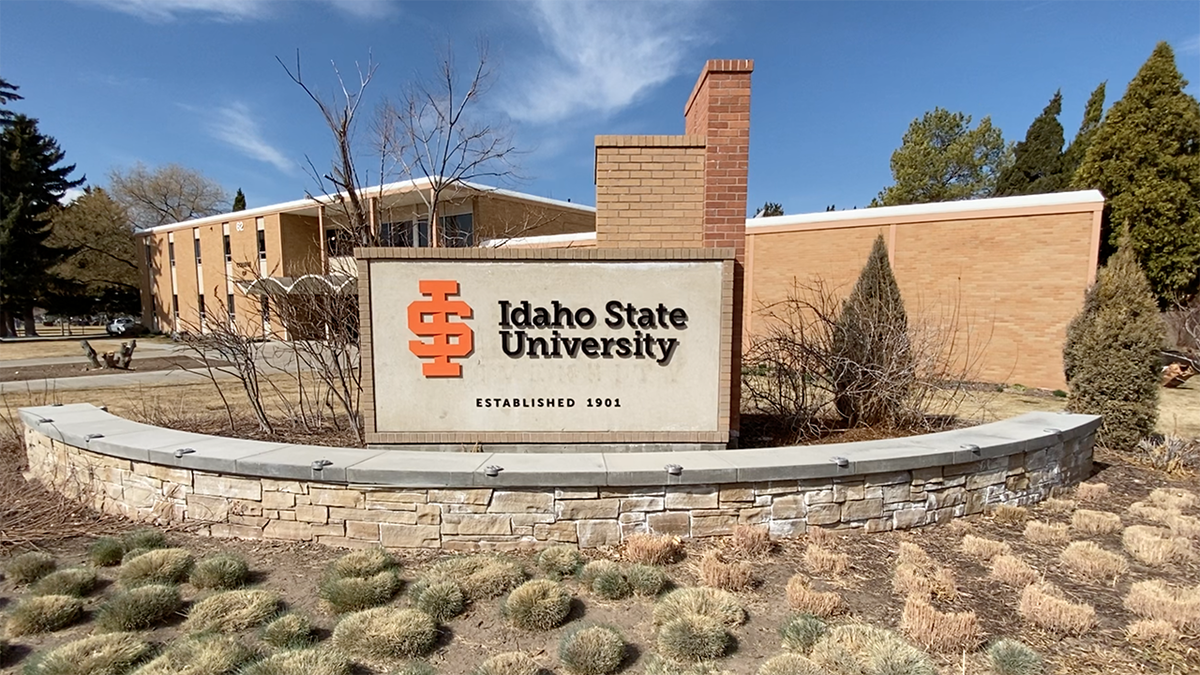
Idaho State University in Pocatello, ID

Originally posted on IdahoEdNews.org on February 12, 2026

by: Devin Bodkin

POCATELLO, Idaho — Idaho State University is reshaping itself with sweeping changes in the face of current and looming state budget cuts.

That includes merging colleges, restructuring programs, “modest” student fee hikes and a range of other changes starting July 1 to try and save and generate millions by year’s end. The university released a complete budget restructuring plan Wednesday. ISU President Robert Wagner overviewed the changes in an accompanying video

The overhaul, which follows news of 44 position cuts at the university, reflects campus feedback, Wagner announced.

Details are still emerging, and EdNews will interview Wagner Friday to try and garner more clarity. Still, the latest update brings the university’s roadmap into clearer focus — and underscores what’s at stake for the 125-year-old institution: cutting costs without cutting its core mission. 

“This is a difficult moment in our university’s history,” Wagner said in the nearly 20-minute video. “It is appropriate to recognize that openly and honestly.” 

What’s changing — and why now 

The university’s scramble to adjust its budget follows state cuts that started with a 3% holdback for state agencies — including colleges and universities — last year. 
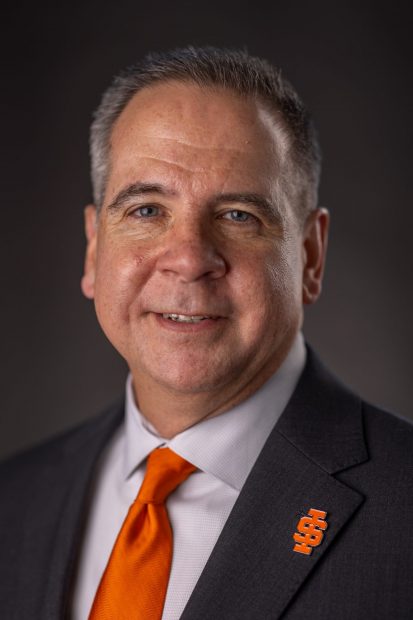
Robert Wagner

To add to the unease, more proposed cuts are moving through the Statehouse at a rapid pace this legislative session — and higher ed remains on the chopping block.

With those cuts in view, ISU’s adjustments span the gamut: 

Colleges are merging. 

It’s a major reorganization in the university’s academic affairs: 

  • The College of Arts and Letters will combine with the College of Education to become the College of Humanities, Education, and Social Sciences. 
  • The College of Health will become the College of Nursing and Rehabilitative Sciences. 
  • The College of Science and Engineering will consolidate departments.
  • Arts programs will merge into a new School of Arts

Wagner and other leaders are banking on added revenue from performances through the new arts school. Projected savings include some $1.8 million from the College of Humanities, Education, and Social Sciences merger.

Other cost savings stem from restructuring and eliminating positions at the university’s library, graduate school and Bengal Success Center.

Position reductions are in place. 

The university posted details — including projected dollar amounts — tied to previously announced position cuts.

The breakdown lists 44 positions within administrative, staff and faculty roles. Projected savings are $8.3 million

Here’s a closer look:
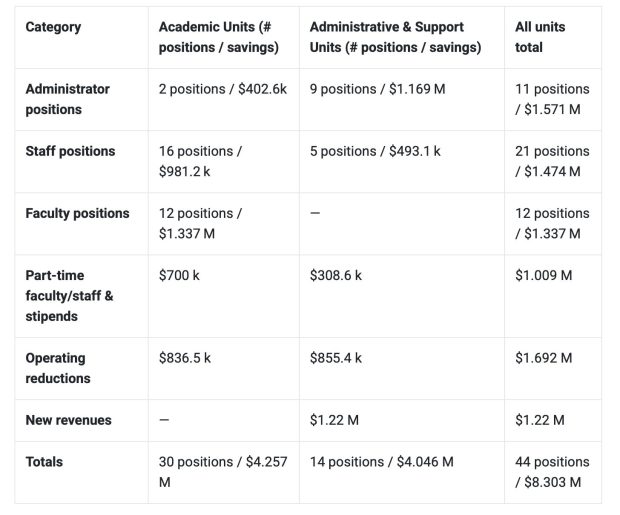
About 40% of these positions were vacant or planned retirements at the time of the announcement, the univAbout 40% of these positions were vacant or planned retirements at the time of the announcement, the university says.

Tuition and fee increases are on the table.

The University says it will set tuition and fees according to State Board of Education processes ahead of fee hearings set for March 2026.

The board will set fiscal year 2027 tuition rates in April of next year. ISU will share any changes in tuition following board approval, the university’s budget restructuring plan reads.

Meanwhile, some “modest” fee hikes will go into effect. But these are “market-aligned,” Wagner said, without mentioning a dollar amount. Rather, this new pricing will match the university’s “sister institutions.” 

A range of other changes are coming.

These include:

  • A heavier reliance on local auxiliary revenue and philanthropy for the athletics budget
  • A six-center “Innovation Hub” to help buoy an entrepreneurial push, including a new unit to manage health clinics and the Idaho Accelerator Center
  • Closure of ISU’s Research Data Center
  • Shifting computing efforts to the state-owned Collaborative Computing Center in Idaho Falls, which the Idaho National Laboratory leases. 

Click here for the entire budgeting plan.

Uncertainty still looms 

Wagner and his university’s budget plan peg financial impacts from the moves at $8.3 million in savings and revenue by 2026. 

But, he added in his video recording, this is the first phase. More cuts could come, and final impacts will depend on lawmakers. 

The prospect of more cuts from the Legislature this session fueled a recent request from state budget writers for ISU and other institutions to lay out scenarios in the event of further belt-tightening. University leaders told lawmakers a second batch in addition to the 3% holdbacks that hit last year would mean mandatory furloughs this fiscal year, affecting employees who make more than $60,000 annually. 

The plan released Wednesday acknowledges that possibility.

Staff reductions and restructuring would also apply if further cuts happen, university leaders told lawmakers, further impacting student services and in-demand workforce programs. 
Budget battles boiling in Boise as lawmakers tighten the belt">Budget battles boiling in Boise as lawmakers tighten the belt

Budget battles boiling in Boise as lawmakers tighten the belt">

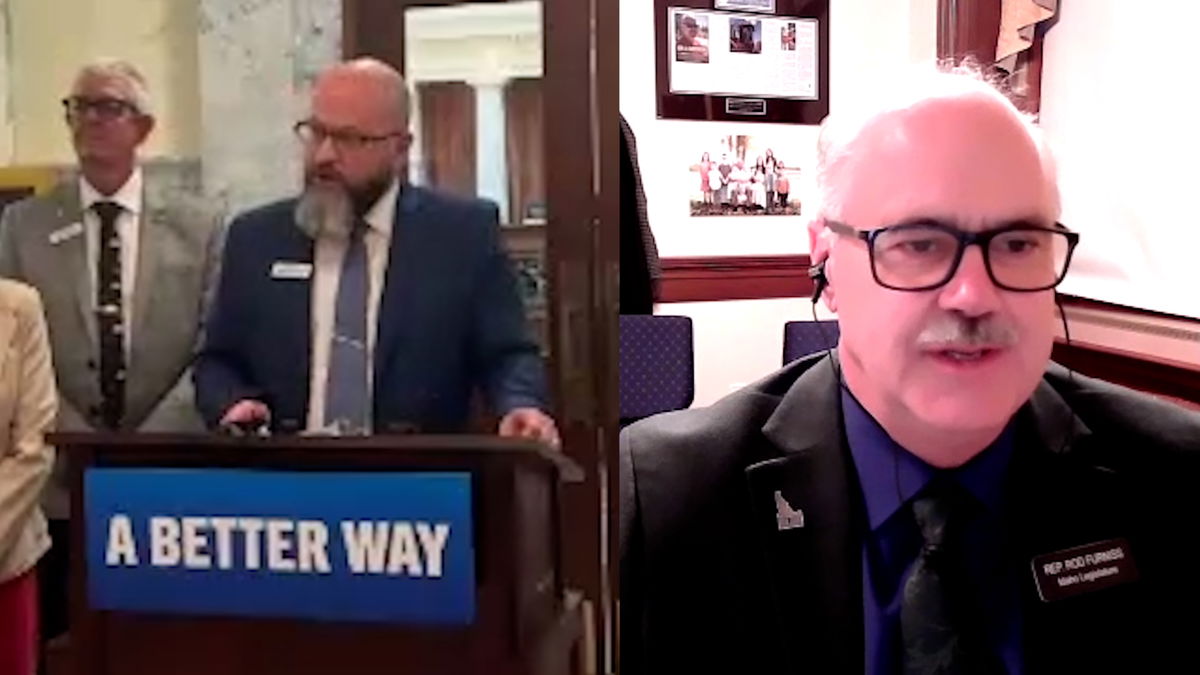
BOISE, Idaho (KIFI) – Idaho lawmakers from both parties are sounding off about the budget at the Idaho Statehouse.

In a press conference Thursday afternoon, Democratic leaders warned that Idaho has a revenue problem, not a spending problem.

“Over the last five years, the Idaho Legislature cut income tax revenue by like $4 billion. Last year alone, it cut taxes by $450 million,” said Idaho’s Assistant Senate Minority Leader James Ruchti, D-Pocatello.

GOP Rep. Rod Furniss, R-Rigby, who serves on the state’s budget-setting Joint Finance-Appropriations Committee agreed that this year’s cost-cutting measures have led to a tight situation.

“Last year, we lowered the tax rate. We increased the grocery tax credit. And then we didn’t know that the Big Beautiful Bill was going to come, and that was another $155 million hit to our budget,” Furniss said. “With that, we’ve had some increases in expenses. So we’ve had to be really careful.”

Those revenue reductions lead to difficult decisions as elected officials continue to cut back on state agencies and programs – with an additional one and two percent cut passed by the Joint Finance-Appropriations Committee on Friday.

“Each year moving forward, we have 1.1 billion fewer dollars to spend on our public schools, our universities, our roads, our courts, our law enforcement and our prisons,” Ruchti said.

In a press release, Democrats also recommended “reexamining expensive giveaways, pursuing targeted tax conformity reforms, reinstating a child tax credit, bolstering the Idaho Child Care Program and reindexing the homeowner’s exemption.

But Furniss reiterated Idaho’s state constitution’s mandate to not spend more than it takes in.

“Idaho does not print money like the federal government. We have to balance our books every single year,” he said.

Citing Ronald Reagan’s economic philosophy, Furniss stated. “If you reduce taxes, the revenue will increase. You give the money back to the people, you’ll see a better day, and you’ll actually see more taxes in the future. I believe that to be the case, and our projections show that over time.”

Both Furniss and Democratic lawmakers proposed dipping into Idaho’s rainy day fund to provide money for essential services facing cuts – including firefighting.

“We just need to get through a hard time that we’re having now,” Furniss said. “I know that a lot of people are concerned about it, but we’ll get through it. Idaho will be better for it.”

Idaho Democrats disagreed strongly with that fiscal outlook.

“Who is going to pay the price for that bad fiscal policy?” Ruchti said. “You will – your school district, your kid’s classroom, your neighbor who’s going to lose their health insurance.”

We’ll have more on Idaho’s budget reckoning in the weeks ahead.

INTERVIEW: IFPD Chief Bryce Johnson – immigration relationship, community safety">INTERVIEW: IFPD Chief Bryce Johnson – immigration relationship, community safety

INTERVIEW: IFPD Chief Bryce Johnson – immigration relationship, community safety">

(IDAHO FALLS) – In an exclusive interview with Neal Larson and Julie Mason from Newstalk 107.9, Idaho Falls Police Chief Bryce Johnson provided a comprehensive overview of the department’s current operations, addressing topics ranging from immigration enforcement to shifting crime trends and new law enforcement technologies. The discussion offered a detailed look into the challenges of policing a growing city while navigating sensitive political and legislative landscapes.

Chief Johnson took the opportunity to clarify the Idaho Falls Police Department’s (IFPD) stance on immigration, particularly as some members of the local Hispanic community feel “on edge” regarding federal enforcement. Johnson emphasized that the department’s core mission is to investigate crimes and protect the public, regardless of a person’s legal status. He noted that local law enforcement lacks the legal authority to enforce federal immigration laws, a distinction supported by federal agencies like Homeland Security Investigations (HSI). According to the Chief, the IFPD focuses on universal safety issues, such as protecting victims of domestic violence and apprehending violent offenders, rather than performing routine immigration checks.

The Chief shared specific instances where cooperation with federal authorities proved essential for public safety. These examples included high-stakes cases of child trafficking and a situation involving a grandfather sexually abusing his granddaughter, where HSI assisted in removing the predator from the family unit through immigration channels. Johnson also highlighted a joint effort to locate former Venezuelan police officers wanted for homicide. In these examples, the Chief argued that federal collaboration is a targeted tool used specifically to remove dangerous individuals from the community, rather than a broad enforcement of immigration policy.

On the topic of local crime, Chief Johnson characterized Idaho Falls as a “typical American city” where the constitutional priority on liberty makes law enforcement a complex task. Despite those inherent challenges, 2023 marked a period of statistical improvement for the region. Following a spike in crime during the years surrounding the pandemic, the city saw a slight decrease in violent crime and a significant double-digit percentage decrease in property crime. Johnson credited these gains to the proactive work of his officers, who conducted approximately 13,000 traffic stops over the course of the year to maintain a visible and active presence.

The interview concluded with a discussion on legislative concerns, including a proposal to remove registration stickers from license plates. Johnson noted that this change would require officers to spend more time looking at in-car computers to verify registration, a distraction he views as inherently dangerous for officers on the road. He also offered a passionate defense of License Plate Readers (LPRs), calling them the “best improvement in law enforcement since DNA.” While acknowledging public “surveillance state” concerns, Johnson asserted that the technology is constitutional and essential for modern policing, expressing wariness over potential legislative actions that might limit its use.

scroll to top