
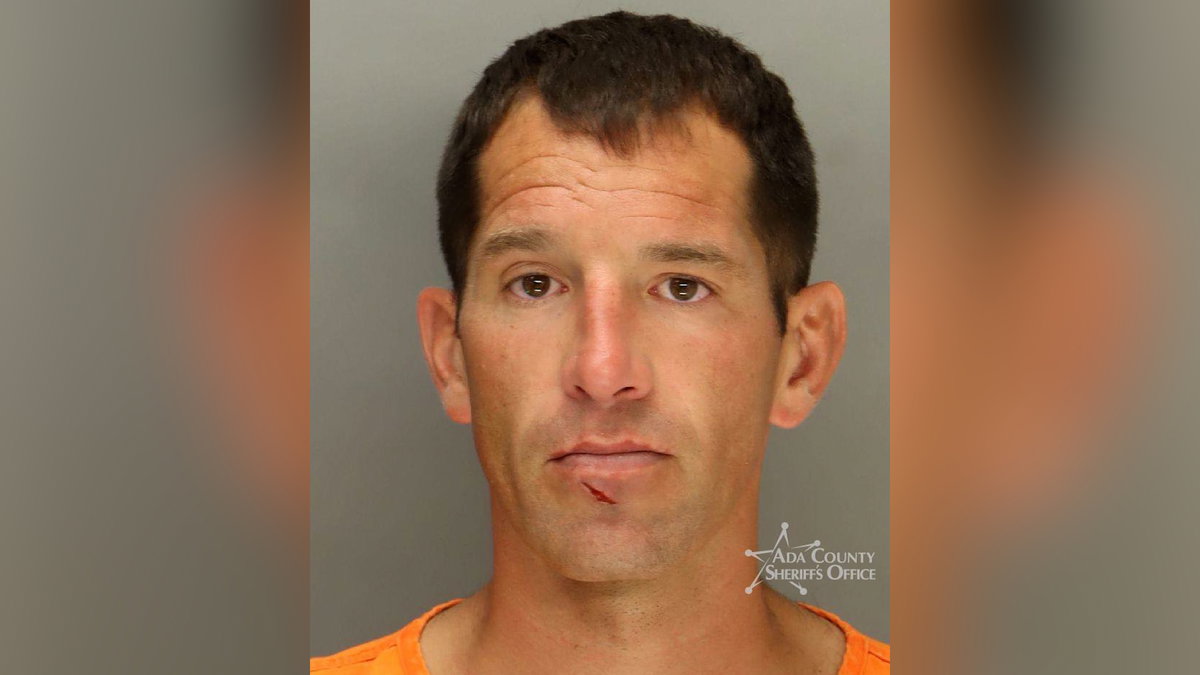

BOISE, Idaho (KIFI) — New developments emerged Tuesday in the Boise River Greenbelt murder case as a judge ordered a mental health competency evaluation for the man charged in the fatal stabbing of 25-year-old Jordan Harbst.
Ross Wardlaw, 41, appeared in Ada County court for a preliminary hearing on a first-degree murder charge stemming from Harbst’s death. However, proceedings were put on hold after questions were raised about Wardlaw’s competency to stand trial.
The court’s decision marks the second time in less than a year that Wardlaw’s mental competency has been challenged in a criminal case.
Survivor of Previous Encounter Speaks Out
For Hannah French, who is a Fremont County native, the latest developments are deeply personal. In 2025, she worked as a shelter worker at the Interfaith Sanctuary in Boise and survived a previous alleged attack involving Wardlaw.
Hannah said Wardlaw threatened her with a knife while she was intervening in a fight.
“It was very preventable, and my heart was broken for the victim,” Hannah said. “This was 100% preventable. It’s very unfortunate that in order to get Ross Wardlaw help with his mental health, an individual had to be murdered.”
Following that incident, Wardlaw spent several months at State Hospital South after a psychologist determined he was not competent to stand trial. According to Hannah, he was later found competent, and a jury acquitted him in May before he was released.
“I knew I was in a dangerous situation when he was coming at me with a knife,” she said. “I have never been scared at work or scared of any of the individuals I serve, but seeing someone charge at you with a weapon is a scary feeling.”
Mental Illness, Not Homelessness, Hannah Says
Hannah emphasized that the tragedy should not be blamed on Wardlaw’s housing status.
“I think it’s important, aside from the fact that the system failed this 25-year-old victim,” she said. “But I think it’s also important to understand that people don’t commit crimes because they’re unhoused. People commit crimes because there’s more internal factors that play into it. There is not a reason that people commit murder.”
She said the larger issue is a system she believes failed both the victim and the broader community.
Calling for Changes to Mental Health Care
Reflecting on her experience testifying in the earlier case, Hannah described the process as emotional and intimidating.
“[He] basically said everything that I testified to wasn’t true,” said French. “It was just also very intimidating. You know when you’re explaining how you’re scared for your life, and that you know you have the feeling that you actually are going to be stabbed. It’s intimidating when you know he’s sitting on the stand telling you that ‘he catches what he’s gonna kill.'”
Hannah said she refuses to stay silent. She said the real accountability must extend beyond the courtroom to state laws that continue to release severely mentally ill individuals without long-term care.
“I’m an individual who utilizes mental health resources and things like that And so just making them easier access, not just for certain populations to have access to that, but access for everyone.”
What Happens Next
Prosecutors did not object to the court-ordered competency evaluation but said they reserve the right to challenge its findings.
The case is now scheduled for a status hearing on Aug. 25.
Vital Resources for those in Need
While Wardlaw’s case highlights systemic gaps in Ada County, the trend of homelessness and unaddressed mental illness remains a statewide challenge. According to the Idaho Housing and Finance Association, nearly 3,000 people are currently experiencing homelessness across Idaho.
In eastern Idaho, community organizations are working to bridge these gaps by pairing shelter services with immediate psychiatric care. The Idaho Falls Rescue Mission, for example, partners directly with the local Behavioral Health Crisis Center to identify and provide mental health support.
“I can think of one instance where a gentleman came to us who was dealing with undiagnosed schizophrenia,” said Chris Aspinall, Director of Development at the Idaho Falls Rescue Mission. “We were able to get him in front of mental health professionals, get him diagnosed, and start him on medication. From there, we placed him in permanent housing where he receives regular care.”
With success stories like these, the Idaho Falls Rescue Mission hopes to continue making a difference in people’s lives. Their partnership with the Behavioral Health Crisis Center helps them provide more resources for anyone experiencing a crisis or is in need of mental health support.
“Most of the time, there are underlying struggles, and people just need help,” said Kenneth Boll, program supervisor for the Rescue Mission’s men’s shelter. “We provide several resources beyond just a bed. We run 100% on community donations to serve nightly dinners, distribute food boxes, and connect people with care.”
How to Get Help or Support
Local Resources: Idaho residents experiencing a housing or mental health crisis can dial 2-1-1 or text 898211 to connect with local support services.
If you want to get involved with the Idaho Falls Rescue Mission, they have an upcoming fundraiser with Jersey Mike’s (2681 E Sunnyside Rd., Ammon, ID 83406) on July 31st, where 10% of all proceeds will go towards the Rescue Mission.
Editor’s Note: AI tools were utilized in the initial research and structural development of this article. All content is thoroughly reviewed and verified for accuracy by the Local News 8 editorial team.