
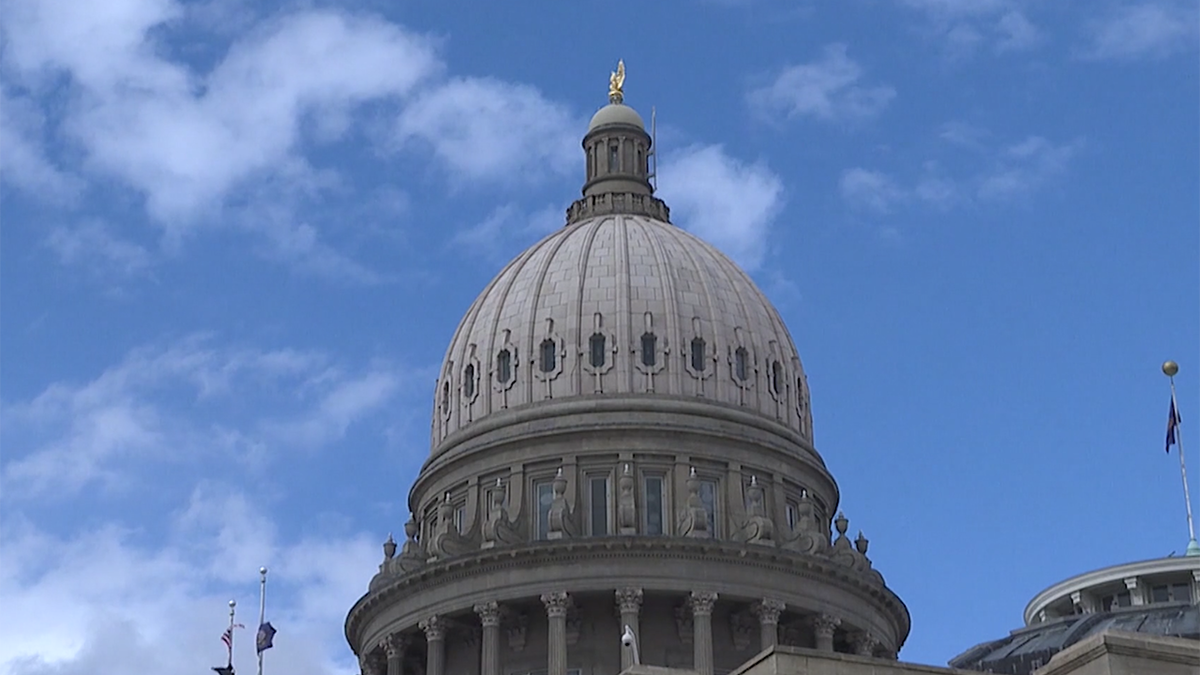
IDAHO FALLS, Idaho (KIFI) — The Idaho Legislature passed more than 350 laws during its 2026 session, bringing sweeping changes to everything from transportation to school AI policies. The vast majority of these laws officially take effect tomorrow, July 1.
Local News 8 has compiled the following breakdown of the most talked-about laws going into effect tomorrow.
House Bill 752 – Restricting restroom/lockeroom access by biological sex
Commonly known as the “bathroom bill,” House Bill 752 makes it a crime to knowingly use a restroom, changing room, or locker room that does not align with a person’s biological sex. However, earlier this month, a judge issued a preliminary injunction temporarily blocking a section of the law regarding single-use restrooms and multi-use restrooms where no single-use option is available. The rest of the law will take effect on July 1.
RELATED: Federal Judge halts Idaho law enforcing restroom access by biological sex
House Bill 664 – Semi-Truck Speed Limits
A new law allowing semi trucks to travel the freeway at 80 miles per hour goes into effect in Idaho on July 1. House Bill 644 states semi-trucks can travel at the same speed as passenger vehicles on interstate highway – up to 80 mph when the posted speed allows it. The bill’s text claims, “Research has shown that speed variance (differences in speed between vehicles) causes more accidents than absolute speed, with a 10 mph difference creating as much as a 227% increase in interactions. When variances in speed occur at excessive speeds, such as on interstate highways, the severity of crashes increases dramatically.”
RELATED: Speeding up: Semi trucks in Idaho can travel at 80 miles per hour starting July 1
Senate Bill 1227 – AI in K-12 Education
This bill addresses the rapid rise of AI in K-12 education, directing the State Department of Education to build a statewide framework for responsible AI use. Additionally, local school districts and public charter schools must now adopt formal policies governing how both students and staff can use AI tools.
House Bill 516 – Teachers Union Restrictions
This law heavily restricts how teachers’ unions interact with school district resources. It prohibits unions from using a school district’s payroll system to automatically deduct member dues, holding union meetings on district property, and bars teachers from using paid leave for legislative advocacy.
House Bill 895 – Data Center Water Restrictions
This law places restrictions on future data centers to be designed for the non-consumptive use of water, or uses water for such purposes from a municipal water district, or water and sewer district system, to “help ensure that Idaho’s limited water rights resources will continue to be available for existing uses, such as agriculture and industry.”
House Bill 538 – Protection for Short-Term Rentals
Starting July 1st, local governments face new limits on how heavily they can regulate short-term rentals like Airbnbs and Vrbos. The law aims to protect “the private property rights of Idaho homeowners by ensuring the right to rent their property is maintained.”
RELATED: Idaho Senate passes bill limiting local regulations on short-term rentals
House Bill 37 & House Bill 803: Firing Squad Executions
Passed in 2025 but officially taking effect July 1, HB 37 establishes a firing squad as Idaho’s primary method of execution. A companion law passed in 2026, HB 803, ensures that the identities of all firing squad members will remain strictly anonymous.
RELATED: Idaho DOC releases detailed firing squad execution protocols ahead of July 1 transition
House Bill 681: No Statute of Limitations for Child Abuse
This law removes the statute of limitations for two major offenses: aggravated lewd conduct with a child and the production of child sexually exploitative material. Prosecutors can now bring charges against perpetrators at any point in time, no matter how many years have passed since the crime.
House Bill 696: Prison Staff Sexual Misconduct
This legislation amends and expands the state’s legal definition of prohibited sexual contact between correctional staff and inmates. The changes are designed to eliminate legal loopholes and make it easier to prosecute prison workers accused of sexually abusing incarcerated individuals. The legislation was in response to InvestigateWest’s reporting that found few Idaho prison workers accused of sexually abusing incarcerated women were ever charged.