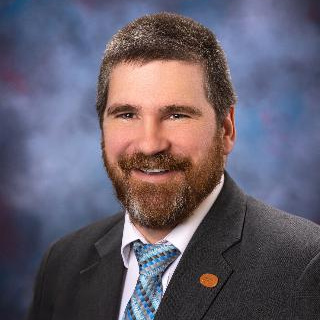
In a recent wide-ranging interview with Neal Larson and Julie Mason of Newstalk 107.9, Senator Dave Lent detailed a comprehensive legislative agenda focused on overhauling Idaho’s public education system, advancing nuclear energy initiatives, and navigating the state’s tightening fiscal landscape. Lent, a prominent figure in education reform, emphasized the need for a paradigm shift to move the state’s schools away from outdated models toward a more individualized, student-centered approach.
Lent revealed he has been conducting town halls across Idaho to gather feedback on reinventing public education, reporting significant support from local school boards and superintendents. Working in collaboration with Superintendent Critchfield, Lent is developing a two-to-three-year plan that features a restructured funding formula. A key element of this proposal includes integrating successful innovations from charter schools into the traditional public school system. Lent argued that while the state’s constitutional mandate for a “general and uniform” system remains relevant, the delivery method must evolve to meet modern needs. He expressed support for the concept of “money following the student,” suggesting that the current system—which was largely designed in 1908 to prepare students for factory work—is poorly suited for a modern information economy. Lent described the current institutional structure as an “old cardboard box” that cannot be fixed by increased funding alone, advocating instead for a focus on measurable outcomes like marketable skills and degrees.
Beyond education, Lent discussed his involvement with Governor Little’s Advanced Nuclear Energy Task Force. Drawing on his extensive professional background at the Idaho National Laboratory (INL), Lent stated that Idaho is uniquely positioned to lead the nation in nuclear energy development. The task force aims to establish Idaho as a hub for the sector by learning from the legislative efforts of other states. Lent noted that Idaho possesses the necessary infrastructure, technology, and expertise to lead a resurgence in the industry, specifically in areas such as fuel recycling and the development of new reactor technologies.
Addressing the state’s fiscal health, Lent provided insights into ongoing budget discussions. He characterized the current revenue challenges as “under-revenueing” caused by five separate income tax reductions implemented over the last eight years. With a legislative consensus against raising taxes or utilizing rainy day funds, the state is prioritizing spending cuts to achieve efficiency. Lent compared this approach to corporate restructuring, acknowledging the difficulty of such cuts while maintaining that they are necessary for long-term stability. He concluded with a note of cautious optimism, suggesting that a mild winter and continued construction activity might result in corporate tax receipts exceeding current conservative projections.