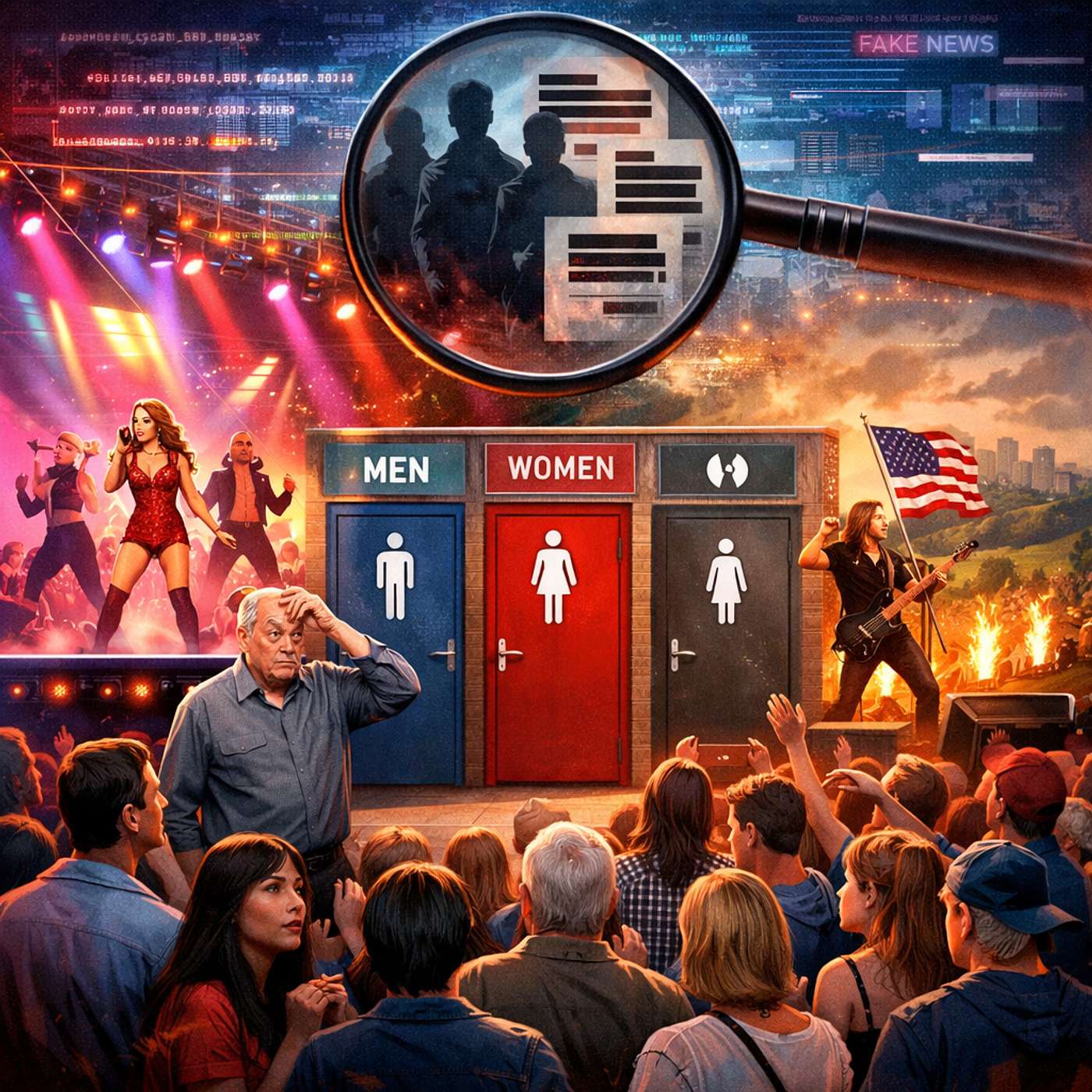
The hosts kick off the show with a broad sweep of topics, from a Super Bowl recap dissecting the game’s quality, the controversial Bad Bunny halftime show, and the alternative TPUSA performance, right through to local weather and sports triumphs. A significant portion of the discussion then shifts to the Idaho legislative session, focusing on a hotly debated bill to restrict public restroom use based on biological sex. This leads to a critical examination of Representative Stephanie Mickelson’s memorable, if unconventional, opposition, and a Democrat’s argument against preventative measures, both of which are thoroughly picked apart by Neal and Julie for their logical inconsistencies and implications for protecting women and girls.
The conversation later expands to national themes, with deep skepticism expressed over the FBI’s claims regarding the recently released Epstein files, highlighting widespread distrust and the challenge of discerning truth amidst online misinformation. They also challenge a particular argument against voter ID laws, questioning its accuracy regarding rural access to services. Concluding the segment, the hosts touch on Utah’s legislative moves to ban gender-affirming care for minors and a proposed fuel tax that could impact Idaho, expressing frustration over what they perceive as political posturing detached from practical realities and the needs of their constituents.
—
**Highlight List**
* The Super Bowl’s halftime show sparked significant debate, with hosts and callers critiquing Bad Bunny’s politically charged performance and contrasting it with the alternative TPUSA show.
* An Idaho “bathroom bill” brought forth a highly unusual legislative argument from a Republican representative, which was roundly criticized for its perceived classlessness and logical flaws.
* Deep skepticism was voiced regarding the official narratives surrounding the Jeffrey Epstein files, with concerns about potential redactions and the impact of misinformation and emotional bias on public perception.
* A discussion on voter ID laws challenged the common argument that such requirements disproportionately burden rural communities by highlighting readily available technological and physical resources.
Let’s talk advertising. When you want to advertise on the radio, you call the station, right? But what about Facebook, Instagram, Hulu, Disney+, Peacock, and other streaming platforms?
You could try clicking around, reading books, or taking online courses to figure it out—or you can let us handle it. At Sandhill Media Group, we’re your local experts in both radio and digital marketing.
Visit SandhillMediaGroup.com today.