
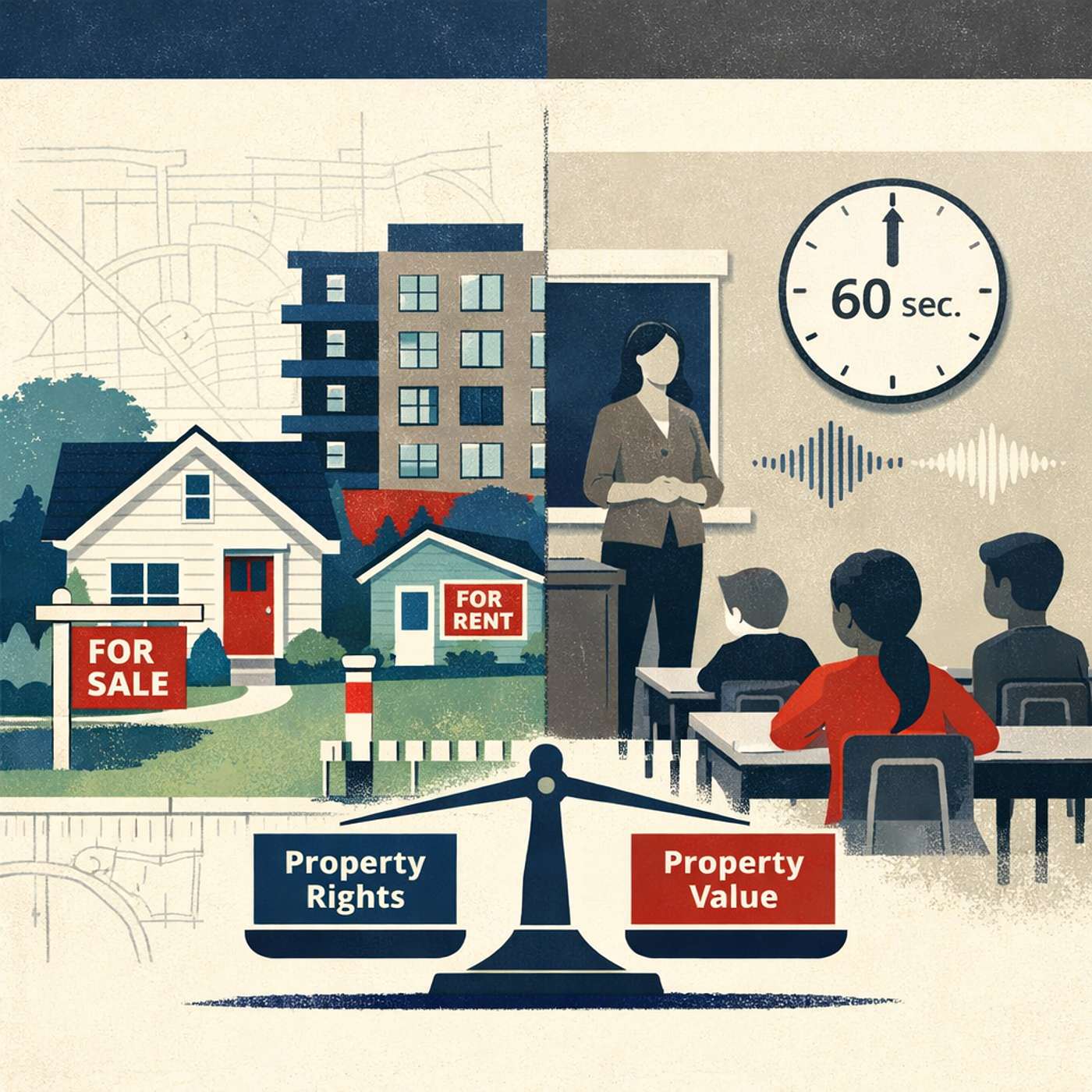
We spent time unpacking the late-session Idaho housing “affordability” bills and the common thread running through them: loosening planning and zoning to allow more density—duplexes, apartments, even backyard tiny homes—plus talk of rent caps tied to local median income. It’s the kind of solution that sounds clean on paper (more supply = lower prices), but it runs straight into the real-world tension between property rights and protecting neighborhood stability and property values. We walked through why zoning exists in the first place, how quickly these ideas are moving (and sometimes stalling) in the legislature, and why giving local officials even more discretion can feel risky—especially when most of us couldn’t name who’s actually running planning and zoning in our own communities.
Then we shifted into the moment-of-silence law for public schools—60 seconds of quiet each morning—and the reaction from a loud minority of teachers online who insist it can’t be done. Our take: kids can learn hard things, and “they can’t” is the soft cruelty of low expectations. We’re not pretending the bill isn’t partially about making room for prayer, but we also think a daily pause is a legitimate skill—focus, calm, self-control—whether a student prays or just breathes. We wrapped with a lively flash poll that showed the audience genuinely split on property value vs. property rights, and we touched on broader Capitol intrigue: rumors of a behind-the-scenes push to replace Speaker Mike Moyle, plus skepticism toward hit pieces and “boogeyman” narratives (including around the IFF) that get used to manipulate voters.
– Housing bills aim to boost supply by loosening zoning, but that can collide with neighborhood expectations and property values.
– The moment-of-silence debate: the issue isn’t perfection—it’s whether teachers will make a good-faith effort and let kids build the habit.
– Flash poll takeaway: conservatives are split when property rights and property values come into conflict.
– Capitol talk: rumors of a Speaker challenge, and a warning about power coalitions that don’t hold together.
– Media/political narratives: skepticism about using groups like the IFF as a convenient “boogeyman.”
Let’s talk advertising. When you want to advertise on the radio, you call the station, right? But what about Facebook, Instagram, Hulu, Disney+, Peacock, and other streaming platforms?
You could try clicking around, reading books, or taking online courses to figure it out—or you can let us handle it. At Sandhill Media Group, we’re your local experts in both radio and digital marketing.
Visit SandhillMediaGroup.com today.